
.avif)
With low-income individuals in mind, the Spanish government promotes the concept of VPO, or “Vivienda de Protección Oficial” (Publicly Subsidized Housing), so that the most vulnerable people—those with limited financial resources or special needs—can have access to their own home. We invite you to read on to learn more about this topic.
Social housing (VPO) is a special type of housing that is allocated to people in vulnerable situations at a price significantly lower than the market rate.
Each autonomous community has its own housing programs and specific eligibility criteria for assigning these units.
The owner agrees to comply with a series of rules, such as using the home solely for residential purposes and as their primary residence. To sell it, they must wait a certain number of years.
It is common to find the term “subsidized housing” used as a synonym for “VPO,” since both terms are used interchangeably depending on the autonomous community where you are located. Essentially, they refer to the same concept: a home priced below market value, intended for people with limited financial resources. Within this category, there are different types of subsidized housing, which vary depending on their purpose—rental or purchase—and on the regional regulations that govern them, as we will see below.

Properties of this nature depend on the housing plans of each autonomous community, and there are two types: those intended for rent and those built for owner-occupancy or resale. Find out how much capital gains tax applies to the sale of such a property.
Below, we’ll detail these two types of subsidized housing:
Price-capped housing (VPT): These were originally built to be purchased but are rented out under certain conditions.
Social Integration Housing (VIS): intended exclusively for people in need of social protection. These are units measuring less than 130 square meters and are available only for rent, with no option to purchase
Publicly Protected Housing for Rent (VPPA): Eligibility for this type of housing is determined by the household’s annual income. These are apartments ranging from 110 m² to 150 m², with the larger units reserved for large families.
Price-Limited Housing (VPPL): These units may measure up to 150 m², and are built only on land designated for social housing.
Basic Publicly Protected Housing (VPPB): These units remain under the protection regime for 20 years, although in some cases the owner may sell them before that period ends, but at a price lower than the legal maximum.

To be eligible for Subsidized Housing (VPO) in Spain, you must meet a set of established requirements that ensure these homes are allocated to those who need them most. The eligibility criteria are detailed below:
Before beginning any application process, it is important to understand the eligibility requirements—or basic requirements for access—to a VPO: having an income within the limit set by the IPREM, not owning another home, proving legal residence in Spain, and using the property as your primary residence. Once these conditions are met, the next step is to pre-register in your autonomous community’s applicant registry, an essential requirement for being considered for any housing allocation. From there, you can search for available units through the housing portals and offices of each local government, since local authorities—managed by each city council or autonomous community—are responsible for publishing and awarding the available housing developments.
To determine whether your home qualifies as subsidized housing (VPO), you can check with the Department of Public Works in your autonomous community.
You can also verify this at the property registry to see if it is registered under a housing plan or if it has a qualification certificate.
The process of removing social housing status is the exclusive responsibility of the autonomous community that originally granted the housing its social housing status; only they can initiate and resolve the procedure to remove this status.
There is one fundamental requirement for deregistering a VPO: the owner must repay all public subsidies received, unless the minimum period required for the property to be considered deregistered has elapsed (this is typically a minimum of 30 years).
If decertification is requested before this period has elapsed, the owner must repay not only the public subsidies originally received but also the corresponding statutory interest, calculated from the date the subsidies were granted until the Autonomous Community’s final approval of the VPO’s decertification.
The period during which a property is classified as a VPO is set by each Autonomous Community.
Generally speaking, a property classified as VPO is released from this classification 30 years after the purchase of the property; however, in many cases, VPO housing may be released 10 years after the initial sale.
If the subsidized housing unit is still within the eligibility period, it may be sold, but only with authorization from the public administration and at the price set by the administration; in such cases, the buyer must meet the eligibility requirements to purchase it.

On Domoblock, the investor platform, you’ll find the best opportunities in the real estate market. Our blockchain platform uses advanced technology, real estate tokenization, and real estate crowdfunding, and is managed by experts to ensure a secure and profitable investment portfolio.
Start growing your savings on Domoblock with various types of investment projects starting at €200 and begin receiving returns in less than 8 months. Diversify your investments alongside your profitable passive income and secure your future!
The duration depends on each autonomous community and the type of subsidized housing (VPO), but generally, the protected status remains in effect for 10 to 30 years from the date of the initial sale. During that period, the housing unit remains subject to the price and use restrictions mentioned earlier, and can only be released early if the owner repays the subsidies received along with the corresponding interest.
Is there a price cap on new-construction protected housing?
Yes. Just as with pre-owned VPO units, new-construction developments have a maximum sale price set by each autonomous community, typically calculated based on square meters and an official reference module. This cap remains in effect as long as the home is classified as subsidized housing, and its purpose is to ensure that the price remains affordable for low-income families.

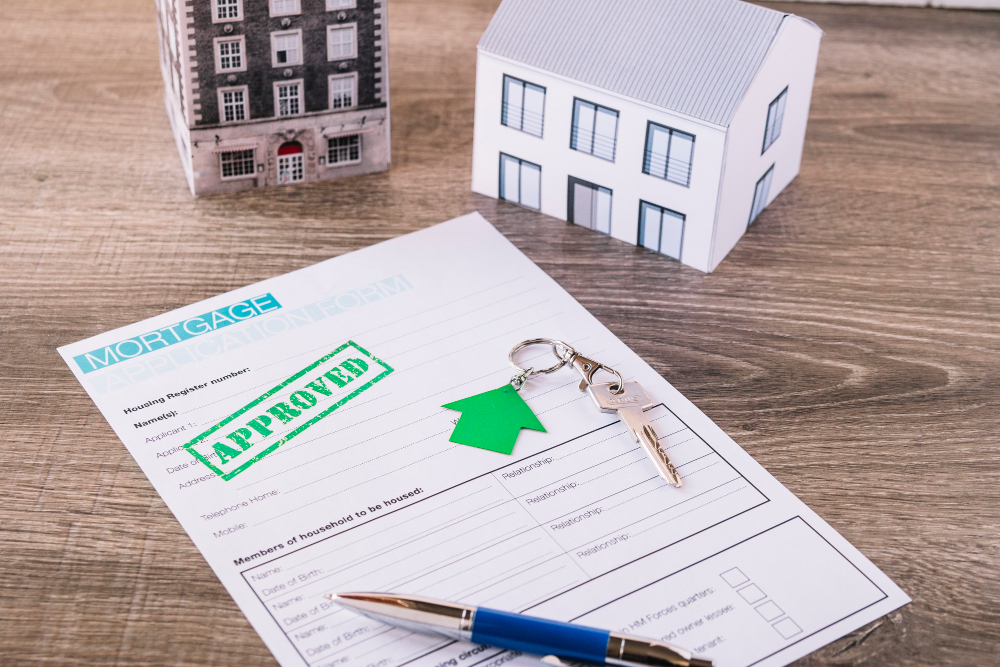
If you’re interested in purchasing a pre-owned subsidized housing unit, you must first verify that it is currently listed as such in the Property Registry. If you meet the eligibility requirements, you can apply for a mortgage for the subsidized housing unit, exploring various options until you find the one that best fits your profile.


.png)

Rúa Progreso, 27
Funded
Target
1.575.297,50 €


.png)
.png)
.png)
.png)




.avif)


