
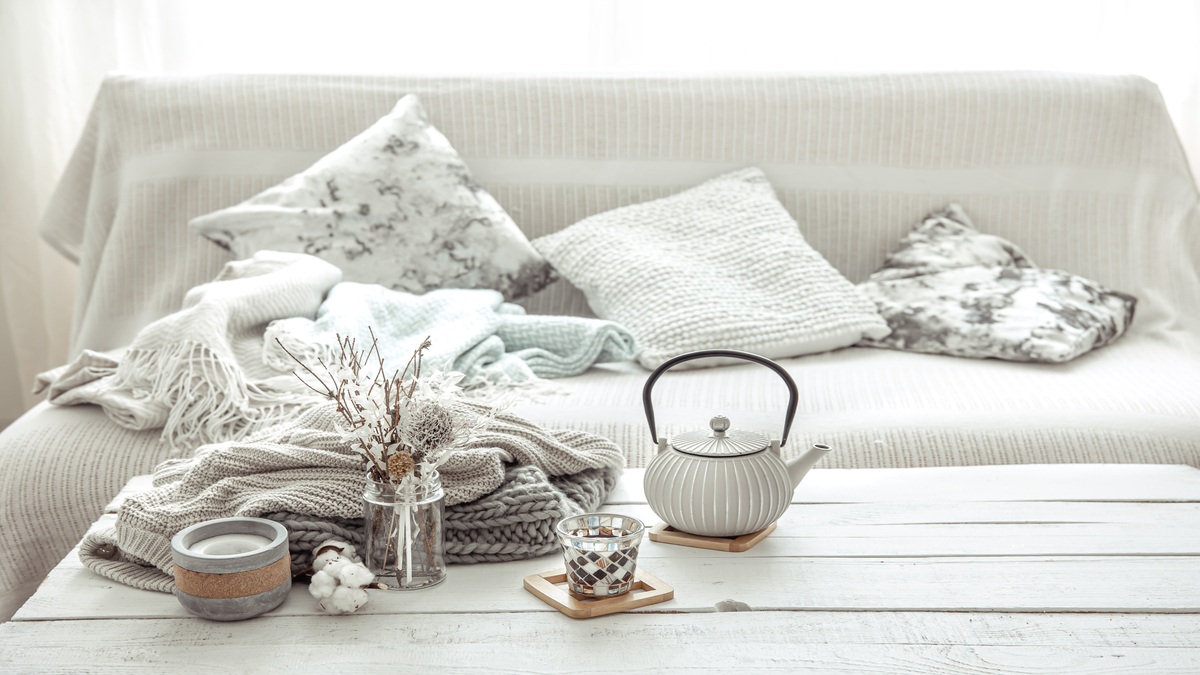
In a world that increasingly pushes us to live at an accelerated pace and succumb to the digital, it feels necessary to find a counterpoint. Discovering how to create moments of calm and well-being within the home has become a priority. The hygge style, (pronounced hoo-gah), originated in Denmark and is a philosophy of life that promotes creating cozy, warm, and joyful spaces, making it an ideal option for establishing peace in the home.
More than just a decorative trend, hygge can be defined as an attitude, a way of life that seeks to enjoy simple things, such as a hot cup of tea, a soft blanket, aromatic candles, or an afternoon of reading under dim light – scenarios of comfort and security created within the home. In this article, you'll find everything you need to know about the hygge style. We'll explore what hygge is, its origin, its characteristics, its advantages, and how you can apply it in your own home or in your second home to transform it into a haven of comfort and serenity.


The term "hygge" doesn't have a literal or exact translation into Spanish, but it can be understood to imply concepts like well-being, comfort, and warmth. It's used to represent a lifestyle that values simplicity, moments of connection with loved ones, and enjoying small daily pleasures.
While hygge is primarily associated with a decorating style, we can also consider that it encompasses other areas, such as developing habits and rituals that foster happiness, like cooking at home, gathering with friends and family to spend quality time, or enjoying nature.
Hygge is a concept deeply rooted in Danish culture. Initially, it emerged as a response to the long, dark winters experienced in Scandinavia, where people sought ways to make their homes more welcoming to cope with the harsh season.
The word "hygge" comes from Old Norwegian, from the term hyggja, which could be translated as "well-being." Denmark has been reported as one of the happiest countries in the world, according to the World Happiness Report, and it can be considered that one reason for this may be that Danish culture has adopted hygge as an essential part of its identity.
In the last decade, hygge has experienced global expansion, becoming internationally popular as a philosophy that combines design, well-being, and the practice of mindfulness, which involves appreciating and living in the moment.
You might be interested in: what a passive house is.
Hygge design prioritizes the use of wood, especially in light tones, textiles like linen, cotton, and wool, and decorative details made from stone and ceramics.
In hygge, candles are essential. Additionally, yellow or warm-light lamps are always preferred, along with indirect lighting to create intimate atmospheres.
Color palettes typically include whites, beige, light grays, and earthy, natural tones as a base, with added details in pastel colors or soft greens to create warmth.
Hygge embraces creating minimalist spaces, but unlike the often cold appearance associated with traditional minimalism, it aims to create cozy environments where excessive objects are avoided. Instead, comfortable, functional, and natural-looking furniture is used, along with plush cushions, thick blankets, soft rugs, handmade elements like wicker baskets, and other types of crafts and organic materials that provide comforting textures.
Since hygge seeks to connect with nature, easy-to-care-for houseplants or dried flowers are used, and spaces are decorated with rustic elements like logs or stones.
The comforting style of hygge helps reduce stress and anxiety, fostering relaxation and mindfulness.
Hygge designs spaces for sharing, with large sofas and tables that invite people to disconnect from digital devices and connect with each other.
Hygge can be adapted to any type of home, from large houses to small apartments, and it doesn't go out of style because it's based on simplicity.
The use of candles and warm, low lighting helps reduce electricity consumption.
You might also be interested in: smart home 2025.
Hygge shares similarities with other popular styles and can sometimes be mistaken for them, but its key differences are as follows:
Both Hygge and minimalism avoid excess, but Hygge adds warmth with textiles and personal touches. It also shares roots with Scandinavian style, but Hygge is more emotional and less aesthetic.
Boho is more colorful and eclectic than Hygge, which favors neutrals. And while comfort is sought after in both, just like in cottagecore, the latter has a more rural and vintage aesthetic.
This can be created with a comfortable armchair, a blanket, and good lighting.
Soy candles and Himalayan salt lamps are recommended.
Light wood should be chosen for flooring, and oak furniture is popular.
Rugs, cushions, and thick curtains can be added.
Decorate with family photos, favorite books, or travel souvenirs.
The kitchen is a focal point in a Hygge-style home, and it can be designed with wooden utensils, ceramic fruit bowls, and fresh herbs.
It's recommended to decorate with plants, dried flowers, or even create a small indoor garden to connect with nature from home.
Spaces are designed with large sofas or spacious tables that are ideal for family meals or board games, aiming to create memorable moments.

It's recommended to start by focusing on a single space or making small changes and introducing decorative elements; you don't need to renovate the entire house.
You can choose furniture that is ideal for relaxing.
It's recommended to use fewer decorations, but ensure they are meaningful to the individual.
You can choose light curtains to let in sunlight and its warmth.
These scents can be incorporated through candles, with fragrances like vanilla, lavender, or cinnamon.
You can start with small changes like candles, cushions, or rearranging furniture and spaces.
Deep sofas, large wooden tables, and cozy armchairs.
Yes, hygge is a flexible style that can be mixed with others, and remember that decorating your space is always up to your discretion and taste. Popular styles aren't strict rules, but you can certainly draw inspiration from them.
You can use light, natural fabrics like linen, citrus-scented candles, and take advantage of natural ventilation.
Yes, hygge can be adapted to offices and workspaces with warm lighting, plants, comfortable chairs, and plush blankets and cushions.
With Domoblock, the leading platform in real estate investment, you can start investing in the real estate market simply, securely, and without hassle. We've created a digital platform that allows you to buy fractions of real properties and earn returns like a professional investor.
You no longer need large sums or technical knowledge. We select the best high-yield properties, so all you have to do is decide how much to invest.
Thanks to blockchaintechnology, all your transactions are transparent and secure. Plus, you'll have a team to support and advise you, ensuring every step you take is firm and strategic. Start today. Visit Domoblock, register for free, and start putting your money to work in real properties!
Hygge is not just a trendy decorative style, but also a philosophy of life that encourages us to live more consciously, simply, and happily. Applying it to your spaces can help you create a peaceful sanctuary where every detail contributes to the well-being of its inhabitants.
Whether you start with candles, wooden furniture, or small daily rituals, adopting the hygge mindset can show that happiness is found in simple things. If, after reading this article, you believe hygge is right for your spaces, you can start enjoying this comfortable way of life today.


.png)

41 Av. del Oeste
Funded
100%
763.249,36 €
Target
€763,249.36


.png)
.png)
.png)
.png)




.avif)
.avif)
.avif)


