
.avif)
Market value is a fundamental concept in the world of finance and business, and it is essential for asset valuation and strategic decision-making. If you’re just getting started in the world of different types of investment projects, you’ll need to have a clear understanding of this concept. In the following post, we’ll explain it in detail—from what it is, its characteristics, who sets it, and how it’s determined, all the way to its disadvantages.


Market value is basically the price at which an asset would be traded in a competitive auction environment. In other words, it’s the price a buyer would be willing to pay and a seller would be willing to accept for an asset at a given moment. You should know that market value is a theoretical concept, since in practice it’s difficult to determine with exact precision.
Now that you understand, in a nutshell, what market value is and that it is a theoretical concept, we’ll explain what makes it so and what its characteristics are:
When analyzing the main characteristics of market value, it is helpful to examine three features that explain why no asset maintains a fixed price over time. First, its dynamic nature means that the value adjusts almost constantly as economic conditions, buyer interest, or the availability of the asset change. Second, its subjective nature means that two analysts may arrive at different figures for the same asset, as each weighs risk, growth potential, or the timing of the transaction differently. Finally, market value is always contextual: it cannot be understood apart from the sector, location, or economic conditions at the time it is calculated, which explains why the same methodology applied to two similar assets can yield very different results.
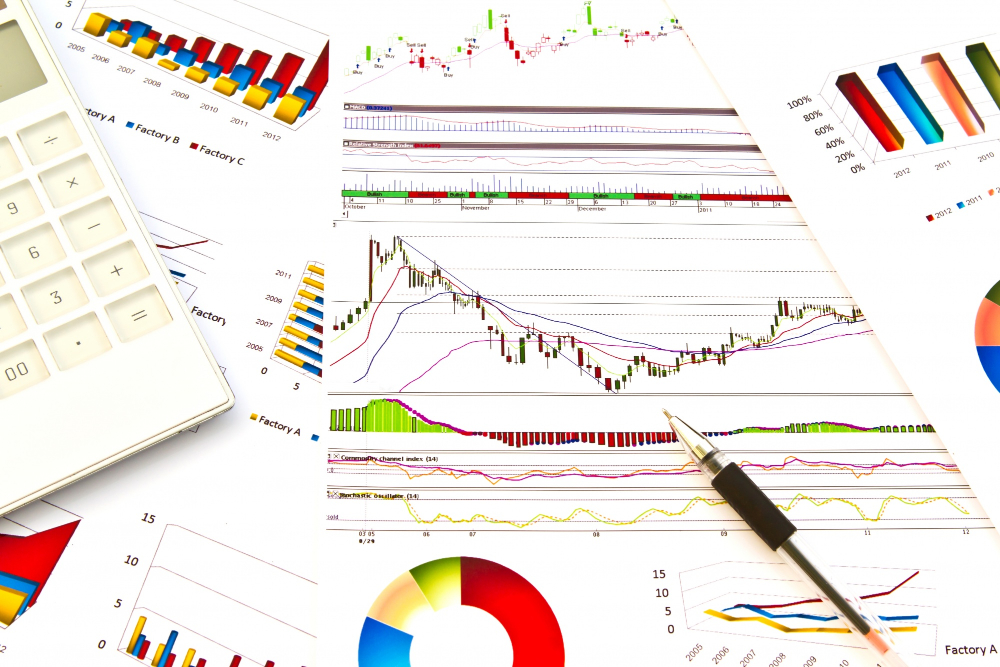
In a free and competitive market, market value is not set by any particular person or entity; rather, it results from the interaction between buyers and sellers. Supply and demand are the two main factors that determine the market value of a good or service. Always remember that supply refers to the quantity of a good or service available for sale, while demand refers to the quantity of a good or service that consumers are willing to buy.
When the demand for a good or service exceeds the supply, its price will tend to rise, since buyers are competing with one another to purchase the good or service. Conversely, when the supply of a good or service exceeds demand, its price will tend to decrease, since sellers are the ones who have to compete with one another to find buyers.
As explained in the previous section, the market value of something—such as a company, a stock, or real estate—is determined through various interactions and methods designed to estimate the price at which that asset could be traded in a free and competitive market. The most common methods for doing so are:
This method involves comparing the asset in question with similar assets that have recently been sold on the market. Why? Because the goal is to identify comparable assets in terms of characteristics, industry, location, and financial performance. Based on the sales of these comparable assets, a likely price range is established for the asset being valued.
Cash flow analysis focuses on estimating—forgive the redundancy—the future cash flows that the asset will generate and discounting them to their present value. To do this, financial projections are used based on the asset’s financial history, industry trends, and growth expectations. The market value of the asset is obtained by summing the present value of all future cash flows.
Finally, there is valuation analysis, a method that involves using complex financial models to value the asset based on a series of factors, such as its risk, growth, and potential. Among the most commonly used valuation models are the Dividend Discount Model (DDM), the Residual Growth Model (GTM), and the Comparable Companies Valuation Method (VCF).
Due to its nature and characteristics, there is no single, universal formula for calculating the market value of an asset, as it depends on the type of asset being valued and the valuation method used. If, for example, you wanted to calculate the market value of a company, you could use the following formula:
Market Value = Number of Shares Outstanding × Market Price per Share
This formula allows you to compare a company’s market value with its book value, which would reveal whether the market values the company above or below its book value.

As we’ve been explaining, calculating the market value of an asset depends on the type of asset being valued and the valuation method used. As for the actual process itself, it almost always consists of the following steps:
Beyond the general methodology, how market value is applied varies considerably depending on the sector in which it is used. In the corporate world (stock market), market value is calculated by multiplying the share price by the number of shares outstanding, and it serves as an immediate benchmark for comparing the relative size of two companies or determining whether the market is overvaluing or undervaluing a business. In the real estate sector, however, the calculation depends more on recent comparable sales in the area, the condition of the property, and local demand; therefore, two similar properties may have different market values depending on the neighborhood in which they are located. In the world of sports, the concept also applies to valuing clubs and athletes: the market value of a soccer player or a professional team is calculated based on their performance, age, potential, and the interest they generate among other clubs, combining objective data with the subjective perceptions of agents and executives.

Market value, as we have seen above, is a fundamental concept in the financial sector; although it is an estimate rather than a definitive price, it offers advantages such as:
Market value is based on actual market transactions, making it a relatively transparent and objective indicator of an asset’s true value. This facilitates the comparison of similar assets and the assessment of their investment potential.
Since it reflects the price at which an asset could be bought or sold in an open and liquid market, investors can get a clear idea of how much their investment is worth, whether it is a profitable investment, and whether it can be easily liquidated if necessary.
Economic theory suggests that efficient markets tend to reflect all available information in asset prices. This means that an asset’s market value should incorporate all relevant information about its future performance.
It serves as a reference for various financial decisions, such as buying or selling assets, setting prices for products or services, assessing a company’s creditworthiness, and allocating investment resources.
Market value almost always reflects the general sentiment toward a particular asset or sector. An increase in market value could indicate optimism, while a decrease could indicate pessimism.
It is used as the basis for various asset valuation methods, such as the comparable analysis, cash flow analysis, and valuation analysis.
It is used in financial regulation to establish capital requirements for financial institutions and to calculate capital gains taxes, among other things.

Since nothing is perfect and everything has its downside, while market value offers various advantages, it also has some disadvantages or limitations:
Finally, since the best way to understand these types of concepts is through practical examples, here are a few:
Example 1: Apple Inc. is listed on the New York Stock Exchange at a price of $150 per share as of July 20, 2023. If the company has 10,000 million shares outstanding, its market value would be $1.5 trillion.
10,000 million shares × $150/share = $1.5 trillion
Example 2: Tesla Inc. is listed on the Nasdaq at a price of $700 per share as of January 2, 2023. If the company has 300 million shares outstanding, its market capitalization would be $210 billion.
300 million shares × $700/share = $210 billion
Example 1: A house in a residential neighborhood in the city sells for $300,000. This price represents the market value of the house, as it is the price a buyer would be willing to pay for it.
Example 2: An apartment building is valued at $5 million using a comparable sales analysis. This analysis compares the building to similar properties that have recently sold in the area, taking into account location, size, features, and the condition of the building.
Domoblock, an innovative blockchain investment platform that uses advanced technology and real estate tokenization to help you grow your savings easily, securely, and conveniently. Invest in investment assets—preferably real estate—with the peace of mind that comes from working with qualified professionals, and start receiving monthly returns with different types of investments starting at €200. What other benefits does investing in Domoblock offer?
Grow your money with Domoblock.

What does market value mean?
It is the price at which buyers and sellers would agree to exchange an asset under normal supply-and-demand conditions, without external pressures that distort the transaction.
How is market value calculated?
It is calculated using various methods—comparables, cash flows, or valuation models—depending on the type of asset, as explained above.
What is the difference between assessed value and market value?
Assessed value is an administrative value set by the government for tax purposes, while market value reflects what a buyer would actually pay in a free transaction; the assessed value is usually lower.
What are the four types of markets?
Markets are generally classified as perfect competition, monopoly, oligopoly, and monopolistic competition, depending on the number of participants and their control over prices.
How can you tell if a stock will go up or down?
There is no foolproof formula; investors combine fundamental analysis (financial results, industry) with technical analysis (historical price trends), always with a margin of uncertainty.
How can you determine the market value of a house?
Through a professional appraisal or a comparables analysis, reviewing recent prices of similar homes in the area, as well as their size, condition, and location.
How do you determine value?
It depends on the asset: for a company, methods such as discounted cash flow are used; for real estate, comparables; for a product, the balance between what the market pays and its cost of production.
What is the market value of a stock?
It is the price at which that stock is trading on the stock market at a given moment, and it fluctuates constantly based on supply, demand, and investor expectations.
Is it true that the assessed value cannot exceed the market value?
In general, it should remain below it, although depending on each municipality’s property assessment review, the two values sometimes come closer than expected.
Which is higher, the assessed value or the market value?
Normally, the market value is higher, since the assessed value is updated less frequently and is based on administrative criteria.
What happens if a property is sold for more than the cadastral value?
There’s no legal issue; in fact, it’s quite common. What you should be careful about is not selling far below the tax reference value, because that could trigger a review by the tax authorities.
In summary, it’s essential to understand what market value is and how it’s calculated in order to conduct accurate and well-founded analyses, whether for investing, selling, or managing assets. Remember that market value isn’t 100% predictable, so you’ll need to work on your frustration tolerance.


.png)

Rúa Progreso, 27
Funded
Target
1.575.297,50 €


.png)
.png)
.png)
.png)




.avif)
.avif)


