
Diversifying money is a common technique among investors because it offers benefits such as risk reduction and the potential for increased profitability. By spreading your resources across various financial scenarios intended for this purpose, such as bonds, stocks, or real estate, you can achieve a more stable balance between vulnerability and gain. One way to diversify is by creating an investment portfolio; we invite you to keep reading.


An investment portfolio is a selection of financial products held in the name of an individual or a company. It is composed of different assets such as stocks, bonds, investment funds, currencies, and real estate; non-negotiable assets like works of art can also be considered.
Investors typically distribute their financial resources strategically using these assets to protect their capital and take advantage of different market opportunities. For example, if one economic sector suffers a downturn, other segments may remain stable or grow, allowing you to offset losses and continue receiving gains from another source.
The primary objective of an investment portfolio is to reduce risk and generate long-term profitability. The main idea is that capital and expected returns should not depend on a single financial resource, as the market is quite volatile.
To give you an example: Ana has 100,000 euros and decides to invest them. Instead of leaving all her money in one place, she proceeds to buy stocks, bonds, and participates in a real estate fund. If any of these assets drop in value, the others currently in play can compensate for the loss of the one that fell.
This is what an investment portfolio is about. Additionally, it allows for:
If you distribute your assets across different products (stocks, bonds, funds, real estate, among others), you decrease the negative impact that a decline in one of them might have on your total portfolio. Therefore, by distributing money among various assets and markets, you can reduce the overall risk of losing resources.
The variation in financial markets is undeniable, as the economy fluctuates across different sectors. This is why it is important to invest across different asset classes, economic segments, and even geographic zones. This diversification provides better resource management and helps face the uncertainty of sudden market crashes.
Portfolio diversification allows resources to be spread across different financial instruments, reducing exposure to significant losses if one market does not perform well. By distributing risk, you also open up possibilities to access growth opportunities on other fronts.
Today more than ever, investors know that concentrating their portfolio in a single sector is quite risky, as the variability of supply and demand is imminent.
You may also be interested in: What is undivided co-ownership?
Portfolio diversification is divided into two types depending on the level of risk the investor is willing to take: passive or active investment. We explain them briefly below:
Active Investing: The investor takes a hands-on, ongoing role in capital management by buying and selling assets to accelerate returns. This strategy demands rigorous analysis—evaluating economic trends, corporate fundamentals, and policy shifts, among other factors—as well as the expertise to determine optimal market timing and asset selection.
Some active investment instruments include: Collective Investment Funds, active stock investment, active stock index investment, cryptocurrency investment, active currency investment, and exchange-traded funds.
Passive Investing: In passive investing, the objective is to mitigate major risks and achieve steady, long-term returns by allocating capital into assets with predictable performance characteristics. Positions are maintained over extended time horizons. This approach is well suited to investors seeking a low-maintenance strategy without the demand for day-to-day oversight.
Selecting the appropriate strategy depends on your investor profile. If you possess financial expertise, risk tolerance, and the capacity for ongoing oversight, an active investment portfolio may be the right fit. Conversely, if you prioritize straightforward, long-term stability, a passive portfolio is the recommended choice.
To diversify an investment portfolio, you can combine various financial instruments, which may include the following:
These represent ownership and a share in the profits of a publicly traded company. Shareholders are, therefore, partial owners of a company. This is usually one of the best investment assets, as they offer good long-term returns. The key, as we have mentioned, is to acquire shares in companies from various economic sectors (healthcare, agriculture, technology, consumer goods, among others).
These represent a loan that the investor grants to a company or government entity in exchange for the future return of funds. In other words, the investor acts as a lender, providing money in exchange for a document (a bond) that serves as proof of the debt. The bond issuer commits to paying interest on one or more specified dates and to repaying the debt on the agreed-upon date.
These are funds traded on the stock exchange that pool money from various investors into a collection of assets, which are bought and sold on the exchange just like stocks.

To create an investment portfolio in Spain, you must be clear about your objectives, the level of risk you are willing to take, and whether you wish to invest actively or passively. Here are the steps to create an investment portfolio:
Determine your financial goals by asking yourself why you want to create the investment portfolio—whether it is for a home, for retirement, or how long you can wait for results. Your choice of assets to invest in will depend on these answers.
Analyze your risk tolerance and economic stability. Decide whether you want to participate actively, passively, or through a mixed approach in your investments. Keep in mind that active investment requires time, expertise, and knowledge, while passive investment can be delegated to an expert.
Decide how much you are going to invest; you do not need large amounts at the beginning. You can start with 50, 100, or 500 euros, depending on the type of asset you want to open. Design the structure of your portfolio by assigning a percentage to each asset according to your risk profile, for example: 40% stocks, 20% ETFs, 30% bonds, 10% cash.
Look for an investment platform that is easy for you to use. Some popular ones in Spain include Renta 4, ING Inversión, MyInvestor, and Indexa Capital, among others.
A baseline scenario for a novice investor: An initial investment of €10,000.
The investor diversifies their capital in this way:
This is an ideal example for beginners as it combines fixed and variable income, reducing risk through a mix of bonds and stocks. Fixed income represents the most stable and predictable investments, such as bonds, where companies pay a set amount and agreed-upon interest that does not fluctuate.
Variable income refers to those investments with higher risk because a fixed return is not guaranteed, but they offer significant potential for high gains, such as stocks.
At the beginning, poor decisions can be made, especially if there is a lack of experience or professional advice when creating an investment portfolio. It is essential to seek guidance or conduct thorough research before investing. Here are the most common mistakes to avoid when diversifying your investment portfolio:
The first mistake is not spreading resources across various assets, as putting all your money into a single one doubles the risk. We recommend always diversifying across several assets; for example, mix fixed income and variable income across different sectors and locations.
If you invest without determining what type of participation and role (active or passive) you will assume, you could face unpleasant surprises, especially if you are unaware of the risks. Evaluate whether you will be an active, passive, or moderate investor, and ensure you understand what each profile entails.
Decision-making should be driven by extensive analysis and strategy rather than emotions or following trends based on the premise that "everyone is buying."
You may also be interested in: Real estate ROI.
The investment amount depends on the platform you choose to start with. Some allow you to begin with 50 euros, while others have a minimum of 2,000 euros. In the stock market, there are no minimums, so you can start with whatever amount you wish.
An investment portfolio for beginners is usually composed of secure investments such as index funds, ETFs, or certificates of deposit (CDs); fixed-income mutual funds can also be considered.
As you gain experience, you will be able to take on a more moderate level of risk in order to achieve higher returns.
If you decide to be an active investor, you will need to be constantly involved in managing your portfolio, as you will be responsible for all the movements involved: investing, withdrawing money, switching between stocks, and other important decisions.
If you decide to be a passive investor, daily review is not required, but periodic validation is necessary.
Did you know that investing in real estate can offer great profitability? Do you want to start investing but don't know where to begin? At Domoblock, we are experts in reliable and secure real estate investments. You can start with a low amount and without complications! Contact us and take the first step toward your financial freedom.
Looking to invest in real estate without committing substantial capital? Domoblock offers an accessible solution. Through real estate tokenization, you can invest in properties starting from just €200—an asset class previously reserved for institutional and high-net-worth investors. Domoblock grants access to this market while delivering compelling target returns exceeding 10% in just 8 to 12 months. Furthermore, our platform enables efficient portfolio diversification without the complexities of conventional property acquisitions.
Whether you are an experienced investor or building your initial portfolio, Domoblock accommodates your specific investment profile. We provide tailored opportunities designed to align directly with your financial objectives. For those seeking direction, our team of dedicated advisors is readily available to guide your strategy and support informed decision-making. Accelerate your capital growth today and capitalize on the advantages of modern real estate investing.
Build your investment portfolio with Domoblock. Explore our current opportunities in Madrid real estate investment, Alicante real estate investment, Zaragoza real estate investment, and Valencia real estate investment. Discover our active projects today.
An investment portfolio is a tool that, when well-structured, can strategically grow anyone's capital. Regardless of the approach you take—passive, active, or moderate—it is important to have clear objectives. Diversifying your capital across various financial resources will allow you to reduce risks and take advantage of market opportunities.


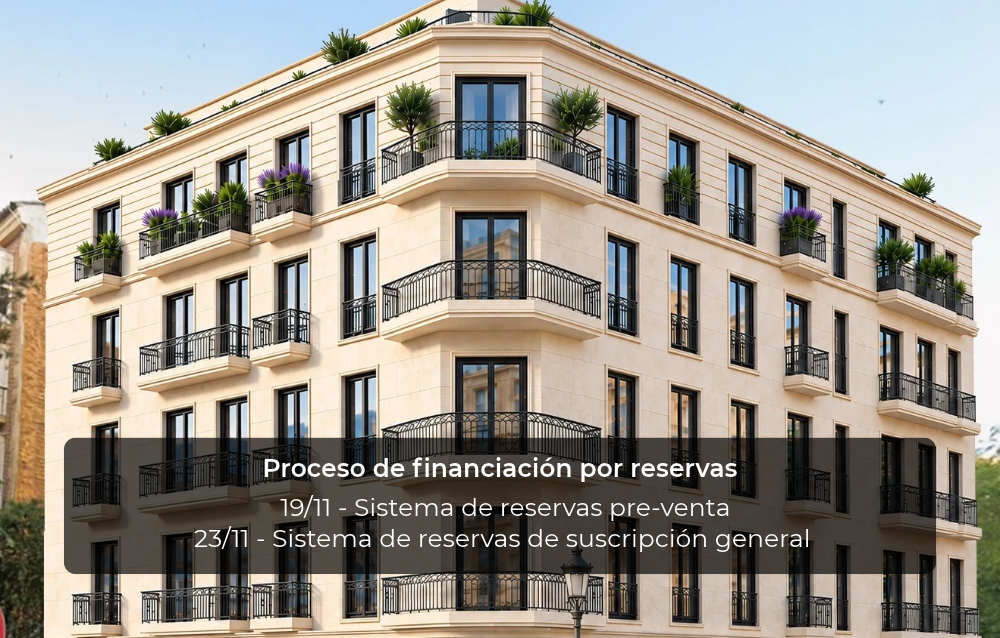

27 Lope Gisbert St.
Funded
Target
€1,922,534.26