
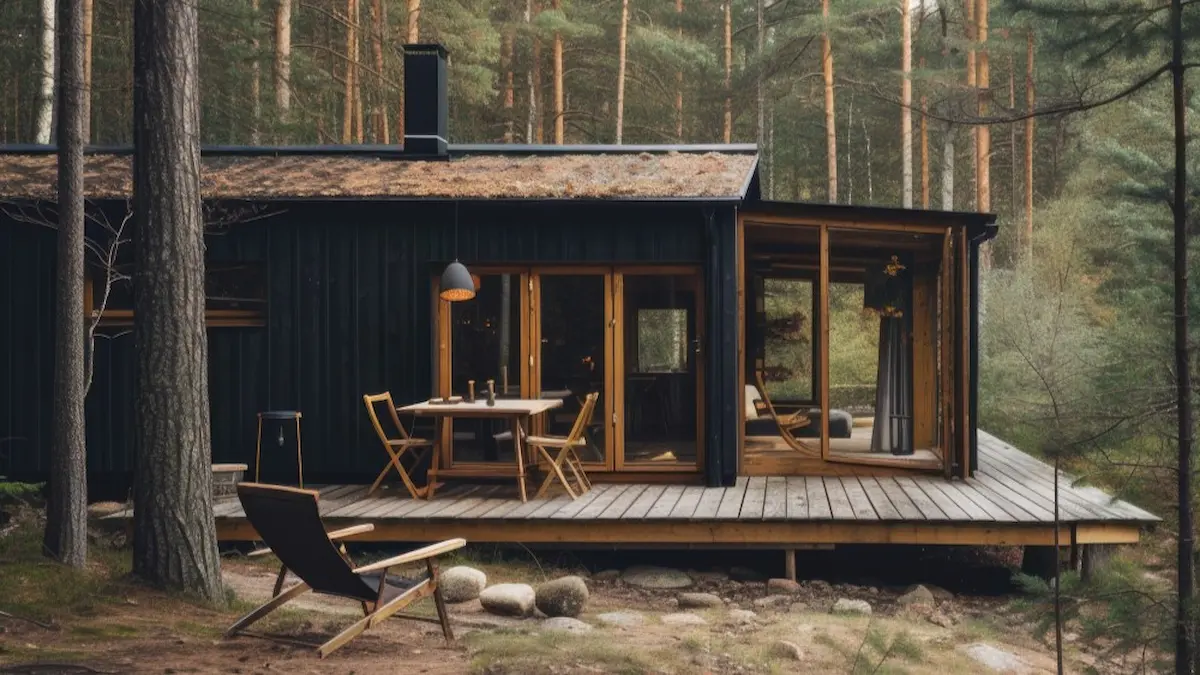
Tiny houses are homes measuring just a few square meters, almost always built in a workshop and designed to make the most of every centimeter. Many are mounted on a trailer; others are anchored to the ground like any other house.
In Spain, interest in them has grown for two reasons we see every day: the cost of housing and the desire to live with less.
At Domoblock, we analyze more than 100 properties per week, and one thing is clear to us: the price of a house is never just the price of the house itself. Let’s take a look at what they are, how much they cost, what the regulations say, and what risks they entail.

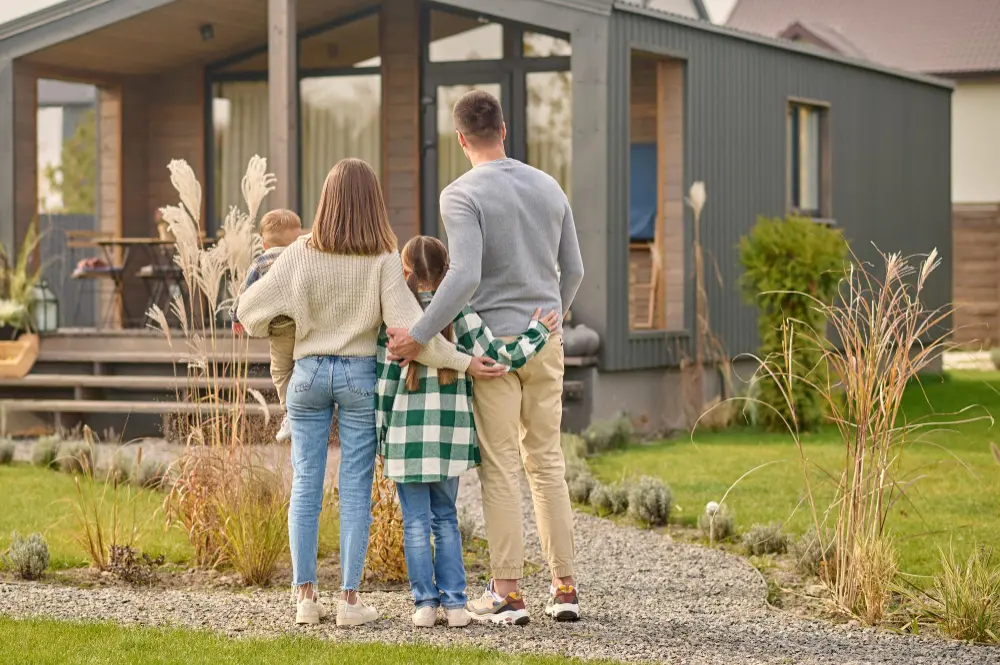
A tiny house is a small, industrially manufactured dwelling that packs everything needed for living into just a few square meters.
If you’re wondering what a tiny house is in the eyes of the law, there’s no official definition: no Spanish regulation specifies a size. What matters is whether it’s attached to the ground, what it will be used for, and on what type of land it’s placed.
The tiny house movement began in the United States in the late 1990s with a simple idea: to live with less space, fewer possessions, and less debt.
The big leap came after the 2008 crisis: with thousands of families losing their homes due to unaffordable mortgages, a small, inexpensive home that didn’t require a loan gained popularity. From there, it spread to Europe.
Not all tiny houses are the same: the type determines how you can use it and its legal status.
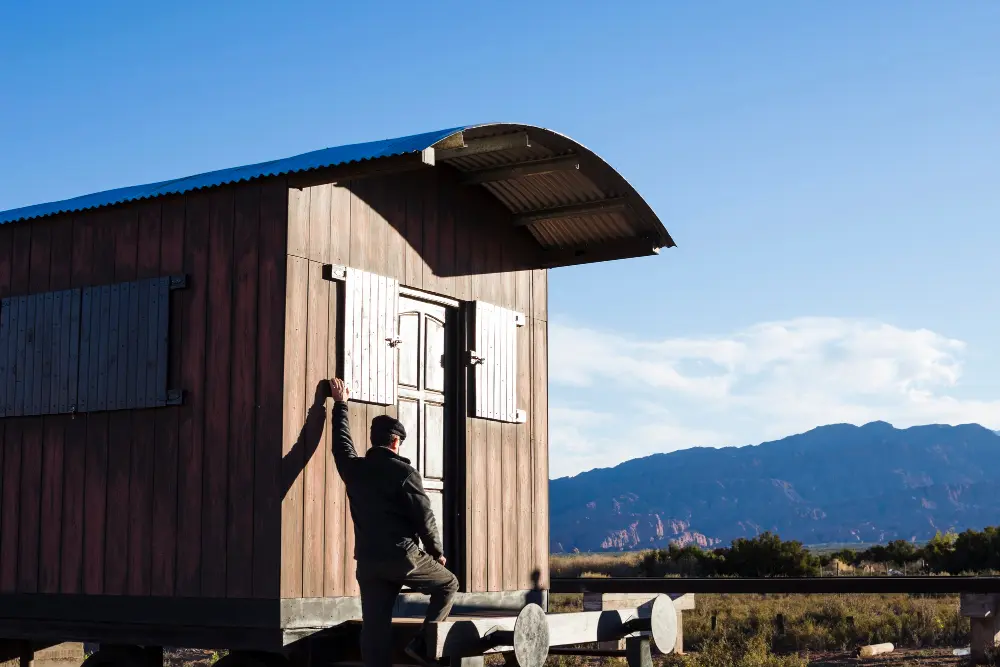
A tiny house on wheels is mounted on an approved trailer. It’s the most flexible option: you can move it to a different lot or set it up at a campground. However, it’s regulated as a trailer, with weight and size limits, its own license plate, and an annual vehicle inspection (ITV) if it weighs more than 750 kg, and it cannot be permanently occupied on just any piece of land.
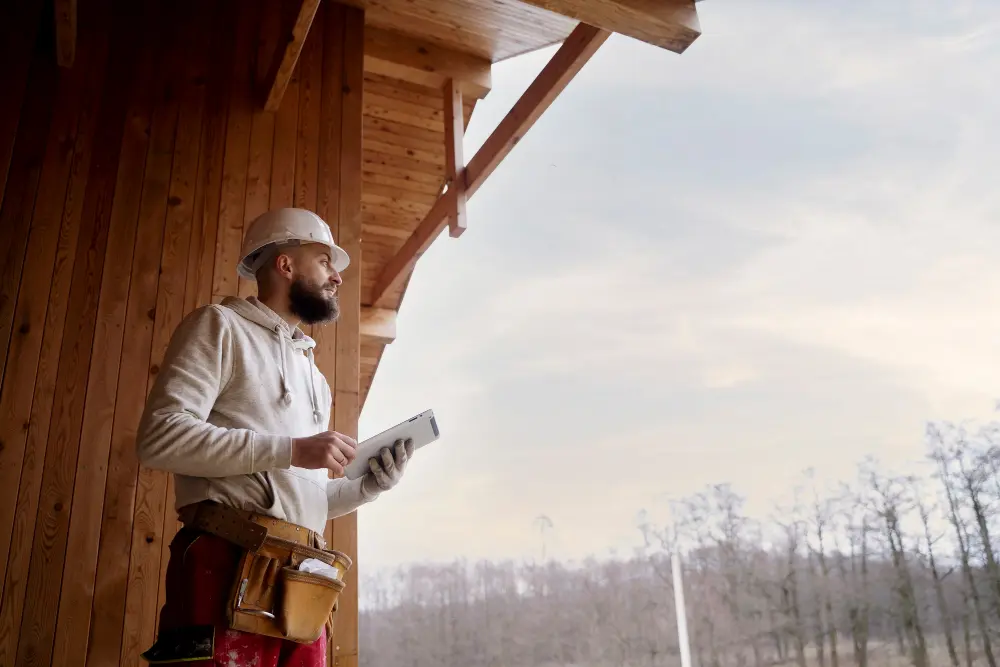
They rest on a slab or footings and are anchored to the ground. They function as a residence: they require a building plan, a permit, and residential land, but they can be registered and financed like any other house.
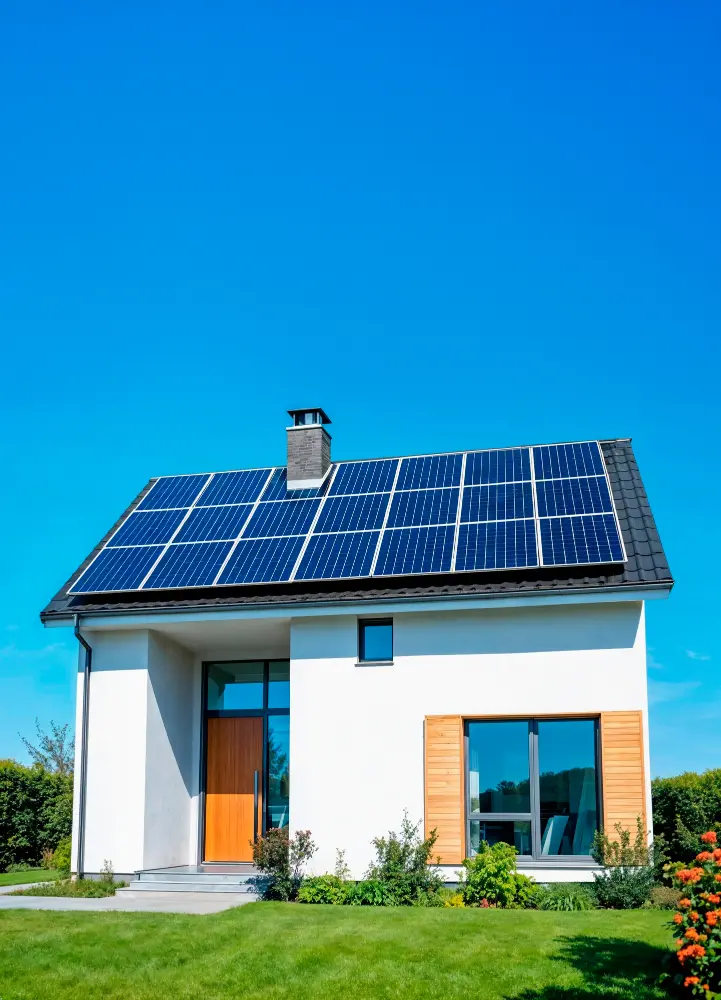
They incorporate solar panels, batteries, rainwater collection, and, sometimes, a dry toilet. They can be mobile or stationary. They reduce fixed costs, but they do not replace the building permit: doing without utility connections does not make a plot of land that is not zoned for residential use suddenly eligible for construction.
Not all small houses are “tiny houses,” nor do they receive the same legal treatment (we explain the larger option in our guide to prefabricated homes).
Tiny houses have real advantages, though almost all come with fine print:
Living in a tiny house comes with costs that aren’t listed in the catalog:
Yes, under certain conditions. There is no specific national law: it is determined by the urban planning regulations of each autonomous community and the zoning plans of each municipality. A tiny house is legal in Spain when it complies with those regulations, not simply because it meets a certain size requirement.
The Civil Code considers structures attached to the ground to be real property (Art. 334). Cadastral regulations treat any building permanently attached to the ground as a structure, even if it can be transported or dismantled (Art. 7.4.a of the Consolidated Text of the Real Estate Cadastre Law).
It is the connection to the land that matters, not the wheels: a “mobile” tiny house that has been stationary for years and is connected to utilities may ultimately be treated as a structure.
On urban residential land, a stationary tiny house is treated as a single-family dwelling. On rural land, as a general rule, it is not permitted to live there, except for regional exceptions related to agricultural operations or tourist uses. For models on wheels, the natural setting is campgrounds.
Before buying a lot, request a zoning certificate that specifies the land classification and permitted uses. This is the first screening step we apply to any property.
A stationary tiny house usually requires a technical plan, a building permit or a declaration of compliance (depending on the municipality), a first-occupancy permit or certificate of occupancy, and registration with the Cadastre. A tiny house on wheels requires an approved trailer, a license plate, an ITV inspection if it weighs more than 750 kg, and permission from the landowner or campground operator.

The price of a tiny house varies greatly. According to the catalog prices published by manufacturers selling in Spain in 2026, there are basic models for less than €20,000, domestically manufactured fully equipped tiny houses starting at around €55,000–€60,000 plus VAT, and large models costing over €100,000 [VERIFY with current rates before publishing].
But the price of the module isn’t the final cost, as we see with every renovation we do:
Illustrative example of a stationary tiny house of about 30 m² on a small urban lot (illustrative figures, not a quote):
| Item | Amount |
|---|---|
| Fully equipped house (list price) | 50,000 € |
| 10% VAT (permanent and suitable for residential use) | €5,000 |
| Urban lot | €40,000 |
| Property Transfer Tax on the lot (assumed: 8%) | €3,200 |
| Notary, registry, and administrative fees (estimated) | €1,500 |
| Foundation and utility connections | €12,000 |
| Transportation and crane services | 3,000 € |
| Design, permit, and ICIO | 4,500 € |
| Total cost | 119,200 |
The house accounts for only 42% of the total. And if it were taxed at 21%, the VAT would go from 5,000 € to 10,500 €: 5,500 € more due to a technical detail.
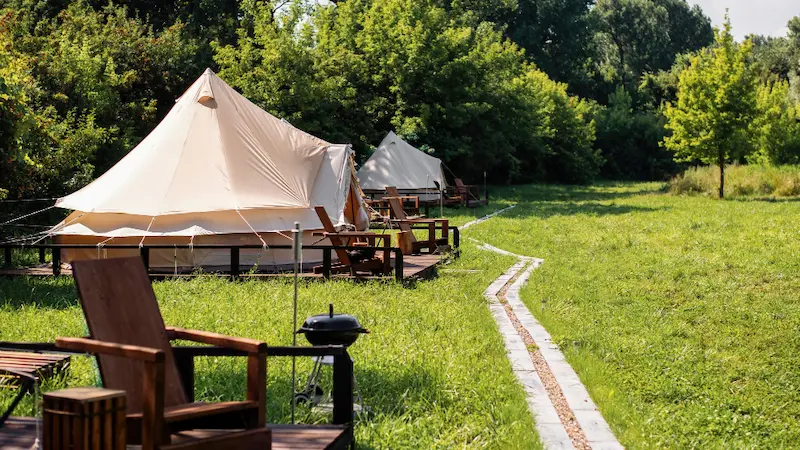
Vacation rentals of a tiny house—either on its own or as part of a glamping site—are the use case investors most often bring up. It can work, but it needs to be analyzed like any other asset.
It depends on actual demand in the area, seasonality, and actual occupancy—which is almost never what’s advertised. It also depends on costs per stay (cleaning, management, commissions) and wear and tear from guest turnover. That’s where the profit margin lies—not in the price of the house.
Tourism falls under regional jurisdiction: you must fit into a specific category (tourist housing, rural lodging, camping, or glamping), register with the tourism registry, and have a land-use designation that’s compatible with the property’s intended use. In addition, guest information must be reported to the Ministry of the Interior (Royal Decree 933/2021).
Update: The Supreme Court, in its ruling 620/2026 of May 19, struck down the single national registry for short-term leases established by Royal Decree 1312/2024, although it upheld the digital one-stop shop and the obligations of the platforms.
No return is guaranteed, and you may lose some of your principal.
Only if it is a fixed-term property that can be registered as real estate. A mortgage requires real estate as collateral, registered with the Property Registry. For mobile tiny houses, people typically turn to personal loans or financing from the manufacturer, which usually have shorter terms and higher interest rates than a mortgage.
It depends on whether it’s considered real property. If it’s permanently attached to the ground, the Cadastre treats it as a structure—even if it can be dismantled—and it’s subject to property tax. A truly mobile tiny house, in principle, is not. But if it’s been stationary for years and connected to utilities, it may end up being registered.
It depends on the maximum authorized mass of the trailer and the combined vehicle-trailer assembly. With a Class B license, you can tow a trailer weighing up to 750 kg, or a heavier one if the combined weight does not exceed 3,500 kg. For weights up to 4,250 kg, you need a B96 license, and for weights above that, a BE license. Check the current limits with the DGT.
Yes, if you live there on a regular basis. The resident registry reflects where each person actually resides, regardless of the housing’s zoning status: the INE’s current technical guidelines even allow for trailers to be listed as a residence. However, registering as a resident does not legalize the installation or prevent a possible zoning violation.
It depends on the materials, the quality of construction, and maintenance; there’s no official figure. A well-insulated structure, protected from moisture and regularly inspected, can last for decades. In the case of mobile homes, the chassis and trailer also wear out with each move. Ask the manufacturer for written warranties.
If you’re interested in investing in real estate with limited capital, there’s another option. At Domoblock, we purchase homes below market value, renovate them with energy efficiency in mind, and sell them within an estimated 8- to 12-month cycle.
You can participate in our real estate investment opportunities starting at €200, 100% online. Your investment is structured as a participatory loan, and the returns are taxed as capital gains under the savings tax bracket, with a 19% withholding tax.
A tiny house can be a good living solution or a tourist attraction, but its success depends not on the house itself, but on the land. Before paying a deposit to the manufacturer, request a zoning certificate for the lot, calculate the total cost including the land, permits, and VAT, and confirm with the city council what use you’ll be allowed to put it to. If that response isn’t in writing, you don’t have a project yet.



Pedro María Ric, 5
Funded
Target
€550,012.94