

Housing rehabilitation involves making changes to an existing building or home to improve its safety, livability, accessibility, or energy efficiency. It is not the same as a renovation, and this difference affects the permit requirements, VAT, and financial assistance.
At Domoblock, we renovate homes in every house-flipping project. As Sergio says, “there are many properties that need renovating,” and what’s most underestimated isn’t the construction work itself, but the paperwork. In this guide, we’ll go over permits, costs, financial assistance, and taxes for 2026.
Housing rehabilitation has two definitions that do not align: a construction project may be considered rehabilitation by an architect but not by the tax authorities.

The Land and Urban Renewal Act defines building renovation as maintenance work or interventions on existing buildings, their facilities, and common areas (Art. 7.2.b of Royal Legislative Decree 7/2015). This ranges from repairing a roof to installing an elevator.
For VAT purposes, a project is considered renovation only if it meets two requirements (Art. 20.1.22.B of the VAT Law, effective in 2026):
An example: if you purchased an apartment for €150,000, of which €30,000 is the land value, the renovation work would need to cost more than €30,000. This is a common mistake: replacing the kitchen, bathroom, and flooring can be very expensive yet still be classified as a “renovation” by the tax authorities.
The difference between a renovation and a rehabilitation can be seen in four key areas:
Types of renovation are distinguished by the problem they address. A single project usually combines several.
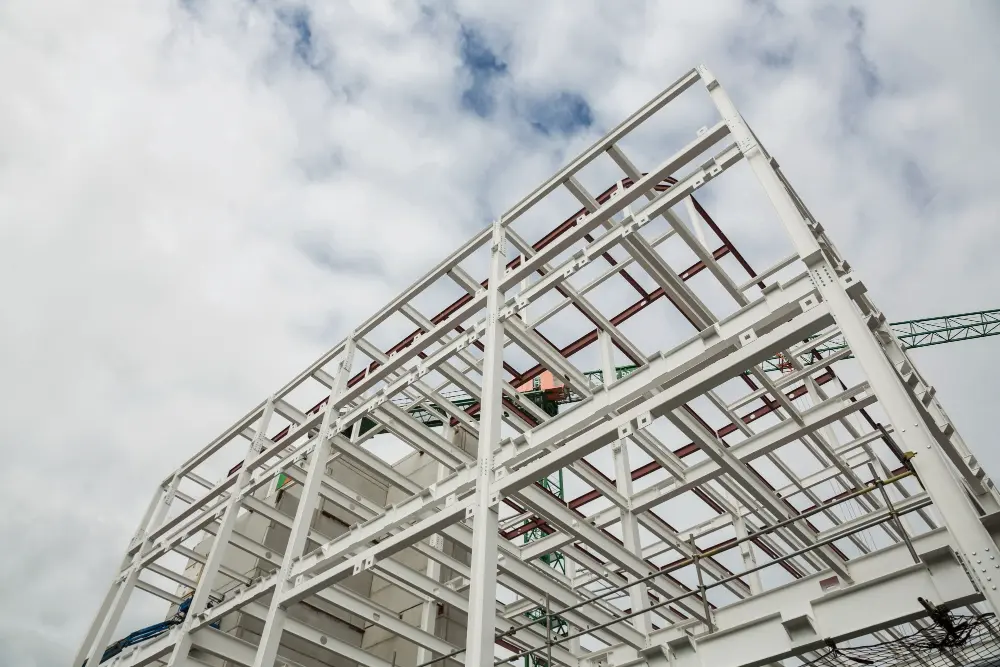
This involves reinforcing or replacing beams, floor slabs, columns, or foundations. For example, replacing wooden beams damaged by woodworm. It always requires a construction plan and is usually the most expensive and unpredictable type of work.
Reduces energy consumption through insulation, energy-efficient windows, geothermal systems, or solar panels. This is the type of renovation that qualifies for the most financial assistance. In our projects, as Sergio puts it, energy-efficient renovations “reduce emissions by 30–40% per project.”

Removes barriers: elevator, ramp, or stairlift. In a condominium, these are mandatory if requested by a resident with a disability or who is over 70 years old, subject to cost limits (Art. 10.1.b of the Horizontal Property Law).

Repair the building’s exterior: cracks, spalling, or a leaking roof. If insulation is added, it also qualifies as an energy-efficient renovation.

Addresses everything at once: structure, systems, layout, building envelope, and finishes. This is typical for a home that hasn’t been renovated in decades, and it’s the closest to our work in house flipping.
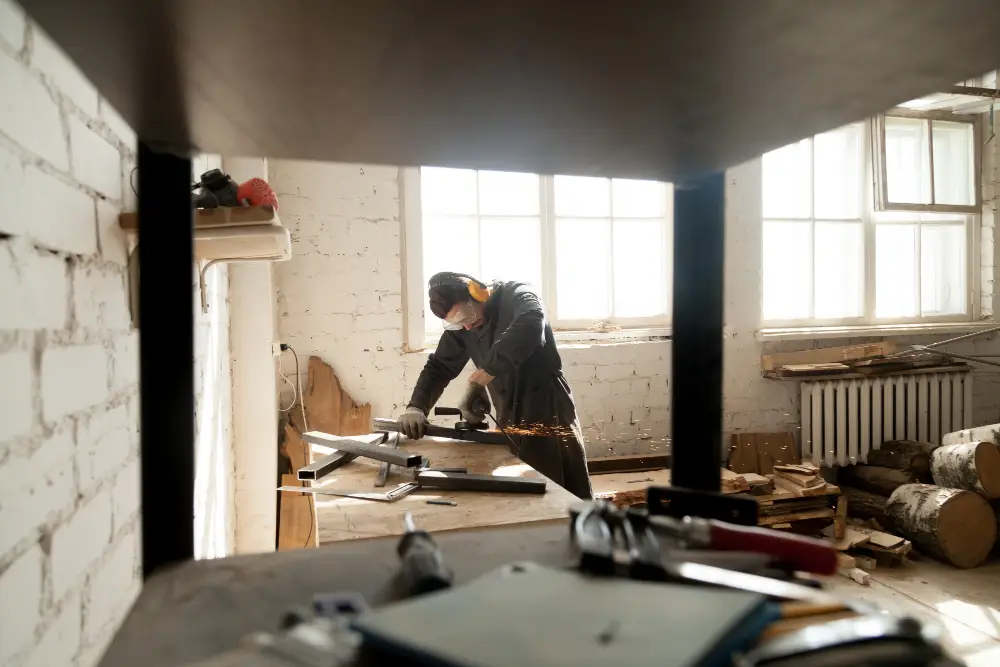
It’s best to renovate a home before a problem forces you to. Here are the signs we look for when analyzing a property:

The building permit for a renovation depends on each local municipality, but the standard procedures are as follows:
The cost of renovating a home varies so widely that an average is of little use, and there are no official statistics per square meter.
[SERGIO/ÓSCAR’S EXPERIENCE: cost per square meter for a typical comprehensive renovation in your projects, with dates.] [VERIFY: 2026 approximate prices by type of project, with sources.] Our advice: get three quotes with the same line items and set aside a contingency fund.
Grants for home renovation in 2026 are primarily based on the 2026–2030 National Housing Plan, regulated by Royal Decree 326/2026, effective as of April 24, 2026. These grants are announced and administered by the autonomous communities.

The renovation program covers urban and rural regeneration, entire buildings, individual homes, vacant homes for affordable rental, and protected buildings. Regarding housing renovation grants (Articles 104–112):
These are maximum amounts: each regional call for applications sets the specific amount.
Many regions and municipalities have their own grant programs for facades, elevators, or energy efficiency. These are compatible with the Plan’s grants if the total does not exceed the cost of the work (Art. 110 of Royal Decree 326/2026). Review the eligibility criteria: many do not allow work that has already begun.
Municipalities may grant ICIO rebates of up to 95% for projects involving solar energy or those of special municipal interest, and up to 90% for accessibility improvements (Art. 103.2 of the Law Regulating Local Finances). For the IBI, reductions of up to 50% are available for solar energy projects (Art. 74.5). This depends on each local tax ordinance.
VAT and income tax deductions significantly affect the final cost. Review them before signing the estimate.
Renovation and repair work on your home is taxed at 10% if three requirements are met (Art. 91.1.2.10 of the VAT Law, effective in 2026):
This last condition is the one that costs the most: when replacing windows, the cost of materials usually exceeds 40%, and the tax rate rises to 21%. Additionally, payment must be made by bank transfer—never in cash.
Additional Provision 50 of the Personal Income Tax Law, as amended in November 2026, includes three deductions:
Note the deadlines: the 20% and 40% options cover payments made through December 31, 2026, with a certificate issued before January 1, 2027. The 60% rate is valid through December 31, 2027. Grants are deducted from the base amount.
Illustrative example: improvement of the building envelope of a primary residence built in 1985, with assistance from the State Plan and a 40% deduction.
| Item | Amount |
|---|---|
| Work (insulation and windows) | €12,000 |
| 10% VAT | €1,200 |
| Total paid | €13,200 |
| State Plan Grant (40% of the construction cost, up to 7,500 €) | −€4,800 |
| Basis for the deduction (13,200 − 4,800 = 8,400; limit €7,500) | €7,500 |
| Income tax deduction (40% of €7,500) | −€3,000 |
| Net cost to the owner | 5,400 |
Estimated calculation: assumes the grant awards the maximum amount and a 10% VAT rate. At 21%, the total amount paid would rise to 14,520 €.
Home renovation goes smoothly when you follow this order:
Renovation as an investment is our day-to-day business: buying a home that needs work below market value, renovating it, and then selling or renting it out. As Sergio says, “the difference between the costs of purchase, construction, and sale results in a capital gain.”

The challenge lies in the details: a delay in obtaining a permit, a beam in poor condition, or a sale below expectations can wipe out the profit margin or even result in a loss. We explain this in our guides to house flipping and building flipping. That’s why Óscar insists that “choosing the right project is very important.”
Real estate investing involves risks, including the potential loss of principal, and liquidity may be limited.
It depends on the type of work and the permit. A renovation based on a self-certification can begin almost immediately; a renovation requiring a building permit must wait for the permit to be issued. Under the 2026–2030 State Plan, work must be completed within 12 months for a single-family home and within 36 months for a building (Articles 103 and 112 of Royal Decree 326/2026).
The owners, according to their ownership share, unless the articles of incorporation or an agreement establishes a different allocation (Art. 9.1.e of the Horizontal Property Law). Work necessary to maintain the building is mandatory and does not require prior approval by the owners’ association. Improvement work, on the other hand, must be put to a vote.
Yes. The 2026–2030 State Plan allows tenants whose current lease expressly authorizes them to carry out the work to be eligible for grants (Art. 105 of Royal Decree 326/2026). The property must be their primary residence. The owner may also apply, subject to the requirements of each regional call for applications.
It is the person or entity that manages the renovation on behalf of the owners. They are responsible for the projects, financing, and grants, which they may collect through an assignment of the right to receive payments (Art. 10 of Royal Decree 326/2026). They must have a signed agreement with the property owners or the homeowners’ association authorizing them to do so.
At Domoblock, we work with house flipping, building flipping, and new construction. In house flipping, we buy homes below market value, renovate them, and sell them. [CONFIRM WITH DOMOBLOCK: that there is an active purchase and renovation project.]
With our real estate co-investment opportunities, you can participate starting at €200, 100% online. It’s free for investors: you pay nothing directly, and Domoblock charges a 5% management fee, which is included in the project costs.
Real estate investing involves risks, including the potential loss of principal, and liquidity may be limited: there is no secondary market; there may be delays in construction or in the sale; you may lose some or all of your invested capital; and this capital is not covered by the Deposit Guarantee Fund. Domoblock does not offer financial instruments supervised by the CNMV.
Renovating a home can increase its value and lower your utility bills, but the outcome depends on the order of steps: first, the energy certificate and technical assessment; next, the permit and any available grants; and only then, the construction work. If you’re eligible for the 20% or 40% tax deductions, remember that the deadline is December 31, 2026.
This article is for informational purposes only and does not constitute tax, legal, or financial advice, nor is it an investment recommendation. Financial assistance depends on each regional and municipal call for applications. Past performance is not a guarantee of future results. All investments involve risks, including the partial or total loss of principal: consult a professional regarding your specific situation. Example of financial aid and tax deduction.



Pedro María Ric, 5
Funded
100%
€550,012.94
Target
€550,012.94