

A smart city improves the concept of a city through the implementation of technology that simplifies daily life. This is achieved because its main objectives include sustainability, efficiency, and overall well-being.


A smart city is a city with interconnected technological systems that allow for more efficient management of various services. In this way, it offers a better quality of life to its inhabitants by applying the following:
Therefore, it is an integrated ecosystem whose main focus is the improvement of quality of life, equity, and a sustainable future.
Smart cities have an extensive network of sensors and IoT (Internet of Things) devices. This means everyday objects are connected to the internet via various public and private networks.
This allows the central system to collect a wide variety of data for analysis and application. This enables informed decisions to be made to promote sustainability and continuously improve living conditions.
You might also be interested in: smart buildings.
The benefits offered by a smart city compared to traditional cities are undeniable. The advantages these cities offer their residents are as follows:
Therefore, these types of cities represent one of the most relevant factors for a country's growth.
For cities to be considered smart, they must possess a series of technological characteristics that integrate for the benefit of citizens. Below, you can learn about the elements to consider:
Smart urban ecosystems must have all the necessary technological elements that facilitate all aspects of their inhabitants' daily lives.
Although they may seem like similar concepts, there are notable differences between these types of cities, as you will see below:
In other words, although a smart city can contribute to sustainable development, it is not necessarily this type of city. On the other hand, a sustainable city can apply technology to achieve its goals without being a smart city.
You might be interested in: investing in sustainable projects.
Currently, there are several examples of cities that can be considered smart, as they meet all the aforementioned characteristics. Below, you will find a list of the best cities of this type:
In addition to these, other cities include Copenhagen in Denmark, Dubai in the United Arab Emirates, and Seoul in South Korea.
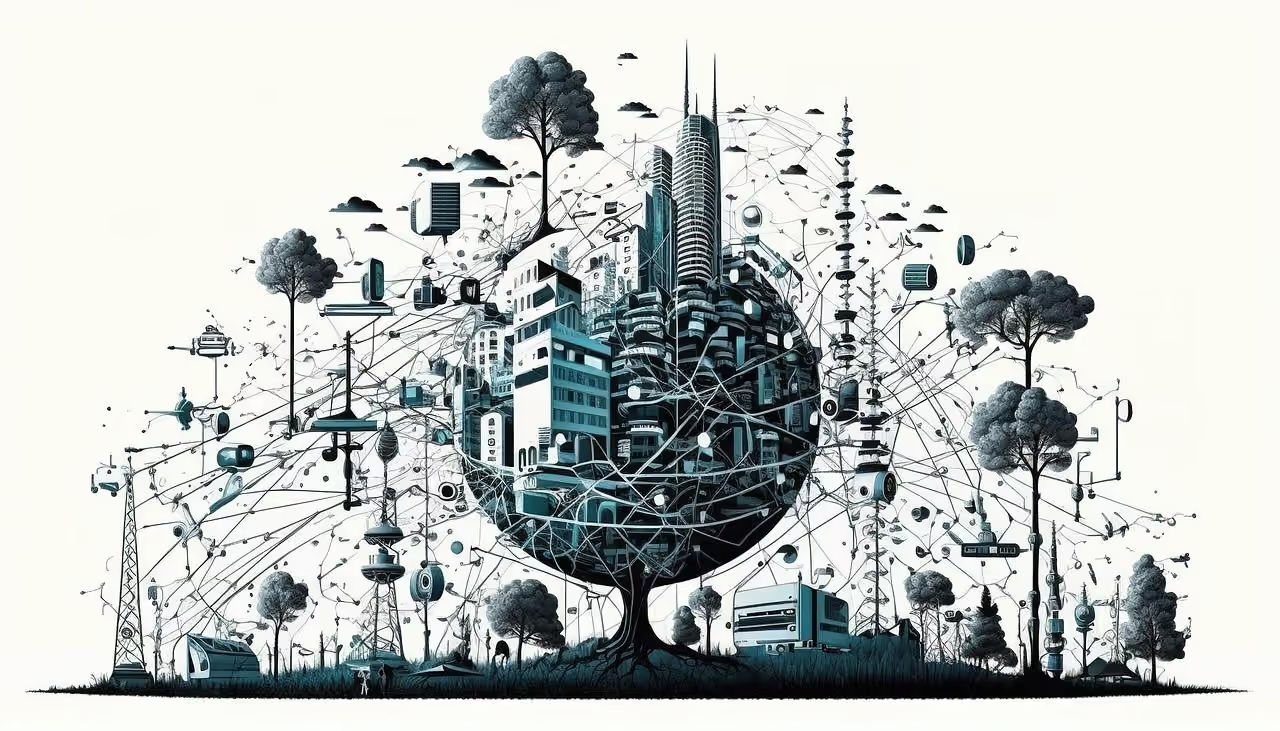
4.0 cities are constantly evolving, integrating strategies and technologies that make them more efficient. Below, we will list the main trends for 2025 and the following years:
Although smart cities offer countless advantages, they also face obstacles such as:
Smart cities can address these risks through legal frameworks, inclusive policies, and citizen participation.
The main goal of a smart city is to improve the quality of life for its citizens through comprehensive sustainability and efficiency.
Transformation is achieved through technology implementation, urban planning, and citizen participation.
Currently, Singapore is considered the smart city most advanced due to its use of AI, Virtual Singapore (digital twin), and more.
It helps improve transportation services, security, and efficiently manage energy and waste.
The main countries involved in the development of 4.0 cities are Singapore, South Korea, Japan, China, and the United States.
Funding can come from multiple sources, both public and private, as well as international collaborations.
Our platform for real estate investment invites you to be part of investing in real estate starting from €200. Domoblock promotes participation in this sector, helping you access profitable assets in flipping house and flipping building without paperwork or bureaucracy.
Are you looking for consistent returns in a short period? The projects on our platform are expert-selected, with estimated profits exceeding 10% and timelines between 8 and 12 months.
The platform's transparency, the technology of blockchain, the real estate tokenization and the assistance of investment specialists instill confidence in every action. From selection to property management, the aim is to achieve a seamless and reliable experience.
The smart cities are projects that improve urban efficiency and sustainability through the use of technology. However, there are risks and challenges to overcome to fully realize the benefits these types of cities offer.
Therefore, a balanced approach is needed between innovation, ethical regulation, and citizen collaboration.


.png)

41 Av. del Oeste
Funded
100%
763.249,36 €
Target
€763,249.36


.png)
.png)
.png)
.png)



.avif)
.avif)
.avif)


