Smart city: What it is, Characteristics, and Examples

June 30, 2026

A smart city improves the concept of a city through the implementation of technology that simplifies daily life. This is achieved because its main objectives include sustainability, efficiency, and overall well-being.


Nueva llamada a la acción

What is a smart city or smart city?

A smart city is a city with interconnected technological systems that allow for more efficient management of various services. In this way, it offers a better quality of life to its inhabitants by applying the following:

  • Environmental sustainability
  • Energy efficiency
  • Fast, comprehensive, and real-time communication.
  • Active citizen participation
  • Efficiency of public services
  • Integration of new technologies 

Therefore, it is an integrated ecosystem whose main focus is the improvement of quality of life, equity, and a sustainable future.

How does it work?

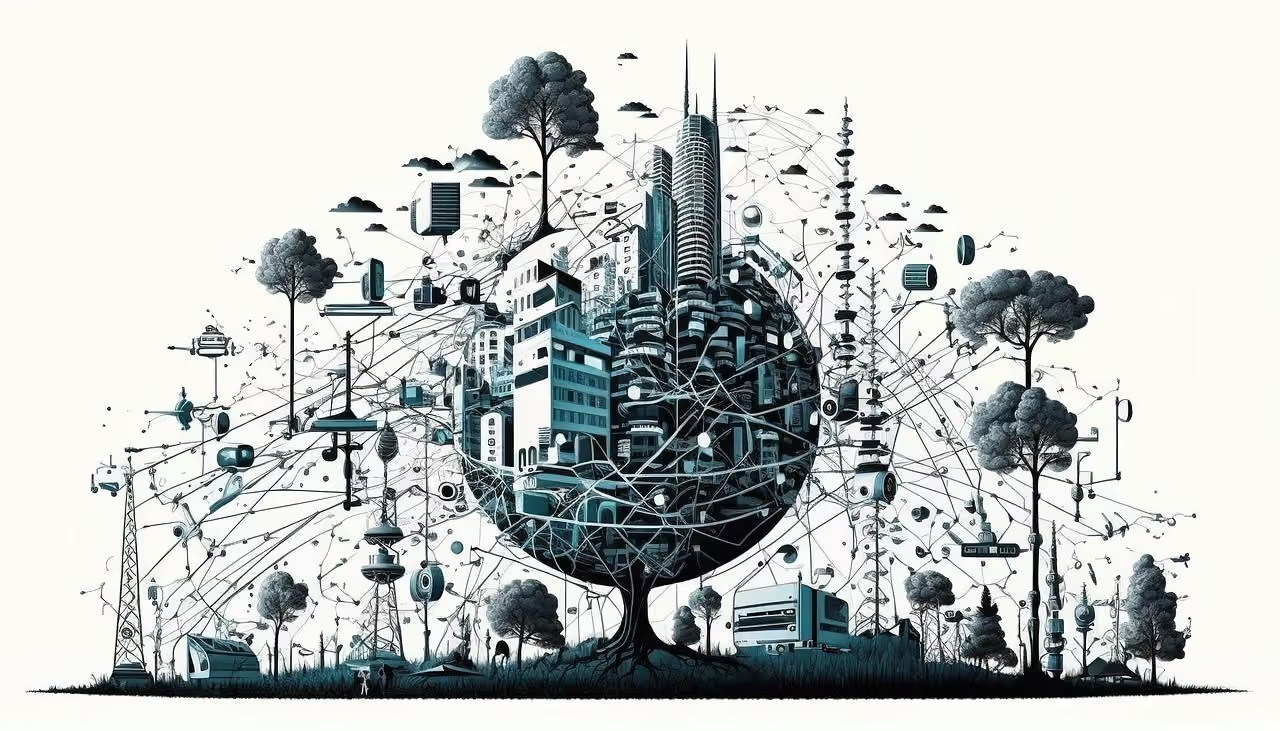
Smart cities have an extensive network of sensors and IoT (Internet of Things) devices. This means everyday objects are connected to the internet via various public and private networks. 

This allows the central system to collect a wide variety of data for analysis and application. This enables informed decisions to be made to promote sustainability and continuously improve living conditions. 

You might also be interested in: smart buildings.

What are the advantages?

The benefits offered by a smart city compared to traditional cities are undeniable. The advantages these cities offer their residents are as follows:

  • Promotes energy efficiency. Through specific technologies, smart cities optimize energy use, reduce consumption and emissions, and improve air quality.
  • Implements sustainable mobility. These cities promote the use of advanced and eco-friendly transportation, and they have an efficient traffic management system.
  • Enhances security. Thanks to various devices like sensors or surveillance cameras, combined with data analysis, there is a more effective response.
  • Improves waste collection. In a digital intelligent systems are also applied for waste collection and recycling, to reduce environmental impact.
  • Service Optimization. Technology allows for improved management of various public services such as street lighting, water, and internet, among others.
  • Encourages Citizen Participation. Digital cities implement easily accessible platforms for citizens to actively report incidents.

Therefore, these types of cities represent one of the most relevant factors for a country's growth. 

What should a smart city?

For cities to be considered smart, they must possess a series of technological characteristics that integrate for the benefit of citizens. Below, you can learn about the elements to consider:

  • Advanced Technology. Modern technology such as IoT, sensors, and data networks are applied to gather information and make continuous improvements. 
  • Sustainable Transportation. The use of eco-friendly transportation is implemented, which allows for emission reduction and improved mobility.
  • Resource Optimization. Smart cities manage energy and common resources more efficiently, in addition to implementing renewable energies.
  • Optimal Urban Planning. Data enables more informed decisions for urban planning and development.
  • Security and Connectivity. This type of city uses interconnected security and communication networks to protect its citizens.
  • Sustainability. They implement sustainable technologies and practices to reduce the effects of human activity on the environment. 
  • Health and education. Technology also provides effective solutions to optimize the health and education sectors.

Smart urban ecosystems must have all the necessary technological elements that facilitate all aspects of their inhabitants' daily lives.

Differences between a sustainable city and a smart city

Although they may seem like similar concepts, there are notable differences between these types of cities, as you will see below:

  • Sustainable cities focus on the environmental aspect, while the priority of smart cities is technology.
  • A sustainable city seeks the global benefit of all citizens, whereas smart cities do not include all social groups.

In other words, although a smart city can contribute to sustainable development, it is not necessarily this type of city. On the other hand, a sustainable city can apply technology to achieve its goals without being a smart city.

You might be interested in: investing in sustainable projects.

Nueva llamada a la acción

Examples of smart cities around the world

Currently, there are several examples of cities that can be considered smart, as they meet all the aforementioned characteristics. Below, you will find a list of the best cities of this type:

  • Singapore (Singapore). It is the leading city in this area thanks to its autonomous transport systems, service optimization, and virtual urban planning project.
  • Barcelona (Spain). This city implemented IoT for various management tasks, solar energy application, among other technological elements.
  • Amsterdam (Netherlands). It enabled citizen participation in innovation, has a specific platform for data sharing, and applies technology in public services.
  • Tokyo (Japan). It uses AI to predict potential natural disasters, implements 5G technology, and features smart, self-sufficient buildings.

In addition to these, other cities include Copenhagen in Denmark, Dubai in the United Arab Emirates, and Seoul in South Korea. 
The future of smart cities: Trends for 2025

C:\Users\Petrovik\Desktop\Redactores Alfa\Smart city\Smart city 3.jpg

4.0 cities are constantly evolving, integrating strategies and technologies that make them more efficient. Below, we will list the main trends for 2025 and the following years:

  • Artificial Intelligence applied to integrated management.
  • Virtual replicas for prediction and analysis to improve cities (Digital Twins).
  • Optimized interconnectivity through the 5G network.
  • Self-sufficient buildings and ecological architecture.
  • Application of the 15-minute City concept (access to essential services within 15 minutes for citizens). 

Challenges and obstacles for smart cities

Although smart cities offer countless advantages, they also face obstacles such as:

  • Concerns about mass surveillance, misuse of information, and the risk of cyberattacks.
  • High costs for implementing various technologies.
  • Unequal access to technology.
  • Difficulties integrating different systems.
  • Generation of electronic waste as obsolete technologies grow.
  • Governance and citizen participation issues.
  • Excessive reliance on automated systems.
  • Adaptation to natural risks.
  • Recurring costs for maintenance and updates.
  • Ethics and biases in the application of artificial intelligence in these cities.

Smart cities can address these risks through legal frameworks, inclusive policies, and citizen participation. 

Frequently asked questions

What is the goal of a smart city?

The main goal of a smart city is to improve the quality of life for its citizens through comprehensive sustainability and efficiency.

How does a city transform into a smart city?

Transformation is achieved through technology implementation, urban planning, and citizen participation.

What is the first smart city in the world?

Currently, Singapore is considered the smart city most advanced due to its use of AI, Virtual Singapore (digital twin), and more.

What role does AI play in a smart city?

It helps improve transportation services, security, and efficiently manage energy and waste.

Which countries lead the development of these cities?

The main countries involved in the development of 4.0 cities are Singapore, South Korea, Japan, China, and the United States.

How is a smart city?

Funding can come from multiple sources, both public and private, as well as international collaborations.

Domoblock, accessible, digital, and secure real estate investment

Our platform for real estate investment invites you to be part of investing in real estate starting from €200. Domoblock promotes participation in this sector, helping you access profitable assets in flipping house and flipping building without paperwork or bureaucracy.

Are you looking for consistent returns in a short period? The projects on our platform are expert-selected, with estimated profits exceeding 10% and timelines between 8 and 12 months. 

The platform's transparency, the technology of blockchain, the real estate tokenization and the assistance of investment specialists instill confidence in every action. From selection to property management, the aim is to achieve a seamless and reliable experience.

Nueva llamada a la acción

Conclusion

The smart cities are projects that improve urban efficiency and sustainability through the use of technology. However, there are risks and challenges to overcome to fully realize the benefits these types of cities offer.

Therefore, a balanced approach is needed between innovation, ethical regulation, and citizen collaboration.

Sergio Navarro

Expert in blockchain, investments, and personal finance

Share on your social media

Do you like what you're reading?

Subscribe to our Newsletter

Do you like what you're reading?

Subscribe to our newsletter!

En estudio

Madrid | Tres cantos

DOMO-TCA-1
Flipping building

Funded

-

-

Target

593.050,00 €

Rentabilidad estimada:
14,03%
Duración estimada
8 meses
Chat with other investors and ask your questions in our Telegram group

Related articles