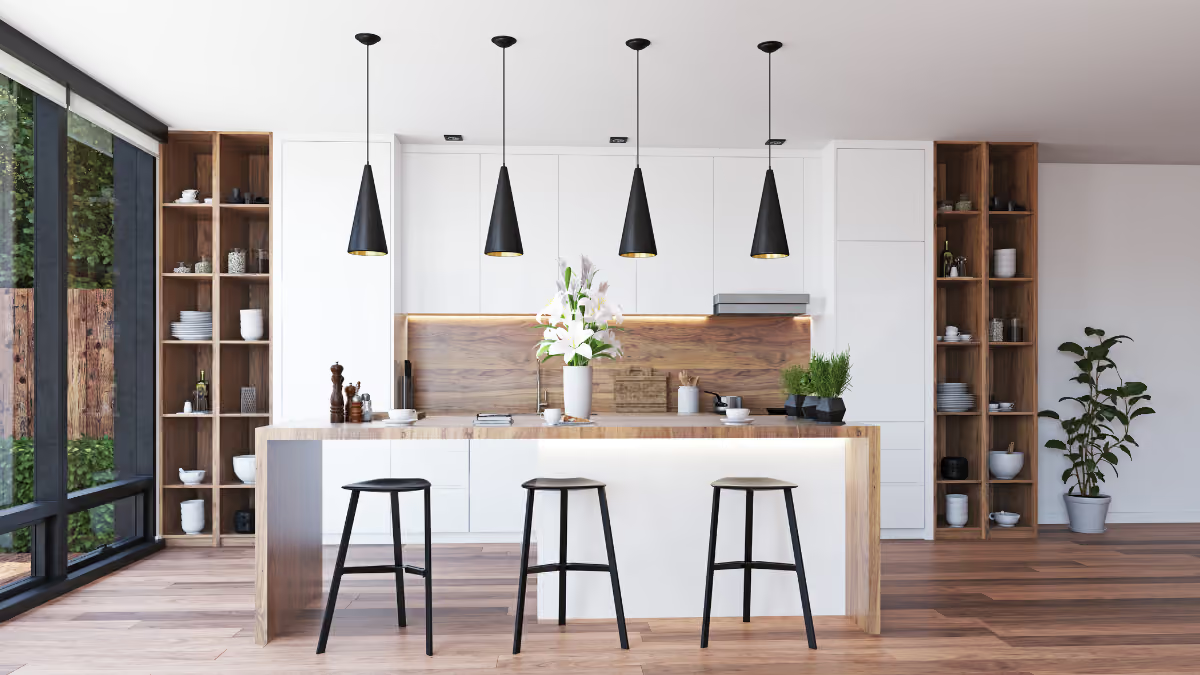

A residential complex promises a pool, gardens, and security without having to leave home, which is why it appeals to both families and investors. What isn’t always mentioned in the listing is how much these services cost each month, who makes decisions about them, and how they affect the property’s value in the long term.
In this guide, we explain what a residential complex is, how it’s organized under the Horizontal Property Law, what expenses are involved, and what we at Domoblock review before appraising a home located within one.
A residential complex is a group of homes designed and built as a single unit, sharing common areas, facilities, and services. It can consist of several apartment buildings, single-family homes, or a combination of both types within the same compound.
Unlike a standalone building, a residential complex is conceived as a whole from the outset: a single developer, a single architectural design, and an interior layout planned for multiple buildings. This holistic approach allows for the allocation of space for green areas and amenities that a small lot alone could not accommodate.
The facades, roofs, window and door frames, and materials are typically uniform throughout the complex. The homeowners’ association bylaws usually restrict aesthetic changes—such as terrace enclosures or awning colors—to maintain the visual unity that contributes to the complex’s value.
Internal roads, gardens, the swimming pool, sports courts, and the concierge office are common elements that belong to all owners in proportion to their share. Their use is shared, and their maintenance is funded by monthly homeowners’ association dues.
These are detached homes on their own lots that share roads, green spaces, or the pool with the rest of the complex. They offer the privacy of a detached home with the amenities of a gated community, although with community fees that a completely detached home would not have.
These are homes joined on one or both sides, combining a small private yard with a lower land cost than that of a detached home. They are very common in the suburbs of large cities and are in steady demand among families with children.
These consist of several apartment buildings arranged around a common open space, usually with a shared underground garage. This is the most common layout in new urban developments because it allows for high densities without sacrificing a garden or swimming pool.
They combine apartments, townhouses, and, occasionally, ground-floor commercial spaces within a single complex. This mix broadens the range of residents but complicates the allocation of expenses, since not all owners use or need the same services.
They have no perimeter fence, and their open spaces may be for public use even if they are maintained by the homeowners’ association or a property management entity. They integrate better into the urban fabric but offer less control over access and a lesser sense of exclusivity.
They feature fencing and controlled access, and their internal roads are private. The maintenance of streets, lighting, and internal utilities is the responsibility of the homeowners, which increases fees compared to a building located on a public street maintained by the city.
These include a gym, paddle tennis courts, common rooms, coworking spaces, or even a spa. These amenities increase the complex’s commercial appeal, but they also raise monthly fees and the risk of special assessments as the facilities age.
These have few homes per hectare—typically single-family homes or townhouses—and are usually located in outlying areas or in municipalities near a major city. They offer more space and tranquility, in exchange for greater reliance on cars and the sharing of expenses among fewer owners.
These are high-rise towers or multi-story buildings with common areas concentrated in the open space of the lot or on the rooftops. Common in recent urban developments, they spread expenses across many units, although the intensity of use of the facilities is higher.
These include interior streets, sidewalks, ramps, and outdoor lighting. If they are private, their maintenance, cleaning, and repairs are paid for by the homeowners’ association, and it’s a good idea to check their condition before buying because new paving can result in a significant special assessment.
These may be common areas of the complex or separate properties with parking spaces assigned to each unit. Underground garages require ventilation, fire protection, and waterproofing, and leaks are one of the most costly problems in older complexes.
They require irrigation, landscaping, and periodic pruning, and are often one of the largest items in the annual budget. A well-designed landscape with plant species adapted to the climate and an efficient irrigation system can significantly reduce these costs without compromising the quality of the outdoor environment.
Community swimming pools must comply with Royal Decree 742/2013 on technical and health criteria, as well as regional regulations, which in many cases require a lifeguard depending on the size of the pool. Water treatment, inspections, and staffing drive up costs, even if the pool is only used for a few months a year.
Playgrounds require periodic safety inspections, appropriate flooring, and liability insurance to cover potential accidents. Social spaces, such as meeting rooms or event halls, also require booking and usage policies approved by the community.
These may include a concierge service, security patrols, cameras, barriers, or visitor control. Security cameras must comply with data protection regulations, be clearly marked, and record only what is strictly necessary; their installation must be approved at a community meeting by the required majority.
The legal basis is Law 49/1960 on Horizontal Property (LPH). Article 24 of this law regulates private real estate complexes: two or more independent buildings whose owners share, as an inherent part of their ownership, common elements, roads, facilities, or services. These complexes can be organized in two ways:
There is a third common scenario in housing developments: the urban conservation entity, a public-law entity that brings owners together to maintain roads and urban services when required by the zoning plan. Its dues are mandatory and are in addition to those of the homeowners’ association, so it is advisable to inquire whether one exists before purchasing.
In practice, the governing bodies are the homeowners’ association, the president, and the property manager. Decisions are made according to the majorities specified in Article 17 of the LPH, and the rules for using the pool, gardens, or sports courts are set forth in internal regulations approved by the association.
These cover the day-to-day operation of the complex and are allocated according to each unit’s ownership share, as established in Article 9.1.e of the LPH. The amount is approved annually at the owners’ meeting along with the budget and is typically adjusted when service contracts or staff salaries increase.
The swimming pool, gardens, elevators, garage doors, and lighting have their own maintenance contracts, many of which are required by law. The more facilities the complex has, the higher this expense will be and the greater the risk of costly breakdowns.
Concierge services and security are often the most expensive line item in the budget, as they depend on salary costs that are adjusted annually. Some homeowners’ associations replace on-site security with technological systems to reduce this expense, which requires approval at a homeowners’ association meeting.
These include insurance for the complex, water for irrigation and the pool, and electricity for common areas and outdoor lighting. These expenses are sensitive to increases in energy and water prices, and their share of the budget varies greatly depending on the climate and the size of the green spaces.
These are projects not included in the regular budget, such as renovating the pool, waterproofing the garage, or restoring building facades. The homeowners’ association must maintain a reserve fund of at least 10% of its regular budget (Art. 9.1.f LPH), but this is rarely sufficient to cover a major project.
A complex of 120 units with a pool, gardens, and a concierge service has an annual budget of 216,000 €, distributed as follows:
A unit with a 0.9% fee would pay 216,000 × 0.9% = 1,944 € per year, or about 162 € per month. An equivalent apartment in a building without these services could cost less than half as much, and that difference—over the course of many years—must be offset by a higher rental or sale price for the arrangement to make economic sense.

Take your time to visit the pool, garage, and gardens, and if possible, bring a technician along. Dampness in the garage, cracks in the pool lining, or deteriorated paving are signs of potential special assessments that aren’t included in the sale price.
Ask the property manager for the property’s debt certificate and inquire about approved or pending special assessments. The buyer is liable for any unpaid fees from the current year and the three preceding years (Art. 9.1.e LPH), so this document is essential before signing.
Check whether there are any restrictions on short-term rentals, enclosing terraces, pets, or professional activities. As of April 3, 2025, opening a tourist apartment requires a favorable vote from three-fifths of the homeowners’ association (Art. 17.12 LPH, amended by Organic Law 1/2025).
The minutes reveal planned construction projects, conflicts with the developer, the level of delinquent payments, or the existence of litigation. Reading the minutes from the last three years provides a fairly accurate picture of how the homeowners’ association operates and the expenses you may face.
Check which contracts are currently in effect, their duration, and whether there are penalties for terminating them early. Some complexes are saddled with contracts signed by the developer under unfavorable terms that take the homeowners’ association years to renegotiate.
The property abstract from the Registry should list the home, its annexes, and the corresponding ownership share. Also check whether there is a housing maintenance association with additional fees, as this isn’t always mentioned in the listing.
Common areas and amenities typically increase the price compared to similar homes that lack them, especially in areas with high demand from families. However, this premium is only maintained if the complex is well-maintained and the homeowners’ association manages its finances rigorously.
A complex with a dilapidated pool, neglected gardens, or high delinquency rates can negatively impact the value of all its units. Therefore, when appraising a property of this type, we analyze both the unit and the community’s financial situation as if they were a single asset.
For an investor, the key question is whether the market actually compensates for the complex’s amenities. Using the previous example, if an apartment in the complex rents for €1,300/month and a comparable one without services rents for €1,150/month, the difference in rent (€1,800 per year) barely covers the difference in maintenance fees. The estimated net return would be similar, but with a higher risk of special assessments.
Community fees are a deductible expense from real estate investment income for personal income tax purposes (Art. 23 of Law 35/2006), which mitigates their tax impact but does not eliminate it. They must always be included in the calculation of net return, along with property tax (IBI), insurance, and a vacancy period.
Furthermore, the rental market is subject to frequent regulatory changes. Royal Decree-Law 26/2026, published in the Official State Gazette (BOE) on September 30, 2026, limits rent adjustments and is subject to ratification by Congress; therefore, any revenue forecast must take this framework into account.
At Domoblock, our proprietary tool monitors real estate portals 24/7, and we analyze more than 100 properties per week. As Óscar Peñaranda, COO of Domoblock, says, “Selecting the right project is crucial for achieving high returns in a short period of time.” In residential complexes, this selection process depends as much on the homeowners’ association’s financial records as it does on the apartment itself.
Add up the mortgage or rent, the homeowners’ association fee, property tax (IBI), insurance, and, if applicable, the maintenance association fee. That is the actual monthly cost of living in the complex, and it’s the figure you should compare with other options—not just the purchase price.
Do this at different times of day and, if possible, during the swimming pool season, to observe how the facilities are actually used and maintained. Talking to a neighbor or the building manager often provides information that isn’t included in any documents.
Ask yourself honestly whether you’ll actually use the pool, the gym, or the paddle tennis courts, because you’ll be paying for them every month regardless. If you’re looking to invest, consider whether your target tenant profile is willing to pay more for those amenities.
Request the bylaws, the internal regulations, the annual budget, recent meeting minutes, and the debt certificate. With this documentation, you can anticipate expenses, usage restrictions, and potential conflicts before committing.
Inspect the elevators, ramps, the energy performance certificates for the units, and the efficiency of common facilities, such as lighting or the pool filtration system. A well-maintained and efficient complex reduces future expenses and retains its value better.
Check the area’s zoning regulations, whether there is a homeowners’ association, and municipal ordinances regarding rental or tourist use. These regulations may limit the future use of the property and affect its profitability as an investment.
Not exactly. A “urbanización” typically refers to a developed area with streets, utilities, and lots, which may be public or private. A “conjunto residencial” is a group of homes designed as a single unit with private common areas. A gated community may be a “conjunto residencial,” but not every “urbanización” is one.
It is the legal concept defined in Article 24 of the Horizontal Property Law for two or more independent buildings that share common elements, roads, or services. It can be managed as a single homeowners’ association or as a group of associations, with a board composed of the presidents of each association to make decisions regarding common matters.
No. Common expenses are allocated according to the ownership share, regardless of whether the services are used (Art. 9.1.e LPH). An exemption applies only if the deed of incorporation or the bylaws expressly provide for it—which is common for commercial properties—or if the board approves it with the required majority.
Yes. When renting out a property, the owner grants the tenant the right to use the dwelling and the associated common areas. The homeowners’ association may regulate hours, guests, or usage schedules in its internal regulations, but it cannot exclude tenants simply because they are tenants. The lease agreement may specify who is responsible for each expense.
Yes. For income tax purposes, homeowners’ association fees, property tax (IBI), insurance, and repairs are deductible expenses from real estate investment income, according to Article 23 of Law 35/2006. Special assessments for improvements, on the other hand, are typically amortized rather than deducted in a single year.
It is a public-law entity that brings together property owners in a specific area to maintain roads, street lighting, or green spaces when required by the zoning plan. Its fees are mandatory and are in addition to the homeowners’ association fees. It’s a good idea to check whether one exists before buying.
In a residential complex, the quality of services can boost demand, but fees, maintenance, and special assessments also affect the property’s financial performance. Before investing as little as €200 in Domoblock’s tokenized real estate projects, review how these factors fit into the transaction, its projections, and its risks; the 100% online process does not eliminate the need to analyze the asset.
A residential complex offers services that a single-family home cannot provide, but each owner pays for them every month, whether they use them or not. Before buying, calculate the annual cost of the monthly fee and compare it to the difference in price or rent compared to homes without these services. If it’s not worth it, the appeal is only superficial. Remember that all real estate investments involve risks of illiquidity, delays, and capital loss, and are not covered by the Deposit Insurance Fund.


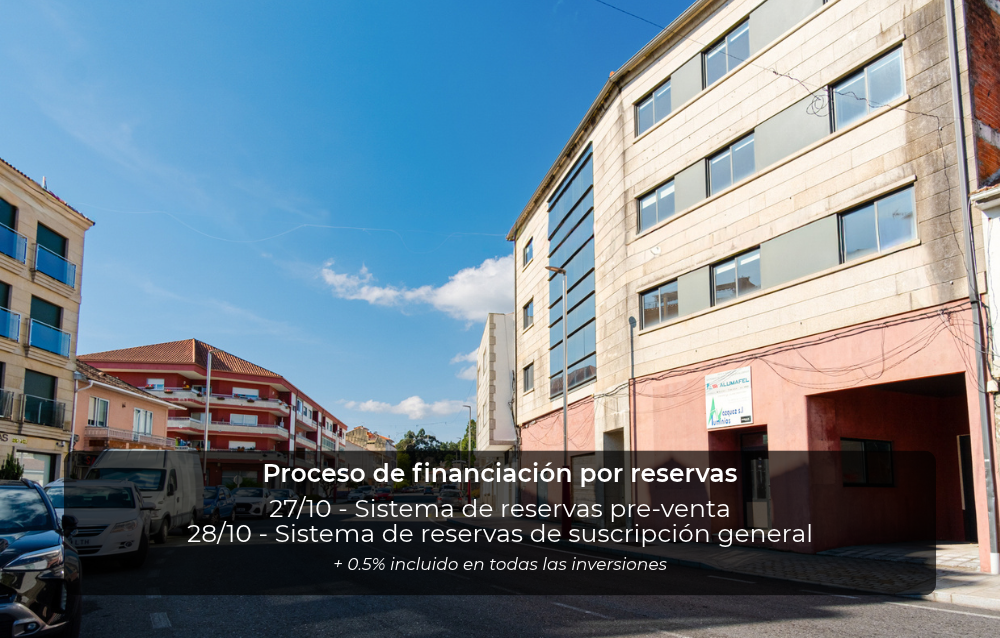

Rúa Progreso, 27
Funded
Target
1.575.297,50 €