

Purchasing a home without an initial down payment may seem utopian, but it is not impossible. Although financial institutions typically finance around 80% of the purchase price, there are various alternatives to overcome the savings barrier. For example, some mortgages cover 100% of the value (especially for bank-owned properties or specific groups such as civil servants), a second property can be offered as dual collateral, public guarantees for young people can be utilized, or negotiations can be conducted through a mortgage broker.
Some even resort to an additional personal loan to cover the down payment, although this increases the monthly installment. In any case, each option comes with its own requirements.
In this guide, we thoroughly analyze all the avenues, their requirements, and risks, so that you know how to buy a house without savings in a realistic and secure manner.


Yes, it is possible to buy a house without savings, but only in specific cases and with careful planning. In Spain, it is standard for financial institutions to finance around 80% of the purchase price or the appraised value, meaning the buyer must provide the remaining 20% plus the expenses associated with the transaction. Between taxes, appraisal, notary fees, and registration, it is advisable to have an additional 10% to 12% of the property price available.
This means that, in a traditional purchase, the buyer usually needs nearly 30% of the property's value before signing. For a €200,000 home, we are talking about approximately €60,000 for the down payment and expenses. This is precisely the barrier that prevents many people with stable incomes but insufficient savings capacity from accessing homeownership.
However, there are exceptions. Some banks may finance more than 80% when the buyer's profile is highly solvent, when public or private guarantees are available, when purchasing a bank-owned property, or when additional collateral is provided. There are also formulas that allow for delaying the purchase or accumulating part of the money gradually, such as rent-to-own agreements or off-plan housing.
In a standard transaction, the buyer needs three major blocks of funds: the down payment, taxes, and closing costs. The down payment usually represents 20% of the property price, as the bank typically finances 80%. Taxes depend on whether it is a new or second-hand property. For new homes, the general VAT is 10%, plus the Stamp Duty (Impuesto de Actos Jurídicos Documentados). For used homes, the Property Transfer Tax (Impuesto de Transmisiones Patrimoniales) is paid, which varies by autonomous community and usually ranges between 6% and 10%.
In addition, one must account for notary fees, registration, administrative agency fees, appraisal, and potential brokerage fees. Although the bank covers some mortgage-related expenses, the costs of the sale and purchase remain the buyer's responsibility.
Therefore, when someone seeks to buy without savings, they usually need to solve two distinct problems: how to cover the down payment and how to pay the initial expenses.
Standard financing is around 80% of the sale price or the appraised value. In some cases, the bank uses the lower of the two values as a reference. For example, if you buy for €220,000 but the appraisal comes in at €200,000, the institution may calculate the 80% based on €200,000, not €220,000. This forces the buyer to provide more money.
Mortgages exceeding 80% exist, but they are not the norm. As of June 2026, some institutions such as Ibercaja, imagin, ABANCA, Unicaja, ING, and Kutxabank could reach 100% in certain cases, although always with specific requirements and not as a general option for every buyer.
Public guarantee schemes are also on the rise. In these cases, the government guarantees a portion of the loan that the bank would not normally cover, making it easier for the buyer to access higher financing. Even so, this does not mean the buyer can overlook the associated costs.
Additional costs are one of the most underestimated factors. Even if you secure full financing, you will typically still need to pay for taxes, notary fees, property registration, appraisals, and other transaction costs. A 100% mortgage usually covers the price of the property, not all the expenses derived from the transaction.
The most significant costs include:
It is prudent to always calculate an additional buffer. Buying at your limit can leave you without a margin for moving expenses, renovations, furniture, homeowners association fees, insurance, or unforeseen events.
These are the best-known alternative for buying a home without a down payment. They allow you to finance the entire price of the property, avoiding the 20% initial contribution required for a conventional mortgage. However, they are not easy products to obtain.
This type of financing entails higher risk for the bank because the buyer begins the transaction without contributing their own capital. For this reason, the institution usually analyzes the profile in greater detail: income, job stability, seniority, existing debt, available savings for expenses, contract type, age, credit history, and property value.
It is a mortgage loan that covers the entire purchase price or the appraised value of a property. It should not be confused with a mortgage that covers "everything": it typically does not include taxes or transaction costs.
It can be obtained, above all, by those with a very solid profile. For example:
Requirements may vary, but several criteria are commonly requested:
Financing 100% of a property has an obvious advantage: it allows for an earlier purchase. However, it also carries clear risks. The first is that the initial debt is higher. The more money you borrow, the higher your monthly payment will be and the more interest you will pay over the life of the loan.
The second risk is the lack of a financial buffer. If you buy without savings and a repair, an unexpected assessment, or a drop in income occurs, you may be left with no room to maneuver. Furthermore, if property prices fall, you could owe the bank more than the house is worth during the first few years.
The third risk is accepting poor terms due to urgency. This may involve higher rates, more cross-selling requirements, mandatory insurance, or fees that increase the cost of the transaction. Before signing, it is advisable to compare the APR, not just the nominal interest rate.
Buying a bank-owned property can facilitate access to financing exceeding 80%. Financial institutions are often interested in selling repossessed properties or those from real estate portfolios, which is why they sometimes offer better mortgage terms.
This does not mean that all bank-owned properties are bargains or that all allow for full financing. However, it can be an interesting avenue for buyers without a down payment, especially if the bank is looking to offload a specific asset.
When a property belongs to a bank or is managed by an affiliated company, the institution has a dual interest: selling the home and providing the financing. This can result in greater flexibility, a higher loan-to-value ratio, or terms tailored to the buyer.
Banks can offer mortgages specifically for these types of properties and finance more than the standard 80% because they are motivated to divest these assets.
It is also possible that the price is adjusted relative to the market, which improves the ratio between the appraisal and the purchase price. If the appraisal is higher than the agreed price, the bank may view the transaction more favorably.
The primary advantage is the possibility of obtaining more financing. For someone without savings, this can make the difference between being able to buy or not.
Other potential advantages include:
Even so, it is advisable to compare. A bank-owned apartment is not always cheaper. The price must be analyzed against similar properties in the same area, with the same condition and comparable features.
Buying a bank-owned apartment requires a thorough review of the property's legal and physical condition. Some may require significant renovations, have prior occupancy, utility issues, outstanding community fees, or liens that must be cleared before signing.
Before proceeding, check:
High financing is not worth it if you purchase a property with hidden defects or renovation costs you cannot afford.

Rent-to-own is a hybrid between renting and buying. It allows you to live in a property for a period of time while reserving the right to purchase it later, typically at a price agreed upon from the start.
This option can be useful if you have sufficient income to cover monthly payments but have not yet saved for a down payment. Instead of waiting several years while paying conventional rent, you can agree to have a portion of your payments deducted from the final purchase price.
The contract combines two legal arrangements: a lease and a purchase option. During the agreed-upon period, the tenant pays monthly rent. If the tenant decides to buy within the specified timeframe, they may exercise their right and finalize the purchase.
This formula acts as a bridge between traditional renting and homeownership, which is particularly useful for those who lack the savings to cover the initial 20% to 25% down payment.
The contract must specify in writing:
There is no standard percentage. 100% of the rent, a portion of it, or only the initial premium may be deducted. It all depends on the agreement reached between the buyer and the seller.
For example, if you pay €1,000 per month for three years and it is agreed that 50% will be deducted from the price, you will have accumulated €18,000 toward the future purchase. If you also paid an initial premium of €10,000, you could have €28,000 already contributed.
The key is for the contract to be clear. A common mistake is to assume that the entire rent is automatically deducted. This is not the case: only what is explicitly signed for is deducted.
Rent-to-own allows you to test the property before purchasing it, get to know the area, stabilize your income, and gain time to improve your mortgage profile. It also prevents the entire rent from being "lost," provided the contract includes deductions from the final price.
Its main advantages are:
It can be particularly attractive for young couples, self-employed individuals who need to consolidate their income, or families who do not yet meet bank requirements.
The main risk is losing the premium or any advanced payments if you are ultimately unable to complete the purchase. It may also happen that the agreed price is no longer attractive if the market declines.
Furthermore, the owner may demand a rent higher than the market rate. Therefore, it is advisable to calculate whether the transaction remains attractive by considering everything: monthly rent, premium, final price, future expenses, and the projected mortgage.
A contract of this type should never be signed without legal review. The clauses must be precise to avoid disputes.
Buying off-plan property consists of acquiring a home before it is built or completed. It is a common alternative for those who do not have the full down payment available at the initial stage, as it allows for progressive payments to be made during construction.
It does not eliminate the need for capital, but it distributes it over time. Instead of providing a 20% down payment upfront, you can make payments over one, two, or three years until the keys are handed over.
Buying off-plan can facilitate planning because a reservation fee is typically paid, followed by periodic installments, with the remainder due upon signing the deed. During construction, the buyer contributes a portion of the price that will not need to be financed later.
This method allows for paying installments gradually until reaching part of the percentage that the bank typically does not finance.
For example, if you purchase a property for €240,000 and pay €30,000 in installments to the developer over two years, you will have covered a significant portion of the down payment. Upon delivery, you will only need to apply for a mortgage for the remaining amount.
New properties are taxed differently than resale properties. Generally, the buyer must pay VAT, which is usually 10%, and Stamp Duty (AJD), the percentage of which depends on the autonomous community. Additionally, there are notary, registry, administrative, and appraisal fees if a mortgage is requested.
For off-plan developments, you must also verify whether the amounts paid include VAT or if it is paid separately. This detail significantly impacts cash flow planning.
The greatest risk is that the development may be delayed, market conditions may change, or the developer may face financial difficulties. For this reason, it is essential to demand guarantees.
The Building Management Act requires developers who receive advance payments to guarantee the return of those amounts plus interest through a surety insurance policy or a joint and several guarantee, and to deposit them into a special account separate from other funds.
Before making any payments, verify:
Public aid can be an option for buyers with sufficient income but no savings for a down payment. While it does not always replace the need for savings, it can make it easier for a bank to finance more than 80% of the property value.
The key is that aid varies depending on the timing, the autonomous community, age, income, the type of property, and whether it is a primary residence.
Young people often face the greatest difficulty in saving for a down payment. For this reason, there are public guarantee programs aimed at those under a certain age and families with dependent children.
The ICO has launched a line of guarantees to facilitate the purchase of a first home, covering the 20% that banks typically do not finance.
Many autonomous communities have their own programs. Some guarantee part of the mortgage, while others reduce taxes such as the Property Transfer Tax (ITP) for young people, large families, individuals with disabilities, or buyers in rural municipalities.
It is advisable to always check regional regulations, as there are significant differences. Buying in Madrid, Andalusia, Castile and León, Catalonia, the Valencian Community, or the Balearic Islands involves different conditions. Age limits, income thresholds, maximum property prices, and the percentage guaranteed can vary.
In addition to guarantees, there may be subsidized loans, regional tax deductions, reduced rates for ITP or Stamp Duty (AJD), and aid linked to social housing. In some cases, the property must be used as a primary and permanent residence for a minimum period.
Not all aid is received before the purchase. Some are applied as tax reductions and others are received afterward, meaning they cannot always be used to pay the initial down payment. This point is essential to avoid planning errors.
To determine if you are eligible for aid, review these criteria:
It is highly recommended to consult the official website of your autonomous community, the ICO where applicable, and the collaborating banking institution.
Family assistance remains one of the most common ways to purchase a home without savings. It can take several forms: a guarantee, a loan, a gift, or using a second property as collateral.
While this is a common solution, it should not be improvised. If not properly documented, it can lead to tax, family, and financial issues.
A guarantor does not provide money to the buyer but is liable to the bank if the borrower defaults. In other words, they assume a risk without necessarily becoming an owner of the property.
A family loan involves a relative lending money to the buyer, which must be repaid under agreed-upon terms. It is advisable to document this in writing, even if there is no interest.
A gift involves transferring money with no obligation for repayment. It must be declared for tax purposes and may be taxed differently depending on the autonomous community.
Documentation is essential. A family loan should be formalized through a private contract specifying the amount, term, repayment method, and interest, even if it is 0%. It must then be submitted to the relevant tax authority.
A gift must also be declared. In some autonomous communities, there are significant tax exemptions for transfers between parents and children, but this does not mean it can be done without formal procedures.
In the case of a guarantee, the bank will include the guarantor in the mortgage agreement. It is crucial that this person fully understands what they are signing.
The guarantor may be liable with all their present and future assets if the debtor defaults, unless a limitation is agreed upon. This can jeopardize their own home, savings, or ability to obtain their own financing.
The guarantor is liable for the debt if the mortgage holder cannot pay, and to reduce risk, there is the possibility of a partial guarantee.
A partial guarantee limits the guarantor's liability to a specific portion of the debt or a set period. For example, they may guarantee only the additional 20% required to exceed 80% financing and be released once the outstanding principal drops below a certain level.
This is a more prudent approach than a full guarantee. It offers better protection for the family member and may be sufficient for the bank to approve the mortgage.
Taking out a personal loan to cover the down payment is one of the most sensitive options. While it may seem like a quick solution, it is usually a red flag for the bank.
The reason is simple: if you need another loan to provide the down payment, your actual debt level increases. The bank may interpret this as a lack of savings capacity and conclude that the transaction is too risky.
This combination involves taking out a mortgage to finance the property and a personal loan to cover the down payment or associated costs. The issue is that both loans generate monthly installments.
For example, if you pay €850 for a mortgage and €350 for a personal loan, your actual monthly commitment will be €1,200. Although each payment might seem manageable on its own, the total can exceed the recommended debt-to-income threshold.
The risk of over-indebtedness is high because personal loans have shorter terms and higher interest rates than mortgages. This significantly increases the cost of the operation during the first few years, precisely when you will also face expenses for moving, furniture, homeowners association fees, insurance, or renovations.
Furthermore, if an unforeseen event occurs, you will have two debts to manage simultaneously.
The bank may reject the mortgage if it detects that the down payment comes from a recent loan. Idealista warns that this approach can leave the buyer with an active personal loan but no approved mortgage.
It can also affect your risk score. The institution reviews bank statements, the CIRBE credit report, active debts, and financial behavior. Attempting to hide a loan is not advisable; the bank will typically detect it.
Before taking out a personal loan for a down payment, it is worth considering safer alternatives:
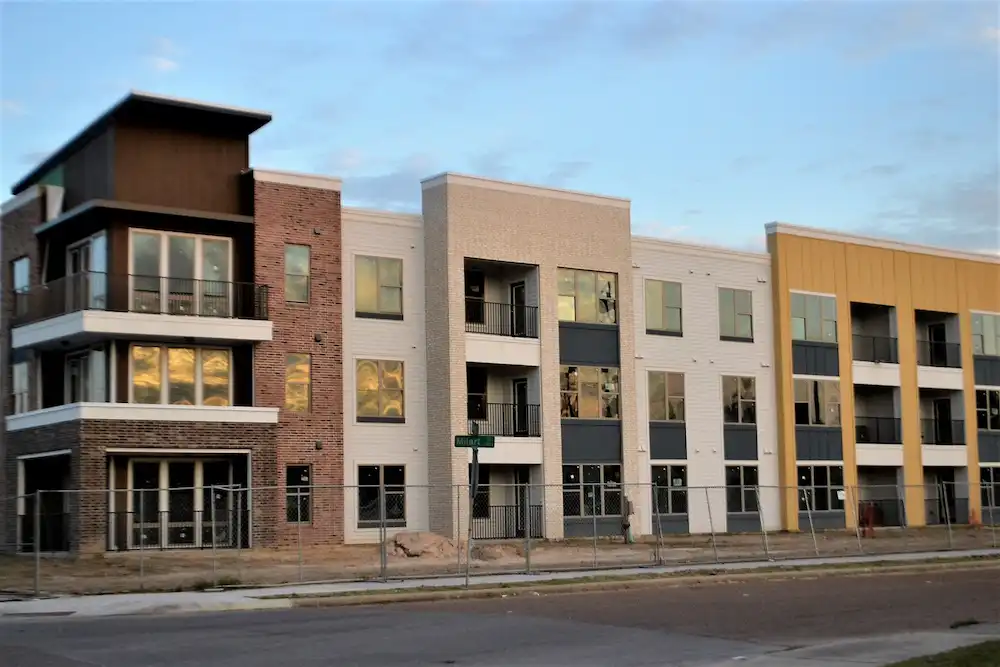
Negotiating with the seller can be helpful when you are short on the down payment. It does not always work, but in certain cases, it allows for deferred payments, a lower down payment, or flexible terms.
This approach depends heavily on the market. In high-demand areas, the seller may prefer another buyer with secured financing. In areas with lower turnover, they may be more open to flexible arrangements.
A nominal down payment involves signing a deposit contract with a smaller amount than usual. Instead of paying 10%, a lower amount can be agreed upon, provided the seller accepts.
Deferred payments allow a portion of the price to be paid after the deed is signed or in several installments. This arrangement must be thoroughly documented to avoid disputes.
Private agreements can be useful, but they must be drafted with precision. It is necessary to define amounts, dates, consequences of non-payment, guarantees, and the relationship with the public deed.
A poorly drafted agreement can cause problems if one of the parties changes their mind. Therefore, it is advisable to avoid verbal agreements or generic documents downloaded from the internet.
Legal advice is essential when agreeing to deferred payments, special deposit contracts, rent-to-own schemes, or any arrangement that deviates from a standard sale.
A lawyer or real estate advisor can review liens, draft clauses, verify taxes, and prevent an apparently convenient solution from becoming a problem.
Not everyone looking to buy a home without savings necessarily needs to live in a property they own. Some wish to enter the real estate market as an investment, generate passive income, or diversify their assets.
In such cases, there are alternatives for participating in the sector without buying an entire home or signing a long-term mortgage.
Real estate crowdfunding allows you to invest small amounts in real estate projects alongside other investors. This can include developments, renovations, asset acquisitions, or financing for developers.
The advantage is that it allows access to the sector with less capital. The drawback is that it does not guarantee real estate returns and there may be delays, defaults, or partial loss of capital. Real estate crowdlending in Spain allows participation in projects starting from small amounts, but it also involves risks such as potential defaults or failure to meet projected returns.
Fractional ownership involves acquiring an economic stake in a real estate asset. The investor does not purchase an entire property, but rather a share. Income can be generated if the property is rented out or sold at a profit.
It is important to verify whether the investment grants real property rights, corporate shares, tokens, or loan contracts. Not all structures are the same or offer the same level of protection.
Co-housing is a residential model based on communities of people who share spaces and services. It can reduce costs, foster collaboration, and offer alternatives to traditional individual home ownership.
It does not always imply full ownership. It is sometimes structured through cooperatives, right-to-use agreements, or hybrid models. It is an interesting option for those who prioritize community, sustainability, and a lower financial burden.
You may be interested in: co-housing prices.
The tokenization of real estate allows an asset or project to be divided into digital shares recorded via blockchain technology. The investor acquires tokens associated with a project and may receive returns if the project generates profits.
This is an emerging avenue that seeks to democratize real estate investment. Even so, it must be analyzed with caution: there is market risk, technological risk, regulatory risk, and project-specific risk.
Buying a home without savings can be an opportunity or a mistake, depending on your personal situation. Not having a down payment because rent prevents you from saving is not the same as buying without any financial cushion and with a mortgage payment at your limit, despite having stable income.
The main advantage is gaining access to housing sooner. If the market rises, waiting several years to save can make your desired home increasingly expensive.
It also allows you to stop paying rent and start building equity. For individuals with job stability, sufficient income, and long-term foresight, it can be a reasonable option.
Another advantage is taking advantage of public subsidies, bank-owned properties, or specific conditions for young people.
The biggest disadvantage is taking on more debt. High financing increases your monthly payment, total interest, and dependence on maintaining stable income for many years.
It also reduces flexibility. If you want to sell soon, move to another city, or face a personal crisis, a high mortgage can limit your options.
To avoid over-indebtedness, always calculate your total monthly cost, including mortgage, insurance, homeowners association fees, utilities, property taxes, maintenance, and other loans. Do not focus solely on whether the bank approves the transaction.
Best practices:
It is advisable to wait if you lack job stability, already have debts, cannot cover expenses, rely on variable income, or if the mortgage would leave you with no monthly margin.
Waiting does not always mean missing an opportunity. Sometimes it is the smartest way to buy better, negotiate from a stronger position, and avoid debt that could dictate your life for decades.
Yes, but it is not common. You can do so if you secure a 100% mortgage, a public guarantee, a family guarantee, a bank-owned property with high financing, or an alternative arrangement such as a rent-to-own agreement. Even then, you will need funds for expenses and taxes.
Yes, it is possible to buy without a guarantor if you have a very solid financial profile, stable income, low debt, and a property with a good appraisal. You can also access programs where a public administration provides the guarantee. However, if you need financing above 80%, a guarantor can increase your options.
There is no single answer because it changes depending on the timing, your profile, and the autonomous region. In 2026, institutions such as Ibercaja, imagin, ABANCA, Unicaja, ING, and Kutxabank were identified as banks that could reach 100% in certain scenarios.
The most prudent approach is to compare updated offers, consult mortgage brokers, and inquire directly about youth programs, social housing (VPO), ICO guarantees, or financing for specific properties.
For a traditional purchase, it is recommended to have around 30% of the price: 20% for the down payment and 10-12% for expenses. For a €200,000 property, this would be approximately €60,000. If you secure 100% financing, you could reduce the down payment, but you will still need money for taxes and administrative procedures.
Usually, no. It can increase your debt burden too much and cause the bank to reject your mortgage application. It should only be considered in very specific cases, with high income, clear stability, and prior financial advice.
You can consider rent-to-own, co-housing, off-plan housing, fractional real estate investment, real estate crowdfunding, or tokenization. If the goal is to invest rather than live in the property, digital platforms can provide exposure to the sector with amounts much lower than a traditional purchase.
Buying a home without savings may be possible in some cases, but it also involves meeting demanding requirements, taking on greater financial risks, and careful planning. For this reason, more and more people are looking for alternatives to enter the real estate market without needing to purchase an entire property or commit to a long-term mortgage.
The real estate market is constantly evolving, and Domoblock is positioned as a real estate investment platform designed to democratize access to digital investments. With a minimum investment of €200, you can participate in house flipping in Spain projects with potential returns exceeding 10%.
Our platform uses blockchain to ensure transparent and secure operations, allowing every transaction to be digitally backed. Furthermore, each real estate project is strategically analyzed to offer estimated recovery periods of between 8 and 12 months.
Domoblock is the ideal choice if you wish to generate passive income, diversify your portfolio, or explore new financial opportunities backed by the real estate sector.
Buying a home without savings is possible, but it should not be approached as an impulsive decision. Options exist: 100% mortgages, bank-owned properties, public guarantees, family assistance, rent-to-own agreements, off-plan housing, or negotiating with the seller. However, all of these come with conditions and risks.
The key is to analyze your situation realistically. If you have stable income, low debt, and the capacity to cover expenses, you may be able to find a viable alternative. If you have no margin, have accumulated debt, or depend on overly aggressive financing, waiting and saving may be the best decision.
Buying a home is one of the most significant financial transactions in life. Therefore, it is advisable to compare, ask questions, review the fine print, and never sign anything you do not understand. Entering the real estate market without significant savings can be an opportunity, but only if done with information, prudence, and a clear strategy.


.png)

41 Av. del Oeste
Funded
100%
763.249,36 €
Target
€763,249.36


.png)
.png)
.png)
.png)



.avif)
.avif)
.avif)


