

A shipping container home is a dwelling built from one or more steel shipping containers that have been adapted for living. Its appeal lies in its relatively low cost and the fact that construction is faster than that of a conventional home.
But the price of the shipping container is only part of the story. When you factor in the land, foundation, permits, and taxes, the container itself may account for less than half of the total cost. And before all that, there’s the crucial question: whether the land is suitable for living in it.
At Domoblock, we analyze more than 100 properties per week and have learned that the land and permits carry more weight than the house itself. With that in mind, we’ll explain what a container home is, what models are available, how much it costs, and what permits you’ll need.
If you’re wondering what a shipping container home is, the short answer is this: a home whose structure is a steel shipping container—usually 20 or 40 feet long—converted for residential use. Openings are cut for doors and windows, the structure is reinforced, it’s insulated, and water, electricity, and ventilation systems are installed.
The idea originated in logistics: shipping containers are designed to be transported stacked on top of one another and exposed to the elements, and many are taken out of service while still structurally sound. Reusing them as housing gained popularity with the rise of modular architecture and the search for more affordable alternatives.
A shipping container home follows the principles of industrialized construction but has its own unique features that you should be aware of before buying:
Container homes are often confused with other industrialized housing types. The difference lies in the starting point:
Container house models are distinguished by the number of modules and how they’re combined. The floor areas are approximate and refer to interior spaces before insulation is added.
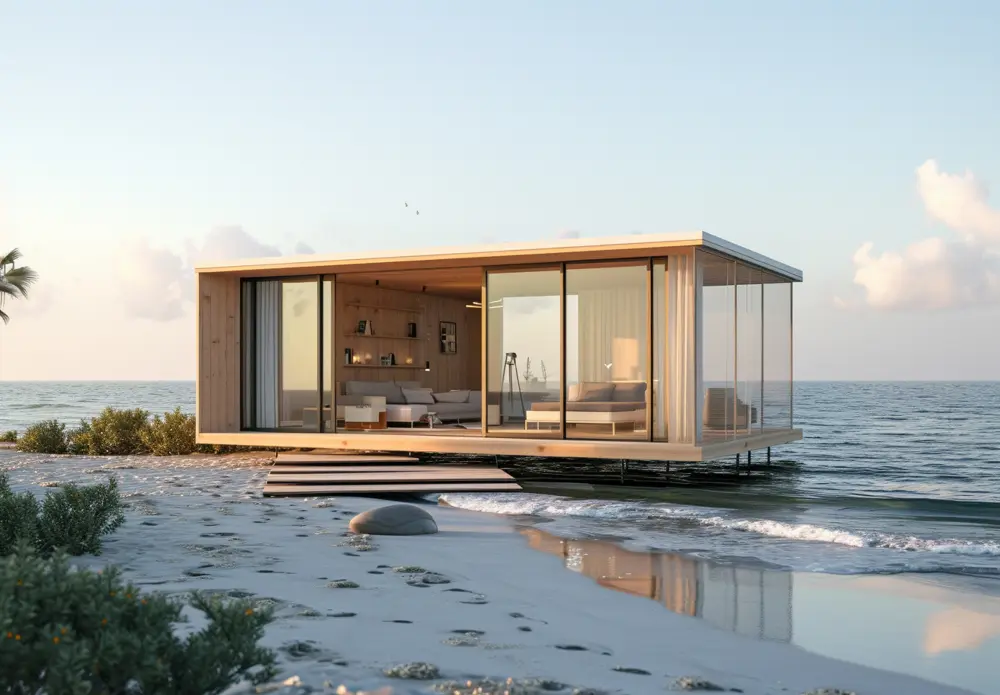
A 20-foot container provides about 14 m², and a 40-foot container, about 28 m². It works well as a studio or a one-person dwelling. It’s the cheapest option, but the most expensive per square meter: utilities and the foundation account for the same cost.
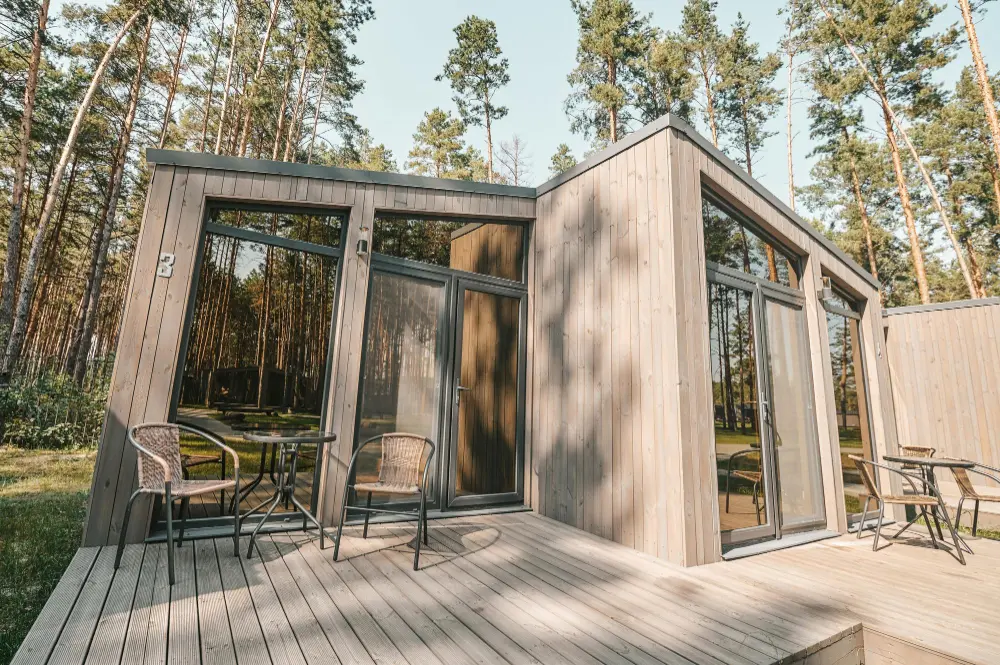
Two 40-foot containers joined side-by-side total about 56 m²: a spacious living room and two bedrooms. This is the most balanced option for a couple or a small family, although joining them requires reinforcement beams.

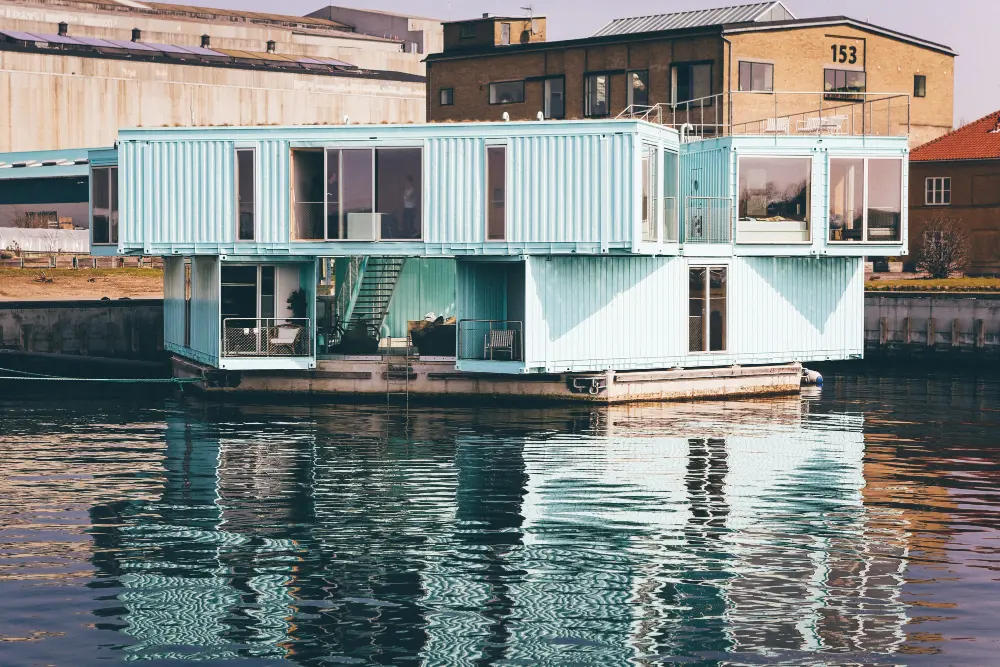
Stacking modules takes up less land. In exchange, it requires a staircase, more complex structural calculations, and compliance with the municipality’s maximum height limits.
With four or more modules, the total area exceeds 100 m². Here, it competes with a modular or traditional home, and the cost savings are reduced: more joints, more reinforcements, and more waterproofing.
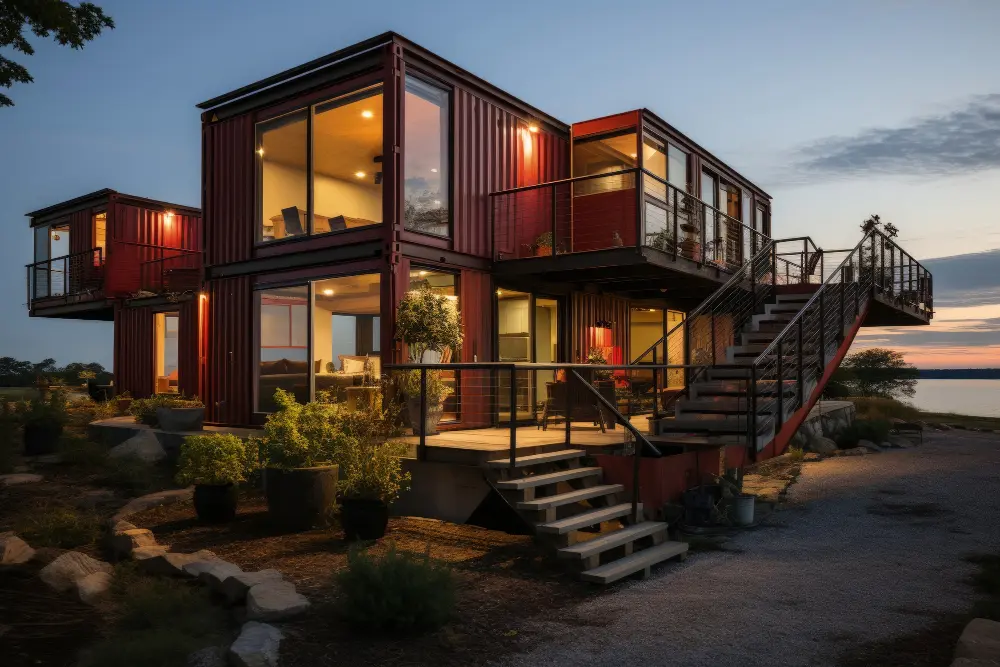
Caption: Multi-module family container home with a garden
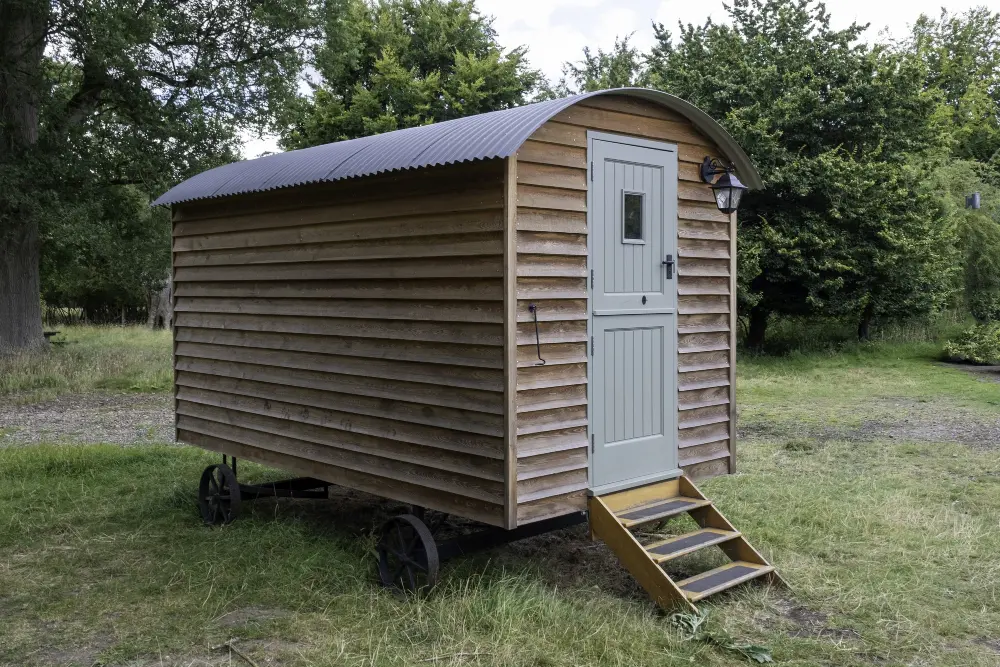
It is delivered fully assembled and placed on supports, without a permanent foundation. It is used as temporary housing or as a supplement on a lot. The fact that it is transportable does not exempt it from permit requirements.
There are no official price statistics by model: request a price range in writing from two or three manufacturers [VERIFY: 2026 price range by model, with date and source].
Manufacturing in the workshop is quick; what prolongs the project is the permit process, which depends on each local government and can take longer than the construction itself. The phases are as follows:
Container homes have prices that can be misleading if you only look at the price per module. What you need to compare is the cost of the entire project.

The price increases with the number of modules, but not proportionally: the second module shares utilities, though it adds joints and reinforcements. The condition of the shipping container, insulation, and woodwork also factor into the cost. Ask for quotes that detail what is and isn’t included.
These are the costs most often overlooked, using the example of a house made from two 40-foot containers on an urban lot. The figures are illustrative, not a quote:
| Item | Amount |
|---|---|
| House made from two shipping containers, fully equipped (estimated quote) | €70,000 |
| 10% VAT (permanent house suitable for habitation) | €7,000 |
| Urban lot | €45,000 |
| Property Transfer Tax on the lot (assumed: 8%) | €3,600 |
| Notary, registration, and administrative fees (estimated) | €1,500 |
| Foundation and utility connections | €12,000 |
| Transportation and crane services | €3,500 |
| Technical design and construction supervision | 6,000 € |
| Permit and ICIO (4% of €82,000 in construction costs, plus fees) | €3,780 |
| Total cost | €152,380 |
The module accounts for 46% of the total. The ICIO is set by each municipality, with a maximum of 4% of the construction cost (Art. 102.3 of the Local Finance Act). VAT holds another surprise: the 10% rate applies to buildings suitable for use as dwellings (Art. 91.1.1.7 of the VAT Law). If the house is considered personal property, it may be taxed at 21%: in this example, an additional €7,700 [CHECK with a tax advisor to determine the applicable rate for each case].
Permits for a shipping container home depend primarily on the land classification. The rules vary by autonomous community and municipality, so our advice is always the same: ask the municipality for a zoning certificate for the lot before purchasing anything.
If it is anchored to the ground for residential use, it is considered a building and requires a construction plan (Art. 2.2.a of Law 38/1999 on Building Regulations). In addition, you’ll need a building permit, must comply with the Technical Building Code (Royal Decree 314/2006), and must obtain a first-occupancy permit or a certificate of habitability.
A shipping container home without a foundation may be considered movable property. But don’t be too confident: for the Cadastre, any building “permanently attached to the ground” counts as a structure, even if it can be transported or dismantled (Art. 7.4.a of the Real Estate Cadastre Law). And if it is used as a permanent residence, many municipalities still require a permit.
Building without authorization on non-developable land can constitute a serious urban planning violation and, in some cases, a criminal offense: the Penal Code punishes developers and builders of structures that cannot be authorized on such land with imprisonment of one to three years and possible demolition (Art. 319.2 and 3).
Living in a shipping container makes sense in some cases and not in others. Here’s our take.
If you’re considering a shipping container home as an investment—whether to rent or resell—analyze it like any other asset. Here are the points we would review:
Real estate investment involves risks, including the potential loss of principal, and liquidity may be limited.
There is no official figure for container homes. As a reference, the Basic Structural Safety Document of the Technical Building Code assumes a service life of 50 years for buildings [VERIFY section]. Reaching that figure depends on the container being in good condition, having insulation that prevents condensation, and receiving regular anti-corrosion maintenance.
Yes, if it is anchored to the ground, legally approved, and registered in the Property Registry. The Mortgage Law only allows for the mortgaging of real property eligible for registration (Art. 106). With a mobile home, there is no real property to mortgage, so a personal loan is typically used, which carries a higher interest rate and a shorter term.
Yes. This is one of its advantages: modules can be added side-by-side or stacked vertically. However, each expansion is a construction project that requires a technical plan and a permit, and must comply with the plot’s buildable area and height restrictions. Before purchasing the land, check how much room for expansion the zoning regulations allow.
Yes, if it is permanently fixed and registered with the Cadastre as a property. The Land Registry Law defines a “building” as any structure permanently attached to the ground, even if it can be transported or dismantled (Art. 7.4.a). Once registered, it is subject to property tax (IBI) like any other residence in the municipality, based on its assessed value.
If you’re interested in investing in real estate without buying an entire property, at Domoblock we work with three types of projects: house flipping, building flipping, and new construction.
With our real estate co-investment opportunities, you can participate starting at €200, 100% online. It’s free for investors: you pay nothing directly, and Domoblock charges a 5% management fee, which is included in the project costs.
Real estate investing involves risks, including the potential loss of principal, and liquidity may be limited: there is no secondary market; there may be delays in construction or in the sale; you may lose some or all of your invested capital; and this capital is not covered by the Deposit Guarantee Fund. Domoblock does not offer financial instruments supervised by the CNMV.
A shipping container home can be a practical and quicker-to-build dwelling, but its feasibility depends not on the container itself, but on the lot. Before paying a deposit to the manufacturer, obtain the plot’s zoning certificate in writing and calculate the total cost, including the land, foundation, permit, and taxes. If the final cost isn’t lower than that of a modular home on the same plot, the shipping container isn’t saving you any money.
This article is for informational purposes only and does not constitute tax, legal, or financial advice, nor is it an investment recommendation. Urban planning and tax regulations vary by autonomous community and municipality. Past performance is not a guarantee of future results. All investments involve risks, including the partial or total loss of principal: consult a professional regarding your specific situation.



Pedro María Ric, 5
Funded
100%
€550,012.94
Target
€550,012.94