

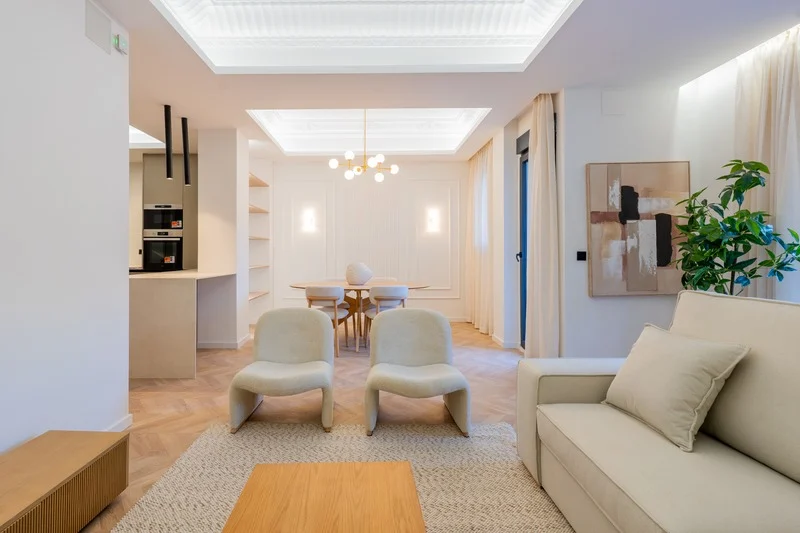
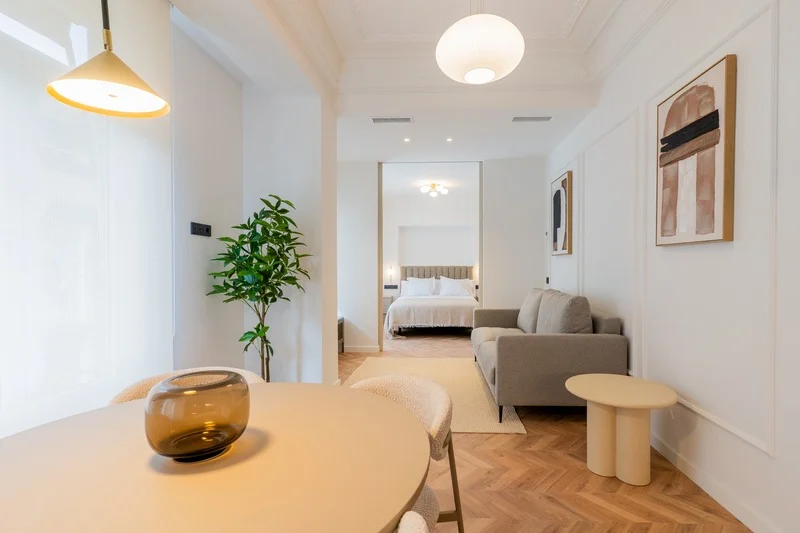
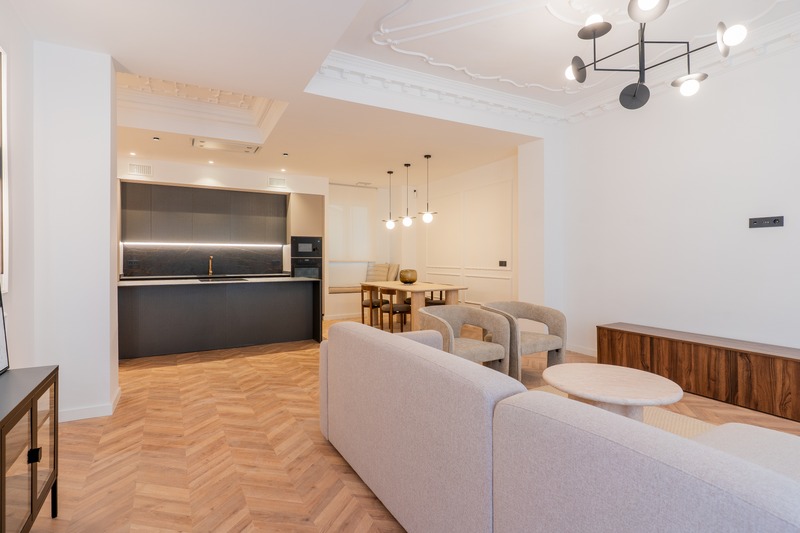

Domoblock raises your capital and uses it to finance specific real estate projects—primarily renovations and residential developments. Unlike a fund or a REIT, you’re not investing in an abstract vehicle: your money goes toward a specific physical asset with a defined management team, documentation, and timeline. Domoblock assumes direct responsibility toward you as an investor, manages the relationship with the project developer, and returns your capital plus interest upon closing. You don’t have to deal with anyone else.
Each project undergoes an internal review process before being made available to investors. We evaluate the location, the developer, the property’s legal status, realistic timelines for construction and sale, and the collateral structure. Not all projects submitted to Domoblock are published—only those that pass our internal screening process. Once approved, the project is published on the platform along with its complete Information Document so that you, as an investor, can review it before committing your capital.
Buying an apartment requires a large upfront investment, a mortgage, tenant management, renovations, and years of holding the property. A REIT is a publicly traded stock—during the three most severe crises of the past 50 years, it fell by more than 30%. Domoblock gives you exposure to real estate without any of those problems: investments start at affordable amounts, with no management, no mortgage, and a defined cycle of 12 to 24 months. When the project closes, you get your capital back. It’s not a permanent position that you have to monitor.
At the end of the project cycle—when the property is sold—Domoblock transfers the principal you contributed, plus the interest earned, directly to your bank account. The process is automatic; you don’t have to do anything. Projects have an estimated timeline, which is indicated in the Information Document—typically between 8 and 12 months. As with any real estate development, timelines may be adjusted, and in that case, Domoblock will keep you informed throughout the process.
This call isn’t a generic introduction. The person you’re speaking with has already read your form—they know your available capital, your goals, and your concerns. The conversation gets right to the point: Which projects match your profile? What documentation should you review first? Does it make sense to start now or wait? If, after talking, you decide it’s not the right time, that’s fine—no one will pressure you. And if you decide to move forward, we’ll guide you through your first steps on the platform.
.png)
.png)
.png)
.png)
.png)
Estimated duration: -
Estimated return: -
Minimum investment: 200€
Reserve investment
Estimated duration: 7 months
Estimated profitability: 17%
Minimum ticket: 200€
Register.png)
Estimated duration: 6 months
Estimated profitability: 13%
Minimum ticket: 200€
Register.png)
Estimated duration: 7 months
Estimated return: 12%
Minimum investment: 200€
Register.png)
Estimated duration: 7 months
Estimated return: 11%
Minimum investment: 200€
Sign up.png)
Duration: 2 months
Return obtained: 44%
Minimum investment: €200
Sign up.png)
Duration: 8 months
Return achieved: 18%
Minimum investment: 200€
Sign up.png)
Duration: 7 months
Return obtained: 20.7%
Minimum investment: €200
Sign up


