
.jpg)
Chueca is a symbol of diversity, avant-garde, and vitality. In this article, we will examine the keys to living and investing in Chueca, its real estate market, quality of life, and future outlook for 2026.


Chueca is internationally known as the epicenter of Madrid's LGTBIQ+ community, with an openly inclusive, tolerant, and festive character. But it is also a commercial and cosmopolitan neighborhood, with a vibrant atmosphere at all hours.
It is nestled in the Centro district, bordering central areas such as Malasaña, Justicia, and the Salamanca neighborhood, making it an ideal starting point for exploring Madrid on foot. Puerta del Sol, the Art Walk (featuring the Prado, Reina Sofía, and Thyssen museums), and Gran Vía are just a few minutes' walk away.
Furthermore, it is extraordinarily well-connected. Chueca Metro station (Line 5, green) is its central hub, and just a few minutes away are Alonso Martínez (Lines 4, 5, and 10), Gran Vía (Lines 1 and 5), and Tribunal (Lines 1 and 10). Numerous EMT bus lines run along its borders and adjacent streets, such as 1, 2, 3, 40, 147, 149, and the night bus N16. Sol and Recoletos stations connect to all Cercanías Madrid commuter rail lines, and there are several stations for the public electric bicycle service, BiciMAD.
Named after the composer Federico Chueca, the neighborhood was a bourgeois and elegant area during the 19th and early 20th centuries. After the Civil War, it entered a prolonged period of decline and neglect, earning a reputation for insecurity. But in the 80s, and more decisively in the 90s, the LGTBIQ+ community, seeking a space where they could express themselves freely, began opening businesses and renovating buildings, initiating an unprecedented process of urban and social regeneration. The designation of Gay Pride (MADO) as a national tourist interest festival and the opening of pioneering businesses and companies solidified its transformation, creating a unique and highly valuable environment.
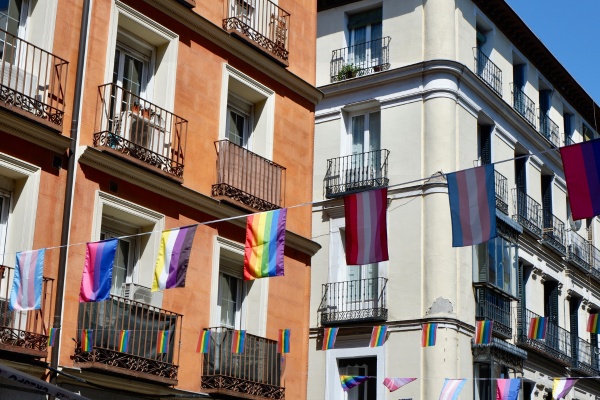
Chueca's housing stock is predominantly historic. Most buildings date from the second half of the 19th century and early 20th century, featuring high ceilings, hardwood floors, wrought-iron balconies, and interior light wells. "Penthouses" and "attics" are highly sought after, often having been renovated to include terraces with panoramic views. There are also some newly constructed buildings or those with comprehensive renovations, although they are a minority and command higher prices.
Chueca is among Madrid's most expensive neighborhoods. The average price per square meter is around €8,000 - €9,000, potentially exceeding this figure significantly for luxury properties. Renting a one-bedroom apartment can range from €900 to €1,300/month, while a two-bedroom apartment easily surpasses €1,400 - €1,800/month.
Advantages include a 24/7 lifestyle, exceptional connectivity, quality shopping and entertainment, a safe and vibrant atmosphere, and a diverse and inclusive community.
However, among the disadvantages, we find constant noise, lack of privacy, high prices, lack of green spaces, and heavy traffic with difficulty parking.
Chueca offers all kinds of services, from national chain supermarkets to delicatessens and gourmet shops. There are 24-hour pharmacies, post offices, banks, and all sorts of local businesses, and urban cleaning is intensive.
Safety in Chueca is high, especially during the day and early evening. As in any busy tourist area, it's wise to be cautious of pickpockets and petty theft, but the general feeling of safety is very good. The quality of life here is measured by its cultural, gastronomic, and leisure offerings.
There are no large public or semi-private schools within its exact boundaries, but renowned educational institutions can be found in neighboring districts. However, there is an interesting range of options for adults, including language academies, design schools, and vocational training centers.
The neighborhood relies on the Justicia Health Center, located on nearby Hortaleza Street, which provides primary care. For specialized care and emergencies, residents go to central hospitals, all just a few minutes away by public transport.
Culturally, highlights include the Museum of Romanticism, the Museum of History of Madrid, and numerous contemporary art galleries.
The gastronomic offerings are overflowing. From gourmet markets like Mercado de San Antón to Michelin-starred restaurants and iconic bars.
For nightlife, options range from luxury cocktail bars and elegant pubs to nightclubs and themed bars.
You might be interested in: best cities to invest in Spain.
Chueca lacks a large park within its boundaries. Its squares are more social gathering points, terraces, and transit areas. To enjoy nature, Retiro Park and the Gardens of the Museum of Romanticism are nearby.
Malasaña shares the alternative spirit but with a different nuance; it's more "hipster," with a more indie and rock vibe, and slightly more affordable prices.
The Justicia neighborhood (or Salesas) is the transition between Chueca and the Salamanca neighborhood. It is quieter and more residential, with wider streets and a more stately and discreet atmosphere.
Salamanca is an orderly, quiet, and exclusive neighborhood, focused on luxury shopping and bourgeois family life. Chueca is its opposite: chaotic, vibrant, and modern.
You might be interested in: real estate investment Salamanca neighborhood.
Chueca is ideal for investors seeking high rental yields, especially from tourist rentals, and medium-to-long-term appreciation.
Its residents are typically young professionals and adults without children, expatriates and digital nomads, and couples and members of the LGTBIQ+ community.
It is not recommended for families with small children (due to noise and lack of space) or for people seeking peace and quiet.
The real estate market in Chueca has shown enviable resilience. Demand continues to outpace supply, keeping prices high and on a stable upward trend. By 2026, the following are anticipated: consolidation of renovations, as the European Union is promoting funds for energy-efficient building rehabilitation; high competition for long-term rentals; regulation of tourist rentals, which could slightly cool investment in this segment but is unlikely to cause a general drop in demand; and increasing value placed on sustainability and local commerce.
An apartment on a quiet side street, or a penthouse with a terrace, will have significantly higher demand and appreciation than one on a noisy street-level square.
An old building without an elevator or with low energy efficiency will sell or rent for less. A renovation that modernizes facilities, improves sound insulation, and adds amenities significantly increases the return on investment.
Before buying, review the homeowners' association bylaws. Some expressly prohibit tourist rentals or have strict rules.
Consider not only vacation rentals but also long-term rentals. Each has its own risks and benefits.
Yes, it's a very safe neighborhood. The constant flow of people and the natural vigilance exercised by businesses and residents deter serious crime.
Chueca is internationally renowned as the heart of Madrid's LGTBIQ+ community and for hosting the Gay Pride celebration (MADO). It's also known for its vibrant nightlife, diverse culinary scene, and trendy shops.
Metro de Madrid's Line 5 (green) has a stop named after the neighborhood: "Estación de Metro de Chueca" (Chueca Metro Station).
Absolutely, if your lifestyle aligns with the neighborhood's pace. It's worth it for the unique urban experience, the convenience of having everything within reach, and the immersion in a cutting-edge cultural and social environment.
Nowadays, investing in real estate is no longer exclusive to those with significant capital. With Domoblock, you can start your real estate investment with as little as €200 and access real estate projects with attractive appreciation potential.
Thanks to the use of blockchain and the tokenization of properties and real estate crowdfunding, all operations within the platform are secure, transparent, and fully verifiable. The projects you'll find offer returns above 10% and estimated payback periods of 8 to 12 months, an efficient option for those looking to grow their money.
Domoblock offers various projects for real estate investment in Madrid, real estate investment in Alicante, real estate investment in Zaragoza and real estate investment in Valencia. Check them out!
With Domoblock, diversifying your capital is simple, fast, and completely digital. Take the first smart step towards your financial freedom!
Chueca represents a way of understanding urban life – intense and diverse. It's a highly solid asset, with constant demand ensuring profitability and crisis-proof appreciation. Investing or living in Chueca means believing in an open-minded area with a bright future.

.png)

41 Av. del Oeste
Funded
100%
763.249,36 €
Target
€763,249.36


.png)
.png)
.png)
.png)



.avif)
.avif)


