
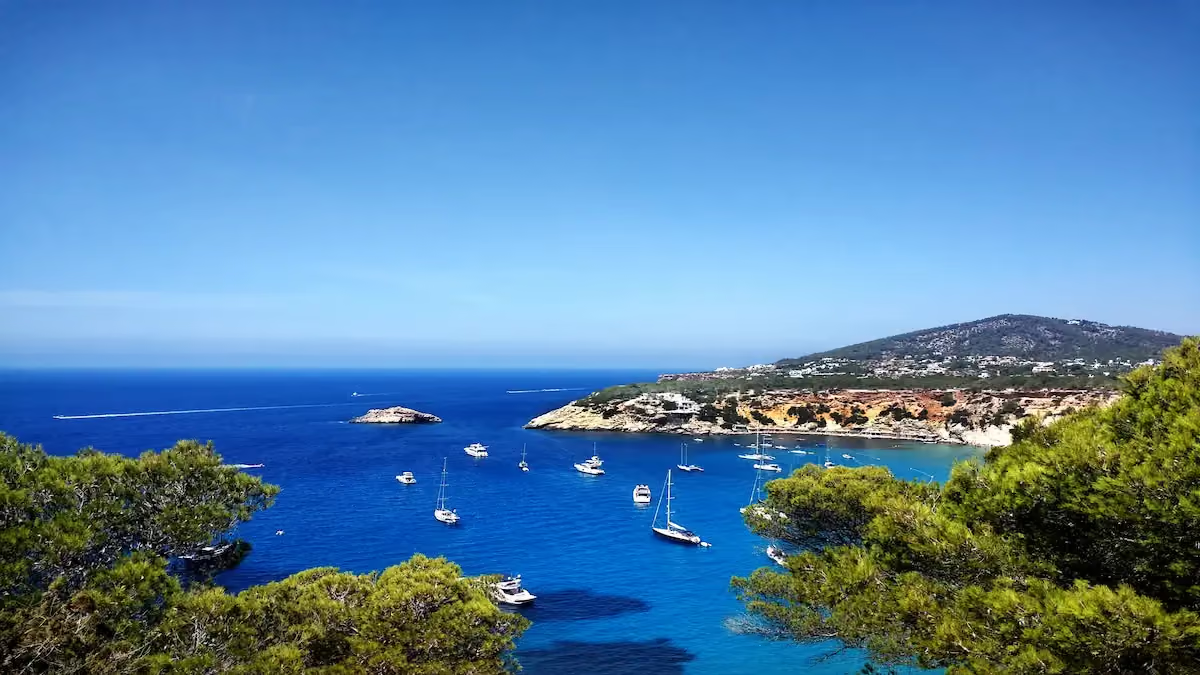
Investing in Ibiza in 2026 remains one of the smartest choices within the Spanish real estate sector. The constant global demand and naturally limited supply sustain rising prices each year.

Investing in Ibiza means a market resilient to downturns and global issues. Few places combine such returns with asset security.
Luxury leisure, sophisticated gastronomy, and protected nature attract millions of visitors from around the world. This magnetism generates constant demand for exclusive properties.
British, German, and Italian buyers account for a large portion of transactions. This diversity decouples the market from the Spanish economy.
The average price exceeds €9,300 per m² for houses and €7,000 for apartments. San José has seen growth of up to 250% in ten years.

Three concrete reasons explain why the island continues to lead compared to other Mediterranean destinations.
Supply cannot keep up with demand, which directly increases the value of any existing property.
A well-located villa generates more than 70% of its annual income. Options such as mid-season rentals or mixed-use allow for maintaining cash flow.
There are apartments in the capital, rural properties inland; the market offers options for different capital levels. Sustainable properties with high energy certification appreciate faster than the average.
You might be interested in: best profitable investments.
In 2026, the Ibiza market maintains a positive trend: transactions are up, and prices are holding steady across all areas of the island.
Houses are around €9,310 per m², 5% more than the previous year. Apartments are around €7,026 with a more moderate variation.
Villas with sea views lead demand, far exceeding available supply. Apartments in Ibiza town follow.
The sustainability is already a requirement, not a differentiator. High energy certification, integrated home automation, and responsible construction increase property value.
Scarcity is structural, not cyclical. Each existing property competes with growing demand that the market cannot absorb.
The island has 5 municipalities with very distinct profiles. Choosing the area before investing in Ibiza is the most important factor, because ROI varies by location.
Cap Martinet, next to Marina Botafoch and Talamanca, boasts some of Europe's most exclusive villas with direct sea access.
Favorite municipality for families and international residents permanent, with first-class infrastructure. Jesús and Roca Llisa offer great appreciation potential.
San José recorded 250% growth in a decade, one of the highest in Spain. San Antonio offers more competitive prices and a very attractive cost-effectiveness ratio.
Ibiza's figures are more favorable than in most Spanish markets. It is advisable to analyze them in detail before committing capital.
The average gross yield ranges between 5% and 8% annually depending on location and asset type.
In July and August, a 4-bedroom villa can achieve weekly rents of between €10,000 and €30,000. The low season, with rentals to digital nomads or families, maintains stable income.
The tourist license is the most crucial factor: without it, legal holiday rentals are impossible.
The annual gross ROI ranges between 5% and 10%, considering only rental income.
Don't underestimate the associated expenses, as this directly affects the actual return. Knowing the cost structure before signing is very important.
Houses are priced at €9,310 per m² and apartments at €7,026. In areas premium prices exceed €15,000 per m².
An additional 10% to 13% in extra costs must be added to the price. This includes Property Transfer Tax (ITP) of 8% to 13% in the Balearic Islands, notary and registry fees (1-2%), agency fees (3-5%), and administrative fees.
Residents in Spain declare rental income for personal income tax (IRPF). Non-residents pay Non-Resident Income Tax (IRNR) at 19% if they are EU citizens.
Community fees, pool, garden, insurance, and cleaning add up to between 2% and 4% of the property's value per year. Full-service holiday rental management charges between 15% and 25% of the income, but eliminates all operational burden.

For many, buying here is also a life project. Understanding daily life outside of peak season is important for making informed decisions.
A mild climate, safety, international schools, and gourmet cuisine elevate the standard of living. The resident international community is active and cohesive throughout the year.
A 2-bedroom apartment in a central area can exceed €2,000 per month. Groceries are between 20% and 30% more expensive than on the mainland.
The airport connects with dozens of European cities year-round. Private healthcare is the preferred option for many international residents, with well-equipped clinics.
Quiet winters, local markets, and a community that is cohesive: that's the Ibiza many residents consider the best version of the island. Santa Eulalia and Ibiza Town are the most active hubs outside of peak season.
If you decide to invest in Ibiza, having these aspects sorted out before buying will save you time, money, and unexpected problems.
Tourist licenses are limited and difficult to obtain if they are not included with the property. A local lawyer and a tax advisor quickly pay for themselves: they check for hidden encumbrances and zoning status before signing any document.
Spanish banks finance up to 70% for non-residents and 80% for residents. The structure of the transaction—personal name, company, or trust— can have very different tax implications depending on your country of residence.
Each goal leads to different decisions regarding location, property type, and entry price. Defining it from the outset helps to filter judiciously and not be swayed by superficial appeal.
Limited supply, diversified international demand, and profitability above the Spanish average. The most real risk is not that the market will fall, but entering without knowing it well.
You might be interested in: types of investment projects.
Between 3,000 and 5,000 € per month for a comfortable life, including accommodation, food, transport, and leisure. With property ownership, the monthly cost is reduced.
For those who value a Mediterranean climate, an international community, and an active lifestyle, yes. The island returns to its more authentic pace outside of peak season.
It's the most expensive of the Balearic Islands: the rent per m² and the cost exceed those of Mallorca and Menorca. This difference reflects its higher demand and more exclusive profile.
Yes, without restrictions for European citizens. Non-EU citizens need a NIE, which is a quick process.
For high-end holiday rentals, San José and Cap Martinet are good options. San Antonio offers better multiples for those seeking a balanced return.
Access to the sector has changed. Today you can participate in the real estate investment market through tokenized assets starting from just €200, without large capital or direct property management.
Blockchain technology and the Real estate tokenization ensure that every investment in House flipping in Spain is recorded transparently and securely. Available projects aim for returns exceeding 10%, with an estimated capital return between 8 and 12 months.
A flexible and efficient alternative for real estate crowdfunding for those seeking real results in the real estate sector. Discover Domoblock to learn how to invest without the traditional barriers that limit most people.
At Domoblock , we currently do not have investment projects in Ibiza, but we do offer real estate opportunities in other key cities in Spain:
Take a look and discover where to invest safely and profitably.
Investing in Ibiza combines strong demand, limited supply, and appreciation constant, with rental yields above the Spanish average. Knowing the market well and relying on the advice of Domoblock makes all the difference.


.png)

León XIII, 27
Funded
-
-
Target
507.697,35 €


.png)
.png)
.png)
.png)




.avif)
.avif)
.avif)


