

Among the formalities we must follow in the process of buying and selling a home in Spain are the property deeds; these are fundamental because they provide legal guarantees and are binding on third parties. Therefore, it is advisable to be clear about the steps and necessary documentation for registering a property, following regulations, even before starting the purchase and sale procedures.
Does it sound complicated? It's not that much! Keep reading until the end, and all your questions about this topic will be answered.

House deeds are legal documents that certify ownership of a property. In essence, they are conclusive proof that a person is the owner of a property and possesses all inherent rights to that property. These deeds are obtained before a notary, who is the person who drafts them. The document is signed in their presence, and they guarantee its authenticity and legal validity. Subsequently, the deeds are registered in the Property Registry, which provides additional security to the owner regarding their right of ownership.
The document that serves to endorse that the commercial purchase-sale operation of a home has been carried out legally is the property deed. It includes all the details of the house: its location, value, owner's data, construction, surface area, among other particulars related to the property.
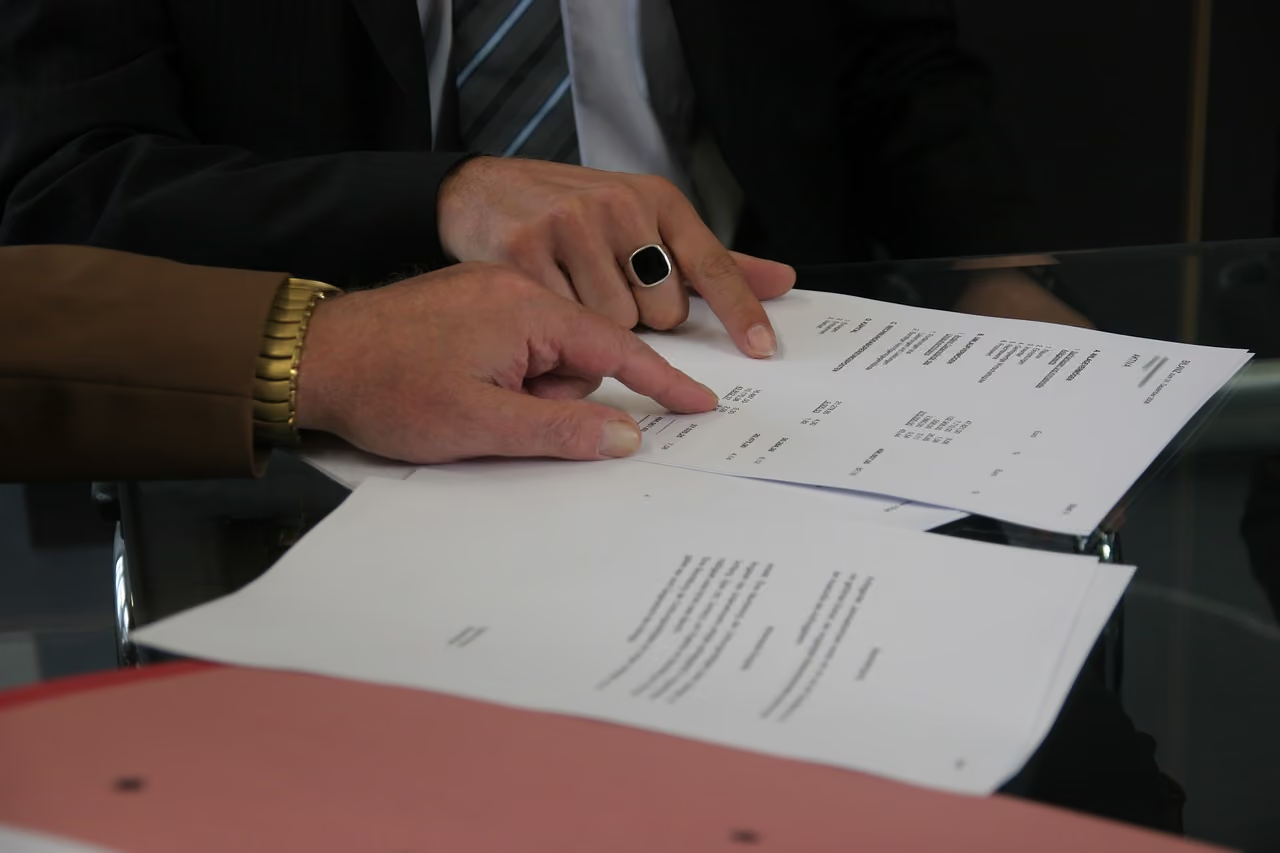
The process for preparing house deeds involves a series of steps that must be followed carefully. First, it is essential that the seller and the buyer reach an agreement on the terms of the sale, such as the price and the date of the deed. Both parties must then gather the necessary documentation, which typically includes the national ID, the residency certificate, the cadastral value of the property and, if necessary, the history of encumbrances.
With the documents ready, an appointment must be made appointment with a public notary, who will be responsible for drafting the deed and attesting to the transaction in accordance with current legislation. During the appointment, the drafting and reading of the deed, where all agreed aspects are detailed.
Finally, once the drafting is complete, both the seller and the buyer must sign the deed before the notary, who is responsible for sealing and certifying it. Subsequently, the notary will elevate the document to a public deed and present it to the Property Registry for its Registration.
Having the property deed provides legal security for the owner, as it is the only way they can fully dispose of the property. This document will also be necessary if you wish to rent out the property, make renovations, and you will also need it to contract utility services such as electricity, gas, and water.
To complete the property deed process and ensure its validity, both the buyer and the seller must meet certain requirements:
To conclude this point, it is advisable to seek the advice of a lawyer or an expert in the field to ensure that all clauses are correctly drafted and all necessary information is included.
The costs associated with preparing property deeds vary depending on several factors:
It's important to note that the notary retains the original deed of the property; one copy goes to the Registry and another to the property owner. In case of loss, theft, or damage, you must go to the notary to request a copy. The prices for these copies are estimated between 75 and 80 euros, depending on the number of pages the document contains.
In general, the total expense can range between 15% and 20% of the property's purchase price. Therefore, it is crucial for the buyer to include these costs in their financial planning.
Regarding the time it takes for house deeds, this can vary considerably, but it can generally be divided into different stages. The first stage is preparation, where gathering documents and scheduling the notary appointment can take anywhere from a few days to several weeks, depending on the availability of the parties and the complexity of the case. The notary signing is a quick process, usually completed in a couple of hours. However, the property registration can take between 15 and 30 days after the notary sends the document. In summary, from the start of the process until the registered deed is obtained, it's common for a month or more to pass, although in many cases it can be managed more quickly.

The idea of getting house deeds done for free might seem appealing; however, it's crucial to understand that, while some services may challenge this premise, there is always an associated cost due to the legal and formal nature of the process. Although there might not be notary fees in some special cases or promotions, other associated costs like the Property Transfer Tax (ITP) are never free.
It's advisable to be cautious of offers that suggest the possibility of completing these deeds without any cost, as this would most likely lead to legal complications or invalid documentation.
Conduct your transactions easily and securely with Domoblock. A platform powered by blockchain technology and supported by professionals to help you invest in real estate tokenization.
Maximize your returns by starting with a minimum investment of just €200 and access a wide range of exclusive options, carefully selected to offer you the greatest financial growth.
Build with Domoblock a diverse and profitable long-term investment portfolio. Secure your future and your family's with a single click. Join us and start today!
Property deeds are a crucial element in the real estate buying and selling process, providing legal backing for both the buyer and the seller. Understanding what they are, their purpose, what they include, how they are executed, the associated requirements and costs, and the timelines involved, is vital for anyone about to undertake a real estate transaction.
While it may seem like a complex process, having the right advice can simplify the experience and ensure every step is taken correctly and legally. Ultimately, having a well-drafted and properly registered deed not only provides peace of mind but also protects against future legal complications.


.png)

41 Av. del Oeste
Funded
100%
763.249,36 €
Target
€763,249.36


.png)
.png)
.png)
.png)





.avif)
.avif)


