

A mortgage loan refers to a loan granted by a banking institution for the purpose of acquiring a home. The payment of this amount is deferred into monthly installments that can extend between 10 and 30 years. The debtor is not only contractually obligated to pay the mortgage amount but must also pay the interest rate set by the bank. This interest can vary periodically and is added to the loan principal. The property remains owned by the financial institution until the debt is fully settled.
It should be noted that an initial down payment must be made, which can be at least 10-20% of the property's value. In the United States, this is the most common way to obtain housing.
If you are interested in buying a home in this country, we recommend you keep reading to learn about the classification and requirements for applying.


There are several types of mortgage loans in the United States, each with differences in interest rates:
Conventional Fixed-Rate Mortgages:
These are loans where the interest rate is agreed upon as a fixed rate from the start of the contract and remains at the same percentage until the loan is fully repaid. This is useful for planning to pay a fixed amount each month and avoiding surprises as the fiscal year changes.
With this type of mortgage, the interest rate can vary throughout the contract's duration, so monthly, quarterly, or even semi-annually (depending on what has been established with the institution), variations in the amounts to be paid can be expected or not, influenced by the financial indicators tied to that loan. Often, this type of loan has the advantage that the initial monthly payment is a bit lower.
Granted by the Federal Housing Administration (FHA), these are designed for individuals with moderate or low incomes. More than a loan, it is an insurance applied to a housing loan, which the FHA must cover if the debtor is unable to make payments. Valid only for a first home, they generally require a lower credit score, and the initial installments are also typically lower (20% below other institutions) with a down payment of 3.5% of the property's value. Not all institutions provide this insurance; you should check with the financial institution to see if it is on the list of institutions that can offer it.
The VA loan refers to the Department of Veterans Affairs, although it is not the one that issues it, but rather a financial institution that grants it. As its name indicates, it is aimed solely at members of the U.S. military forces, veterans, and their families for the purpose of acquiring a new home, an existing home, or renovating one they already own. In some cases, it is possible to purchase the property without a down payment and without additional insurance payments.
With the primary goal of providing homeownership opportunities for low and very low-income families, the USDA loan is offered by the United States Department of Agriculture. It generally does not require a down payment, and the property must be located in a rural area while aligning with the premise of being a decent, sanitary, and safe home.
You might also be interested in: requirements for buying a house in the United States as a foreigner.
Each bank will require specific criteria, but generally, to apply for a mortgage loan in the United States, you should keep the following requirements in mind:
Obtaining a mortgage loan in the United States involves a series of steps you should consider if you wish to apply. Here are the steps:
Generally, the mortgage approval process in the United States can take between 30 and 90 days. The duration also depends on the type of mortgage, the risk assessment, ensuring there are no errors when submitting documentation, and that the bank does not return any documents due to inconsistencies.
According to the Consumer Financial Protection Bureau (CFPB), there are several costs and fees in addition to the down payment. We detail them below:
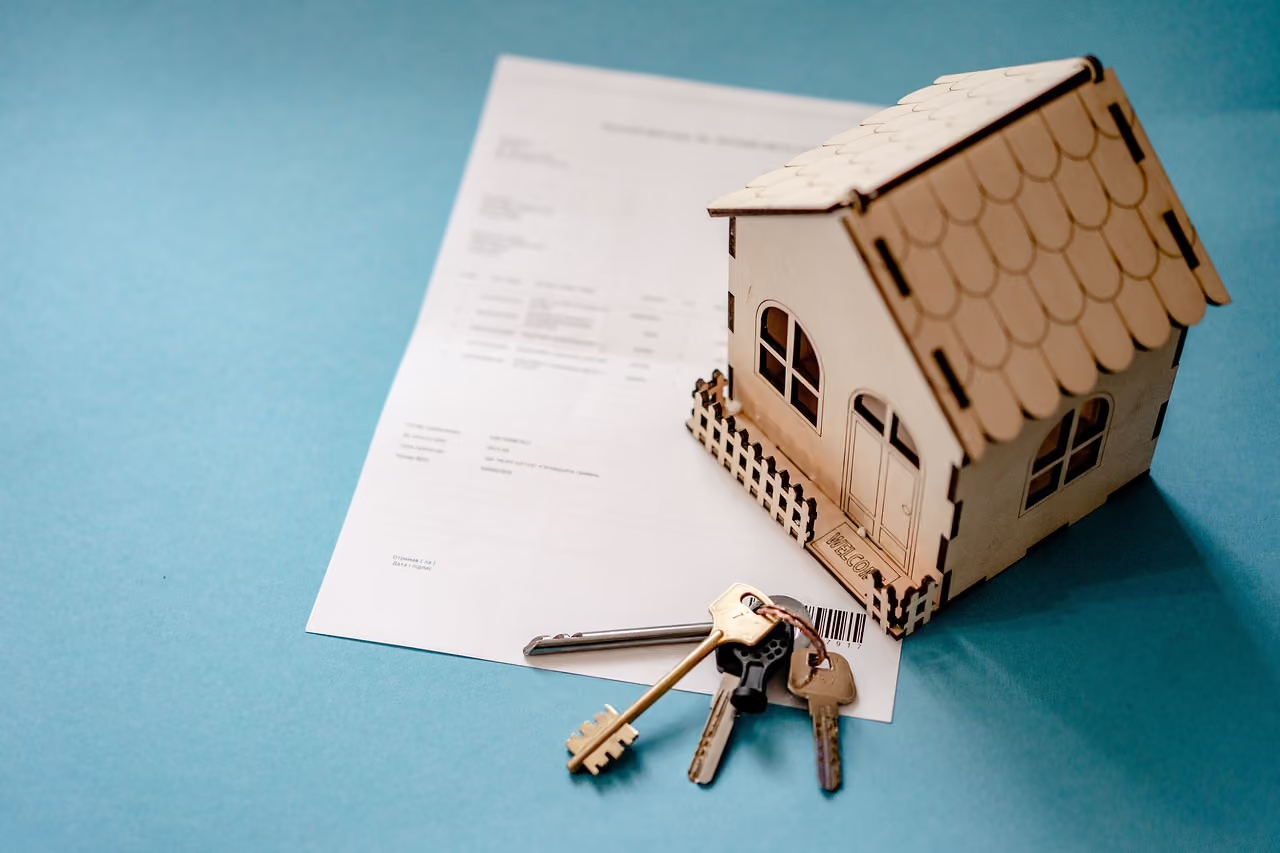
Successfully getting approved for a mortgage in the United States is not impossible; you simply need to consider the following requirements:
The inability to pay a mortgage can lead to the bank taking possession of the home. In this case, the bank may initiate a process called "foreclosure," through which the property becomes its responsibility to resell. To prevent this scenario, it's ideal to plan ahead, save, and have an emergency fund. Additionally, there are insurance policies designed to cover debts in case of unemployment or other unforeseen circumstances. If your income decreases, it's advisable to contact your financial institution to request a loan modification or refinancing.
There are various mechanisms to avoid foreclosure. It's best to contact your bank promptly to learn about the available options, as each institution offers different alternatives.
Yes, it is. Refinancing a mortgage means replacing the original terms of your home loan to obtain benefits that make debt repayment easier. This is done by acquiring a new loan that replaces the initial one. Consequently, the first mortgage is canceled, the bank settles the debt, and the new mortgage begins with the new terms. These can include reducing monthly payments, paying off the loan faster, securing a lower interest rate, changing from a variable to a fixed rate, or even modifying the loan type.
The bank will inform you of the rates and percentages during the negotiation. However, let's say you have a USD 200K mortgage at 6% interest and you refinance. If the bank offers you 4% monthly interest (this is an estimated value; always check with the bank as it may vary), the initial loan is canceled, and you will pay at that new percentage.
Keep in mind that refinancing may include additional costs such as closing expenses or administrative fees.
The answer is Yes. It is possible to obtain a mortgage loan without being an American citizen; you just need to have a valid US visa and follow the financial institution's instructions.
The required documentation does not differ much from what citizens must submit:
You might be interested in: US investor visa.
If you're looking for accessible opportunities to buy property in the United States without many hurdles, Domoblock offers innovative alternatives through blockchain technology. This revolutionary option allows you to participate in exclusive projects in the US and other attractive markets. Discover below how to build your wealth with a minimal investment!
Domoblock, the platform for real estate investment that is transforming access to real estate through real estate tokenization. Now, with a minimum investment of €200, you can participate in exclusive real estate projects and generate returns exceeding 10% within 8 to 12 months. Thanks to blockchaintechnology, Domoblock offers you complete transparency, security in every transaction, and efficient management.
The United States, and Miami in particular, is one of the most attractive real estate markets worldwide, with constant growth in both residential and commercial sectors. With Domoblock, you can seize these opportunities without the need to physically manage properties. Our team of experts selects strategic projects in key areas, ensuring options with high appreciation potential. Furthermore, as a digital platform, it allows you to invest without borders and without the need.
Check out our guide on: investing in Miami.
Real estate investment is no longer exclusive to large capital; with Domoblock, anyone can build their financial future digitally, accessibly, and profitably. Register with Domoblock today and start generating passive income with the confidence and security offered by blockchain technology!
Securing a mortgage in the United States requires foresight to build a suitable credit profile, structure a solid financial situation, and gain the knowledge to choose the loan that fits your possibilities and offers various benefits. By negotiating with different banking institutions, seeking assistance programs, and professional advice like Domoblock's, you can make a difference and ensure success in accessing a mortgage under favorable conditions and making your dream of homeownership a reality.


.png)

Av . del Oeste, 41
Funded
-
-
Target
763.249,36 €


.png)
.png)
.png)
.png)





.avif)
.avif)


