
.avif)
The rise of cryptocurrencies has revolutionized how we conceive and manage money. However, this new financial era has also brought security challenges. Amidst growing concerns about theft and cyber threats, cold wallets emerged as a solution to protect our digital assets. Perhaps you're thinking of upgrading your cold wallet, buying one for the first time, and feeling a bit lost and overwhelmed – don't despair, we're here to help today. In this article, we've gathered all the necessary information to explain the best cold wallet options for 2024. Keep reading to learn more.

A cold wallet is a type of cryptocurrency wallet fundamentally distinguished by its focus on security and the safeguarding of digital assets. What sets it apart is its essential characteristic of not generating keys through a connection to the blockchain or the internet; this aspect defines its "cold" nature. Although these wallets are not precluded from connecting to the network when necessary, they do not rely on a constant connection for their operation.
This approach offers peace of mind, allowing you to maintain a reserve of cryptocurrencies without worrying about market fluctuations. In summary, a cold wallet is a digital refuge that guarantees the security and total control of your crypto assets, while also providing additional options such as personal PIN usage, limited communication methods, and the ability to create a recovery seed in case of emergency.
Cold wallets were designed with the idea of storing cryptocurrencies more securely, thereby minimizing their exposure to cyber threats. To help you understand a bit more about how they work, here's a more detailed explanation:
Nothing is perfect, least of all cold wallets. It's important to understand that they were a response to a potential security issue, and that is their primary focus. Consequently, this means they might 'fall short' in other areas, or in other words, have disadvantages. Here are the advantages and disadvantages of cold wallets:
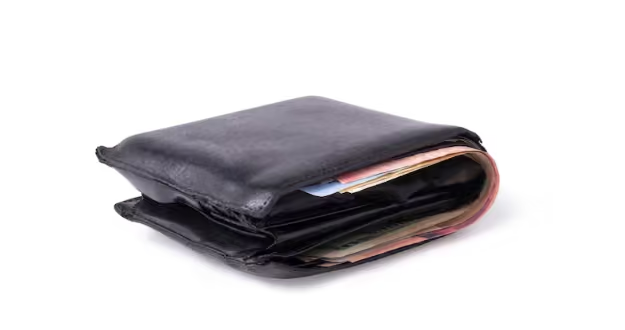
Here, we present and review 7 of the best cold wallets of 2024:
In 2014, eight experts in cryptocurrencies, cybersecurity, and blockchain solutions founded Ledger with a clear mission: to provide a secure and reliable way to store digital assets. Since then, the company has grown to over 130 employees in Paris, Vierzon, and San Francisco, and has become a benchmark in advanced security for cryptocurrency enthusiasts and users.
The Ledger Nano X is a hardware wallet currently priced around 149 USD, which will securely store your Bitcoins, Litecoins, and other altcoins offline. Although it features low-energy Bluetooth (BLE) connectivity for convenience, its security is not compromised in the slightest. Only public data is transmitted via Bluetooth, and your private keys remain protected on the device.
The Ledger Nano X is equipped with a Secure Element (SE) that requests your authorization before making any changes, even if someone attempts to hack the Bluetooth connection.
A distinctive element that this wallet brings to its security is its exclusive operating system called BOLOS. This system integrates Ledger wallet's on-chip security element, making it the only wallet on the market to offer this advanced technology.
Once you receive your Ledger Nano X, you can create a PIN code of at least 4 digits. If you forget your PIN, the Ledger Nano X provides a 24-word recovery phrase that allows you to create a new PIN.
In addition to its robust digital security, the Ledger Nano X is designed to withstand physical damage. Its high-quality stainless steel casing protects it from bumps and drops, ensuring the integrity of your assets.
Although the price is above average, the investment in security is more than justified. The Ledger Nano X is an improved version that offers unique features and invaluable peace of mind.
The Trezor Model T is a gem in the world of cold wallets, revealing a series of advantages that make it stand out in the market.
One of the main advantages of the Trezor Model T is its compatibility with a wide range of cryptocurrencies and tokens. In a world with nearly 7000 different cryptocurrencies, the ability to store a wide variety of digital assets is essential. Whether you want to protect Bitcoin, Ethereum, Litecoin, Bitcoin Cash, Ripple, or any other cryptocurrency, the Trezor Model T is a reliable choice. Currently, its price is around 219 USD.
Security is the fundamental pillar of any hardware wallet, and the Trezor Model T does not disappoint in this regard. It receives regular firmware updates, ensuring your device is protected against malware and kept up-to-date.
Furthermore, it features a touchscreen which significantly improves ease of use compared to its predecessor, the Trezor One, which had physical buttons.
A common complaint among cold wallet users is the tedious task of trading cryptocurrencies while they are securely stored. However, the Trezor Model T has simplified this process, from initial setup to actual coin storage. Another notable feature is the ability to set your recovery phrase at any time, which streamlines the setup and security of your assets.
However, not all opinions on the Trezor Model T are positive. Some users have expressed concerns about the device's bulky design compared to its competitors, such as Ledger. This additional bulk can make it less convenient to transport.
Ellipal, a Hong Kong-based company founded in 2018, has brought an innovative twist to the world of cold wallets with its Ellipal Titan device.
The Ellipal Titan stands out for its focus on security. It uses an air-gapped design to completely isolate the device from the internet and other network connections, ensuring that the user's private keys are never exposed to online threats like hackers, malware, or viruses. Unlike some hardware wallets with small screens or physical buttons, the Titan features a color touchscreen that facilitates navigation and information display.
Ellipal has simplified the setup and usage process, aiming to make it suitable for beginners. Users can set up their recovery phrase at any time, streamlining security and asset access.
Unlike some competitors that use plastic for their wallets, the Titan features an all-metal, water-resistant casing, ideal for active, on-the-go users. It uses QR code technology to scan and confirm transactions, adding an extra layer of security.
On the other hand, some of its drawbacks include the fact that, while compatible with many popular cryptocurrencies, the Ellipal Titan does not support Monero, for example. This can be a disadvantage for those seeking privacy.
The company has advertised its battery life as impressive, but some users have reported issues with charge duration. It generates Bitcoin BIP 44 addresses, which start with the number 3, instead of the more modern BIP 84 addresses that start with "bc". This can result in higher transaction fees.
Unlike wallets that offer more secure 24-word recovery phrases, the Titan uses 12-word phrases and does not support cryptocurrencies on testnets for any blockchain, nor does it allow the addition of a custom RPC, which can complicate testing and learning for certain users. Its price is 139 USD.
The CoolWallet Pro is a revolutionary hardware wallet designed to provide maximum security and portability. Its compact and lightweight design, the size of a standard credit card and weighing less than 6 grams, makes it an incredibly convenient choice for people on the go. Additionally, it is water-resistant.
Security is of utmost importance in the world of cryptocurrencies, and the CoolWallet Pro takes this aspect seriously. It uses a military-grade CC EAL 6+ security chip, surpassing other popular hardware wallets on the market. This ensures robust protection for your digital assets, providing you with peace of mind.
Mobile device compatibility is another standout feature. You can easily pair the CoolWallet Pro with your Android or iOS device via Bluetooth within a 10-meter range. The companion mobile app simplifies the management of your cryptocurrencies, allowing you to make exchanges, track your balances, and swap cryptocurrencies directly from your smartphone. Its battery life is impressive, with a standby period of 2 to 3 weeks on a full charge.
The CoolWallet Pro is compatible with a wide range of cryptocurrencies, making it an ideal choice for those with diversified portfolios. Furthermore, it integrates seamlessly with various operating systems, ensuring its accessibility across different devices and platforms. The user experience is friendly and secure, as it uses tamper-evident seals on the packaging for enhanced protection. Setting up the wallet is straightforward and involves installing the CoolBitX app, pairing via Bluetooth, and creating a hardware wallet with a customizable 12, 18, or 24-word recovery phrase.
The CoolWallet Pro offers portability, Bluetooth integration, high security, support for multiple cryptocurrencies, and a reasonable price of $149.
The Keystone Pro was meticulously designed to ensure the maximum security of your digital assets. From the moment you receive this device, you'll recognize the company's commitment to the security of your cryptocurrencies. Before setting up the Keystone Pro, you will be prompted to scan a QR code on the back of the device to verify the supply chain and prevent any malicious activity during delivery.
Once this security verification is complete, you can proceed to set up your Keystone and account via the official website. During this process, you will be guided on the importance of properly creating and storing your recovery phrase and creating wallets within the Keystone system. Additionally, you can choose between a password or fingerprint scanning to access the device when it is locked.
To maintain security, a firmware update is required. However, since the Keystone Pro is completely isolated from the online world, this update is performed using a Micro SD card. Users must download and transfer the update from their computer to the device via this card.
The process of sending and receiving assets on the Keystone Pro is similar to other hardware wallets, such as the NGRAVE ZERO. To receive assets, you simply need to copy the address from the mobile app or the device via a QR code. However, the sending process involves additional steps, including authentication via password or fingerprint, specifying the recipient's address, and confirmation by scanning QR codes on the mobile device.
The Keystone Pro stands out for its physical anti-tampering technology, which ensures that sensitive data is automatically erased if there are attempts at physical manipulation.
Regarding blockchain compatibility, Keystone offers support for over 5500 cryptocurrencies and 200 blockchains, as well as integrations with more than 15 popular software wallets. Additionally, it is the first hardware wallet to offer direct integration with ENS usernames, simplifying transactions. The price of the Keystone Pro is 169 USD.
However, a negative aspect is the lack of NFT support in its native application, although this feature is expected to be developed in the future. Keystone stands out for its focus on digital asset security, but its usage process can be slower due to its isolation and the use of QR codes to confirm transactions. This wallet is more suitable for those seeking long-term security rather than those who make frequent transactions.
Trezor One is one of the most popular and affordable hardware wallets offered by Trezor. A crucial feature of Trezor One is its isolation of private keys in a secure environment, ensuring the protection of your assets, even if your device is connected to a computer infected with malware. It has a password management function and can be used as a U2F security token, providing an additional layer of protection for your online accounts.
Trezor Model One is compatible with over 1,000 cryptocurrencies, including a wide range of tokens such as Ripple, Monero, Litecoin, EOS, Ethereum, Dash, Binance, and, of course, Bitcoin. This versatility makes it a solid option for those with a diversified portfolio.
The package includes the device itself, a USB cable, a lanyard, quick start instructions, a recovery seed card, and four stickers. Portability and simplicity are distinctive features of this device.
While Trezor Model T, a premium version, might be an option for those seeking a more elegant design, Trezor One is manufactured with lightweight yet durable plastic, featuring a small screen, two buttons, and a USB port.
One of the most notable features of Trezor One is its security track record. Unlike some competitors, this device has not suffered significant attacks, which supports its reputation as a secure choice for protecting your digital assets.
It's important to note that transferring cryptocurrencies to a wallet like Trezor doesn't mean they are "stored." Rather, you notify the blockchain that your assets reside at a Trezor-compatible address, which requires physical authorization for any Bitcoin transaction.
Setting up the Trezor Model One is relatively straightforward. By downloading the Trezor Suite application, you can set a PIN, create a wallet, and generate a backup of your 24-word recovery seed. Its price is among the most affordable on the market, currently around 68 USD.
KeepKey is a cryptocurrency hardware wallet with a modern and elegant design, widely known for its ease of use. Its most prominent feature is that it offers an additional layer of protection against hackers. Furthermore, to further enhance security, KeepKey implements a PIN code and allows for the creation of recovery phrases.
KeepKey is very accessible and easy to use; despite its relatively large size, the single screen and one button simplify navigation and interaction with the device. Most operations are performed intuitively through the associated mobile application, making setup and continuous use easier.
In terms of price, KeepKey is an attractive option. Its cost of $49 (a significant reduction compared to its previous price of $239) makes it accessible to a wide audience interested in keeping their cryptocurrencies secure and out of reach of online threats.
However, it presents some limitations. One of the most notable is its compatibility with a relatively limited number of cryptocurrencies, around 40 in total. This is restrictive for those who wish to store lesser-known tokens or new additions to the market. In comparison, other hardware wallets, such as Ledger, offer support for over 1000 cryptocurrencies.
Furthermore, KeepKey's size and weight are also very inconvenient for those who value portability. Weighing 54 grams and having considerable dimensions, it can be uncomfortable to carry with you.
KeepKey is a hardware wallet that stands out for its ease of use, as well as its affordable price. However, it has limited cryptocurrency compatibility and a considerable size.
To determine if a cryptocurrency wallet is reliable, it's important to consider several key aspects:
When evaluating a cryptocurrency wallet, combine these aspects to make an informed decision and minimize the risk of using an unreliable platform that could compromise the security of your digital assets.
The remuneration or payment a wallet can offer can vary depending on the type of digital asset stored and the specific platform conditions. Here are some key points to consider:
It's important to research and compare different wallets to understand what type of rewards they offer and under what conditions. Additionally, consider the wallet's security, ease of use, and reputation before deciding where to store your cryptocurrencies and participate in reward programs.
The fees a virtual wallet charges can vary depending on several factors, such as the type of transaction you perform (sending or receiving cryptocurrencies), the cryptocurrency involved, and the platform's specific policies. Here are some general aspects to consider:
To determine which virtual wallet charges the lowest fees, it is advisable to:
When evaluating virtual wallets, consider your specific needs, such as the type of cryptocurrencies you want to store, frequency of use, and any additional features that might be important to you.
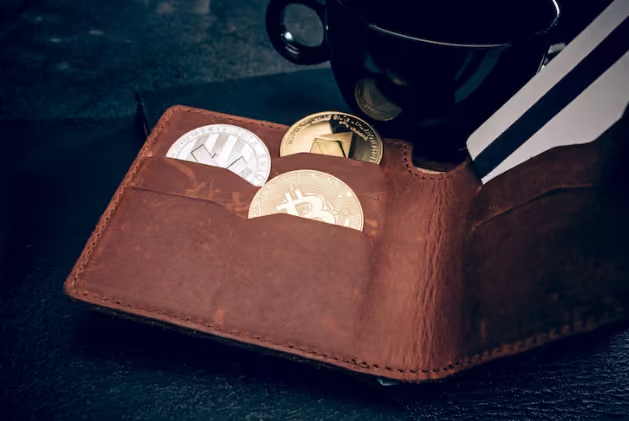
While cold wallets are a solid choice for the security of your cryptocurrencies, it's essential to follow certain practices and tips to ensure safe and effective use. Here are some key guidelines:
In a landscape where security is paramount, cold wallets stand out as a bulwark in the protection of digital assets. These cold wallets offer a formidable barrier against cyber threats by keeping tokens out of reach of hackers and online attacks. Although their use may seem more complex compared to hot wallets, the investment of time and effort in setup and use translates into invaluable peace of mind and confidence.
Ultimately, the control and responsibility for keeping your assets secure lie in our hands. By choosing a cold wallet, you are taking concrete steps to safeguard your financial future in the world of cryptocurrencies. So, trust Domoblock , as you can see, not only specializes in real estate crowdfunding and the real estate tokenization but as an organization, it looks after your assets.
I recommend reading: Cryptocurrency mixer, cryptocurrency tokens and earning money with cryptocurrencies


.png)

41 Av. del Oeste
Funded
100%
763.249,36 €
Target
€763,249.36


.png)
.png)
.png)
.png)



.avif)
.avif)
.avif)


