

Did you know that cohousing is a trend that’s currently gaining popularity and attracting more followers every day? That’s right. The reality is that having decent housing isn’t a possibility available to everyone. Every family, household, and individual faces a different reality.

The term “cohousing” can be translated as “collaborative housing” or “shared living.” It’s a lifestyle in which a group of people own their own private homes but share certain common spaces with other residents. You might be thinking this concept is a new trend, but the truth is that it’s been around for several years now.
The first recorded instance of a community of this type dates back to the 1960s and 1970s in Denmark. Later, this model spread to other cities in Northern Europe and eventually reached the United States, where it came to be known as “cohousing.” This way of life provides support for the most vulnerable, such as very young people and older adults.
Like any human system, cohousing has its own established principles that govern how it operates. In this case, these principles are based on the idea of the common good and mutual support. Let’s look at some of its characteristics:
In this model of community living, it is essential that each member have a voice and a vote when decisions are made. Therefore, in cohousing, all homeowners actively participate in any meetings or consultations that take place. It is precisely these kinds of rules that facilitate community life, as they ensure that every member feels valued and taken into account.
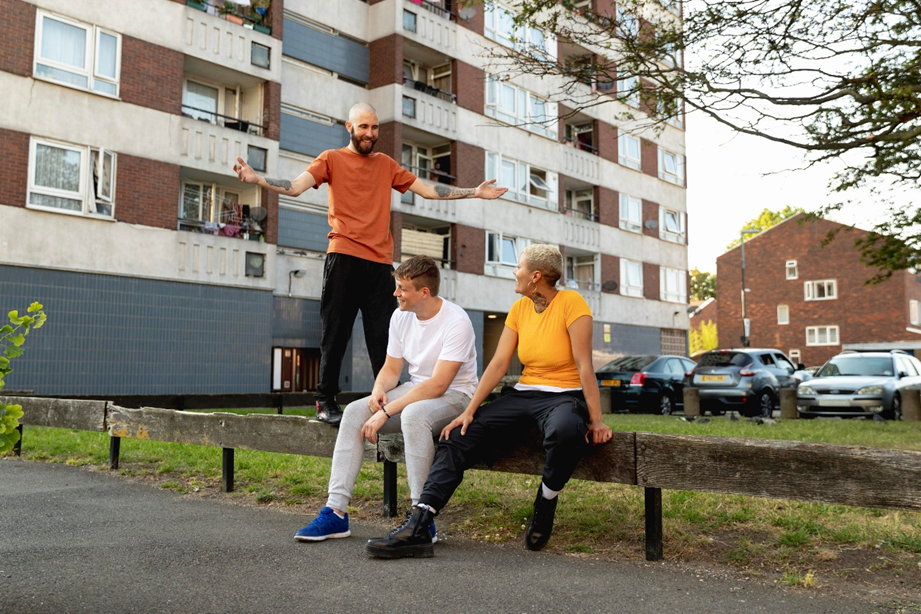
Another non-negotiable principle is the layout and design of common areas. Some of these common areas include:
Each resident must actively participate in the design of the common areas. Similarly, residents take turns maintaining the common areas.
In the cohousing model, it is essential that everyone involved be willing to cooperate, share, and interact with their community. It is vital that there be a spirit of mutual support, with everyone looking out for and caring about the well-being of others. Without this philosophy, it would not be true collaborative housing, but rather a traditional residence, where interaction among neighbors is often nonexistent.
Next, we’ll tell you about the different types of cohousing that exist today.
This is probably the most common type in the world of cohousing. In this case, the property belongs to a cooperative that grants the right to use a home and common areas in exchange for a fee. The amount of this fee or dues is set by the cooperative.
It’s also known as “cloudhousing” because it’s a model better suited to each individual’s needs. In this model, each community member decides which services they’ll use, and the amount to be paid is determined based on that. This format gives each person the freedom to choose what they want and what they’d rather skip.
This is a more selective or private type of cohousing, as it generally does not include as many members as the other models. In this case, a small group of people purchases a plot of land and then builds shared housing on it.

For cohousing to function properly, each member makes financial contributions to cover maintenance, remodeling, and property improvements. For this reason, all residents play a fundamental role in every stage of the cohousing process. From the moment construction is planned through the management of the community, it is everyone’s responsibility.
In addition, reaching a consensus is essential. For this reason, meetings are held frequently in these communities. During these meetings, important decisions are typically made in a democratic and participatory manner. Furthermore, responsibilities are assigned to each member during these neighborhood assemblies.
In Spain, cohousing—or “colaborativa vivienda,” as it is known in Spanish—has evolved from a niche concept into an increasingly established housing alternative. Interest in cohousing in Spain stems from rising housing costs, the search for more sustainable models of community living, and the need to combat social isolation—and this combination largely explains why cohousing has been gaining momentum in recent years. The question of where to find cohousing in Spain now has many answers: there are projects available in Spain in both large cities and rural areas, where collaborative renting and “revitalized villages”—that is, initiatives that renovate homes in depopulated rural communities to build communities with a much more affordable entry cost than in large cities—have gained momentum.

Depending on people’s preferences or needs, different cohousing models can be adopted. Learn about the different types of shared communities below.
This involves a group of people from different age groups or generations living together. This model aims to foster intergenerational exchange, cooperation, and communication.
In this type of cohousing, community members focus on designing environmentally friendly spaces. Homes in these communities are characterized by the use of eco-friendly materials in their construction and by efficient use of energy and resources. In addition, they establish co-living practices and guidelines designed to minimize their environmental impact.
Senior cohousing refers to communities designed to accommodate older adults. In other words, the homes and common areas are equipped with services and adaptations for people with limited mobility. Some examples of special adaptations for older adults include:
It is important to note that this model of communal living is increasingly popular among older adults who previously lived alone. The main reason is that they wish to age with the companionship and support they do not typically receive from their families.
Within this trend, senior cohousing with included services deserves special mention, as it is one of the fastest-growing segments within senior cohousing in Spain. It should not be confused with coliving: while coliving for seniors is typically a more flexible and temporary arrangement, focused on sharing housing and expenses without a long-term life plan, senior cohousing is designed as a stable community in which the residents themselves participate in its management. How does senior cohousing work in practice? Residents share common areas—dining rooms, living rooms, gardens—and have access to community support services, ranging from organized activities to occasional assistance, without sacrificing the independence that comes with having their own home under a right-of-use arrangement. There are already several senior cohousing projects in major cities that are establishing this model, with particularly active initiatives in Seville, Barcelona, and Madrid; in fact, senior cohousing in Madrid has become a model that other autonomous communities are looking to replicate.

These are residential complexes exclusively for families. In this type of living arrangement, there are communities that welcome all family structures, as well as others that are exclusively for traditional families, single-parent families, same-sex parent families, blended families, and extended families, among others.
It is difficult to establish a fixed amount, as it depends on the location, types of housing, facilities, additional services, and the cohousing model. However, estimated prices for the initial fee under the right-of-use model range from 100,000 to 300,000 euros. On the other hand, monthly maintenance fees range from 300 to 1,000 euros.
When taking the plunge, it’s important to understand the factors that affect the cost of a cohousing project. Prices and options vary widely depending on the city, the size of the home, the level of included services, and whether you opt for ownership, collaborative rental, or a right-of-use arrangement; therefore, there is no single answer to the question of how much it costs to live in a cohousing community. In addition to the initial fee and monthly dues mentioned above, it’s important to distinguish between the different types of costs in cohousing: maintenance expenses for common areas, special contributions for renovations, and—in senior cohousing projects—care or assistance services. For this reason, among the most common pieces of advice before joining a “cohousing” project are to visit the community and speak with its residents, review the bylaws and internal regulations, fully understand the ownership or usage structure of the housing, and calculate not only the initial outlay but also the time required to participate in collective management.

The cohousing model is beneficial for both the individual and the community. Among the benefits of this residential model are the following:
Through cohousing, residents develop close bonds of friendship and camaraderie with other members. Each resident feels part of a supportive community, whose members care for and support one another.
By sharing spaces with others, you also share the associated maintenance costs. Bills for electricity, drinking water, gas, internet, and other services are split among all members who benefit from the common areas.
The sense of belonging to a place and being surrounded by people who support you can positively impact your emotional well-being. Likewise, forming connections with those around you fosters a positive environment that leads to a better quality of life.
In most cohousing communities, sustainable practices are established in both the construction and management of the spaces. Additionally, each member adopts habits that contribute to environmental health, such as proper waste management, avoiding polluting products, and the mindful use of basic utilities, among others.
Aging in a cohousing community means aging with dignity. In these types of communities, older adults are not relegated to a secondary role. On the contrary, regardless of age, every member actively participates in managing the residence, is valued, taken into account, and receives constant support from the other members.
Like everything in life, cohousing also has aspects that can be negative in some cases. Among them are:
The costs of renting or buying a home in a cohousing community—or even paying maintenance fees—may be unaffordable for some people.
It’s possible that some people interested in living in a cohousing community may not be able to do so because they don’t meet the necessary requirements. Some selection processes for new members can be quite strict and exclusive.
While it’s true that people living in a cohousing community share similar lifestyles and philosophies, they don’t always get along. Conflicts or disagreements are always a possibility, especially in large communities.
Cohousing is a living arrangement that is currently on the rise. Are you interested in joining a collaborative community? Are you a real estate agent looking for great opportunities? In either case, you can count on Domoblock! Schedule a meeting with our team of professionals today. We’ll be happy to provide you with the guidance you need.
In addition, Domoblock is an advanced blockchain-based investment platform, developed and managed by experts to offer you unbeatable opportunities for profitable investments, backed by extensive experience in real estate tokenization and real estate crowdfunding. It’s real estate—and you can achieve your goals and secure your financial freedom for the future!
Start with as little as €200 and earn returns of over 10% in less than 8 months.


.png)

41 Av. del Oeste
Funded
100%
763.249,36 €
Target
€763,249.36


.png)
.png)
.png)
.png)





.avif)
.avif)


