
.avif)
In the world of finance, the term "economic bubble" is often heard. But what exactly is an economic bubble? In this article, we will explore in detail what an economic bubble is, its causes, phases, and how we can avoid them. Understanding these concepts is crucial for investors and the general public alike, as economic bubbles can have significant consequences for the global economy.

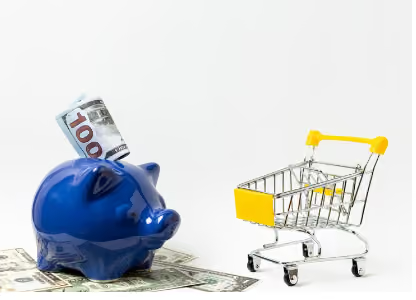
Economic bubbles can have several causes, and it's important to understand them to identify and prevent their impact. Below are some of the main causes of an economic bubble:
One factor that can contribute to the emergence of an economic bubble is excess market liquidity. When there's a large amount of money available for investment, investors may make irrational decisions and overvalue certain assets.
Investors' speculative behavior can also trigger an economic bubble. When investors buy assets with the expectation that their value will increase in the future, they can create artificial demand that drives prices upward.
A lack of regulation and oversight in financial markets can allow economic bubbles to develop unchecked. Without effective mechanisms to monitor and regulate speculative practices, investors may take excessive risks that lead to an economic bubble.
Economic bubbles can have significant and often devastating consequences for the global economy. These consequences not only affect investors and financial markets but can also have lasting repercussions on the real economy and people's daily lives. Below are some of the main consequences of an economic bubble:
When an economic bubble bursts, the prices of inflated assets fall rapidly, often abruptly and unexpectedly. This market collapse can result in substantial losses for investors, both large and small, as the value of their investments drastically decreases. The drop in asset prices can trigger a crisis of confidence in the market, which in turn can lead to mass selling and a downward spiral of prices. This situation not only affects individual investors but can also have a negative impact on the economy as a whole, as the reduction in asset value can lead to a decrease in spending and investment, exacerbating an economic recession.
The bursting of an economic bubble can have a ripple effect throughout the economy, often resulting in increased unemployment. When companies face significant losses due to falling asset values and decreased demand, they may be forced to cut costs to stay afloat. This often involves staff reductions and mass layoffs. Rising unemployment can have a devastating impact on the workforce, affecting not only laid-off workers but also their families and communities. Furthermore, increased unemployment can further reduce consumption and investment, creating a vicious cycle that exacerbates an economic recession.
Economic bubbles can generate significant financial instability in markets. The volatility and uncertainty accompanying a bubble and its eventual bursting can affect investor confidence and the stability of financial institutions. When asset prices fall drastically, banks and other financial institutions may face significant losses in their investment portfolios. This can lead to a reduction in available credit, as banks become more cautious about granting loans. The reduction in credit availability can affect businesses and consumers, making it difficult to finance important projects and purchases, which in turn can lead to a broader economic recession. In extreme cases, financial instability caused by the bursting of an economic bubble can lead to a global financial crisis, similar to the one experienced during the 2008 financial crisis.
In summary, economic bubbles can have profound and far-reaching consequences. Market collapse, increased unemployment, and financial instability are just some of the repercussions that can follow the bursting of an economic bubble. These consequences can affect not only financial markets and investors but also the real economy and the daily lives of millions of people. It is essential that policymakers and investors are aware of the risks associated with economic bubbles and take steps to mitigate their negative impacts where possible.
Economic bubbles go through several phases before bursting. It's important to recognize these phases to identify a bubble and take preventive measures. The main phases of an economic bubble in the financial market are described below:
In this phase, investors show excessive optimism and buy assets at increasingly higher prices. Demand increases, and prices rise rapidly.
In this phase, prices begin to stabilize, and investors start to realize that assets are overvalued. Some investors begin selling, which can lead to a decrease in prices.
In this phase, the economic bubble finally bursts. Prices fall rapidly, and many investors suffer significant losses. There can be market panic and a widespread decline in confidence.
Identifying an economic bubble can be challenging, but there are some warning signs that can help investors and the general public recognize a potential bubble. Here are some key points to consider:
A rapid and disproportionate increase in asset prices can be a sign of an economic bubble. If prices rise irrationally and do not reflect economic fundamentals, a bubble may be developing.
Excessive debt at both individual and corporate levels can indicate the presence of an economic bubble. When loans and debt are used to finance investment accounts speculative, this can increase the risk of a bubble.
If investors exhibit irrational behavior and make investment decisions based on fear or greed, this can be a sign of an economic bubble. Investors should be vigilant about impulsive decisions and seek professional advice.

Throughout history, there have been several notorious examples of economic bubbles that have had a significant impact on the global economy. Some examples include:
In the late 1990s, there was an economic bubble in the information technology sector. Many internet companies saw a massive increase in their market values, but the bubble burst in 2000 and many of these companies collapsed.
In the 2000s, there was an economic bubble in the real estate market in several countries, including the United States and Spain. Housing prices soared and then collapsed, resulting in a global financial crisis.
Preventing a speculative bubble can be challenging, but there are steps investors and regulators can take to reduce the risk. Here are some tips for preventing a speculative bubble:
It is essential to have effective regulation and supervision in financial markets. Regulators must be vigilant about speculative practices and take measures to curb irresponsible behavior.
Financial education for children and adults is key to avoiding excessive speculation and irrational investment decisions. Investors should understand the basics of investing and seek professional advice before making important decisions. Make sure to give children finance books and options for finance and economics movies that teach them the Kakebo method for finances and the 50-30-20 rule so they can manage their unnecessary expenses going forward.
Diversifying an investment portfolio can help reduce the risk of a speculative bubble. By having a balanced and diversified portfolio, investors can mitigate losses in the event of an economic bubble.
For those looking to invest securely and achieve stable long-term returns, Domoblock is the ideal choice. With Domoblock, the ideal platform for real estate investment specializing in real estate crowdfunding and real estate tokenization, you can easily invest in real estate and earn a +10% return. Visit their website for more information and start investing today.

The rapid and disproportionate increase in prices can have a significant impact on the formation of an economic bubble. Some of the most notable effects include:
When asset prices rise excessively and rapidly, these assets are likely to be overvalued in relation to their real economic fundamentals. This can lead to a situation where asset valuations do not correspond to their true intrinsic value.
The accelerated rise in prices can generate irrational expectations among investors, leading them to believe that prices will continue to increase indefinitely. This optimistic mindset can further fuel speculation and contribute to the formation of a bubble.
The rapid increase in prices can create artificial demand for assets, as investors may feel pressured to buy before prices rise even further. This demand, driven by the fear of missing out, can further fuel the bubble.
When prices reach unsustainable levels due to a disproportionate increase, there is a higher risk of a sharp price correction. This correction can trigger the collapse of the bubble and lead to significant losses for investors.
Rapid and excessive price increases can create instability in financial markets and undermine investor confidence.
In summary, the rapid and disproportionate increase in prices can be a key factor in the formation of an economic bubble by creating conditions of overvaluation, irrational expectations, artificial demand, and risks of a sharp correction. It is important to closely monitor these price movements and be alert to warning signs to avoid falling into an economic bubble situation.
Economic bubbles are phenomena that can have a significant impact on the global economy. It is crucial to understand what an economic bubble is, its causes, phases, and how we can avoid them. By being alert to warning signs and taking preventive measures, we can protect ourselves from the negative effects of an economic bubble. Always remember to seek professional advice and make informed investment decisions. Prudence and financial literacy are key to avoiding the pitfalls of economic bubbles.


.png)

41 Av. del Oeste
Funded
-
-
Target
€763,249.36


.png)
.png)
.png)
.png)






.avif)


