
.avif)
Today there are many investment options, and equity is one of the most recognized. You may have heard a lot about it, and in this post, we aim to clear up all your doubts. Broadly speaking, equity is a way to invest in investment assets that does not guarantee the recovery of the capital we have invested. This is because the return is not guaranteed, but rather is conditioned by some important factors.
A good way to analyze how equity works is by evaluating investing in stocks. While it is true that this asset represents a small fraction of a company's capital, its value does not remain stable but is fluctuating. If you want to know about other investment methods, I recommend you read about investing in startups and where to invest in times of crisis.
Throughout this post, we will tell you the good and the not-so-good about investing in equity. We will also share some useful tools to consolidate successful investments. Let's get to it!

While we have already briefly explained what equity is, it is worth delving deeper into this concept. Basically, it is a type of investment where financial assets fluctuate in value, so they remain “variable”.
Therefore, the return of capital is not 100% guaranteed, in fact, it's often unknown. This doesn't mean there aren't analyses that can help predict outcomes, but there's no absolute guarantee.
The fact that profitability varies also raises the possibility of a negative return. This is why it's advisable to thoroughly analyze the entire landscape before making an investment in variable income.
The evolution of financial markets supports the variability of these assets. This often happens with stocks, but also applies in other cases, such as investing in apartments
It's necessary to learn about profitable passive income.
When thinking about investing in variable income, it's very easy to think of buying and renting apartments as well as buying stocks. But the truth is there are other financial instruments that facilitate this investment, such as those we'll mention below.
There are many investor platforms that allow investment in what are called "Commodities." This can be done in two ways: through direct investment in these resources or by investing in companies dedicated to managing them.
Of course, the value of these assets depends on several factors. For example, geopolitical factors and the abundance of the commodity. One of the assets that attracts the most investment of this type is gold. So, it's important to clarify that without a doubt it's a good time to invest in gold

A share represents a portion of a company's consolidated capital, and shareholders gain certain rights over a company. This means that an increase in a stock's value reflects profitability for the investor.
Factors such as a company's innovation capacity and expansion are factors that can impact a stock's price.
It is known as one of the most important stock market indicators. Broadly speaking, it measures the performance of a group of stocks. The Ibex 35 is one of the most prominent indices, along with NASDAQ.
On the other hand, we have the option to invest in exchange-traded funds (ETFs), where we find elements of two very relevant investment types. On one hand, we have the presence of stocks, and on the other, investment funds.
These are other financial instruments that provide periodic income in the form of interest and return the principal at maturity. These assets are generally less risky than equity assets, as interest payments are predetermined.
Issued by national governments, these bonds are considered very safe, especially those from countries with stable economies. Examples include U.S. Treasury Bonds and government bonds in other countries.
Issued by local or municipal governments to finance public projects such as roads, schools, and hospitals. These bonds often offer tax advantages.
Issued by companies to finance operations or expansion. Corporate bonds tend to offer higher yields than government bonds, but also carry greater risk.
Issued by government agencies or government-sponsored enterprises. In the U.S., examples include Fannie Mae and Freddie Mac bonds.
These are short-term instruments issued by the government and typically have maturities of one year or less. They offer lower interest than long-term bonds but are highly liquid and secure.
Offered by banks and credit unions, CDs are fixed-term deposits that pay a specified interest rate and have maturities ranging from a few months to several years.
These are short-term debt instruments issued by companies to cover immediate financing needs. They typically have maturities of less than one year.
Similar to bonds, but can be issued by a variety of entities, including corporations and governments, with diverse maturities and payment structures.
They include assets like money market funds, which invest in short-term debt instruments and are highly liquid.
Issued by governments and designed for small investors. They typically offer a fixed interest rate and are considered very safe.
Fixed-income assets are an important part of a diversified portfolio, as they can provide stability and a steady stream of income, which can help balance the volatility of equity assets.
If you're looking for investment opportunities in 2023 and want to understand the pros and cons of each alternative, it's helpful to know the differences between equities and fixed income. These are not the same options and actually have several distinguishing points. Some people choose to invest in fixed income because they have more control over the outcomes. The following table highlights some interesting differences:
·Does not provide guaranteed information on future returns. ·These are higher-risk investments. ·Generally, the assets are from private entities.
·Fixed-income assets allow for the determination of future returns. ·These are lower-risk investments. ·Often, the assets are public debt.
Among the available options for investing in equities, we find investment funds.
Furthermore, these are collective assets where the principle involves investing the majority of the portfolio in equity instruments. In fact, this is key to classifying it under this category.
Such funds must invest at least 75% of their assets for them to be officially designated as "equity funds."
Today, there are several such funds, some categorized by including assets like shares of companies covering specific niches. They can also be segmented by country.
If you are considering investing in an equity fund, you should know that these are long-term investments. Typically, the holding period equals or exceeds 5 years.
Investing in equities is only suitable for certain types of investors; it's a decision that should only be made if you have a good tolerance for risk.
If you are primarily looking for security and guarantees on your investments, equities will not be your best option.
However, if you consider yourself capable of tolerating risks in pursuit of higher returns, equities might be a suitable choice.
Nevertheless, it's important to understand what factors trigger asset value fluctuations. In the world of trading, for example, fundamental and technical analyses are performed to predict stock values in the medium and long term.
On the other hand, investing in this option is suitable if you seek immediacy when managing your operations.
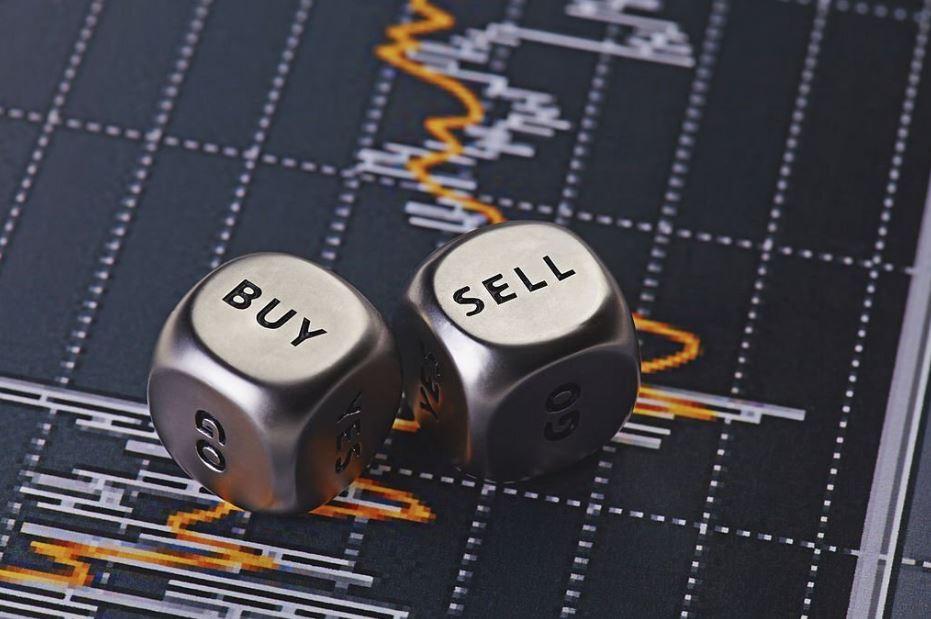
You might still be unsure whether or not it's appropriate to invest in this type of income. As we've shared, it's a modality that better suits a slightly more adventurous and flexible investor profile.
Similarly, in the following list, you can analyze some benefits of investing in equities.
Higher profitability: although not guaranteed, it's a possibility that, if realized, can generate a higher return compared to a fixed-income operation.
Ease of investment: There's an impressive range of options for investing in this type of asset class. Additionally, it's an accessible option if you plan to invest with a small budget.
Offers flexibility: It provides some independence to make decisions regarding the investment at any point during the process, allowing you to adapt it to your preferred timeframe.
When we talk about the disadvantages of variable income investments, we primarily associate them with the risks they entail. Mainly, here you have to learn to deal with volatility.
Of course, volatility indicates the possibility of achieving good returns or not, as it is subject to the fluctuation of financial asset values.
Furthermore, for some, it represents a slightly more complicated type of investment, especially due to the lack of certainty regarding the level of return. Generally speaking, it's advisable to get detailed information on this topic before putting it into practice.

To maintain healthy personal finances, it's important to prudently allocate a portion of your income to housing expenses. A widely accepted general rule is the "30% rule," which suggests that you should not spend more than 30% of your gross monthly income on rent or mortgage payments.
If your gross monthly income is $4,000, 30% would be $1,200. This would be the maximum recommended amount you should spend on rent or a mortgage.
To help you keep your finances under control, you can use financial management and budgeting apps such as:
Do you consider yourself able to tolerate a bit more risk for higher returns? If so, this type of investment might align with your investor profile, especially since it can offer greater profitability.
You can also consider mixed funds, which combine aspects of fixed and variable income. This provides a bit more balance between risks and returns.
Do you want to invest safely and efficiently? We recommend considering investing with Domoblock.io.
This platform specializes in real estate crowdfunding and real estate tokenization makes it easy to invest in the real estate sector, guaranteeing up to 10% annual returns, and with the possibility of starting your operations with just 200 euros. Without a doubt, it is one of the best investor platforms for safely investing money.
It's worthwhile, provided you invest carefully with your capital; it's never recommended to invest what you're not willing to lose.
You should also be aware of the factors that influence price fluctuations; for this, you need to analyze what drives the value of the specific asset you choose to invest in.


.png)

Rúa Progreso, 27
Funded
Target
1.575.297,50 €


.png)
.png)
.png)
.png)



.avif)
.avif)


