

It’s no secret that apps are becoming increasingly popular; there are many different types and something for almost every taste. Some are entertaining, while others make life easier; there are even those that serve as “assistants” and let you keep track of specific tasks or activities. Among the most useful are expense-tracking apps, which provide accurate data on income and expenses, making it easier to manage and administer your personal finances. Here are the 15 most popular apps in this category, so if you’re not familiar with them, take note:

Financial applications, commonly known as financial apps, are programs designed for mobile devices or computers that offer features related to the management and administration of personal or business finances. These apps simplify various financial tasks, such as tracking expenses, creating budgets, managing investments, paying bills, and analyzing credit, among others.
Financial apps are often useful tools for improving financial organization and making informed decisions, as they provide quick access to information about bank accounts, credit cards, investments, and other financial matters. In addition, many of these apps use advanced technologies such as cloud synchronization, artificial intelligence, and data analysis to offer more efficient and personalized services to users.
In short, financial apps are digital tools that help users manage their finances more effectively and conveniently, adapting to the specific needs of each individual or business.

Although each app has its own style, almost all follow one of two models. The best automated options (bank syncing) connect to your accounts and cards and track every transaction without you having to do anything. This is the case with Fintonic or Wallet, as well as apps from your own bank, which increasingly include categorization features and alerts. The best manual and visual options, such as Monefy, Money Manager, or Gastos diarios, require you to manually log each expense in exchange for greater control and very clear charts. Recording expenses manually forces you to pause for a second before every purchase, and that alone helps you spend more mindfully. There’s also a third type designed for shared expenses, such as Splitwise, which doesn’t track your entire finances but works very well for shared expenses like rent, a trip, or a dinner.
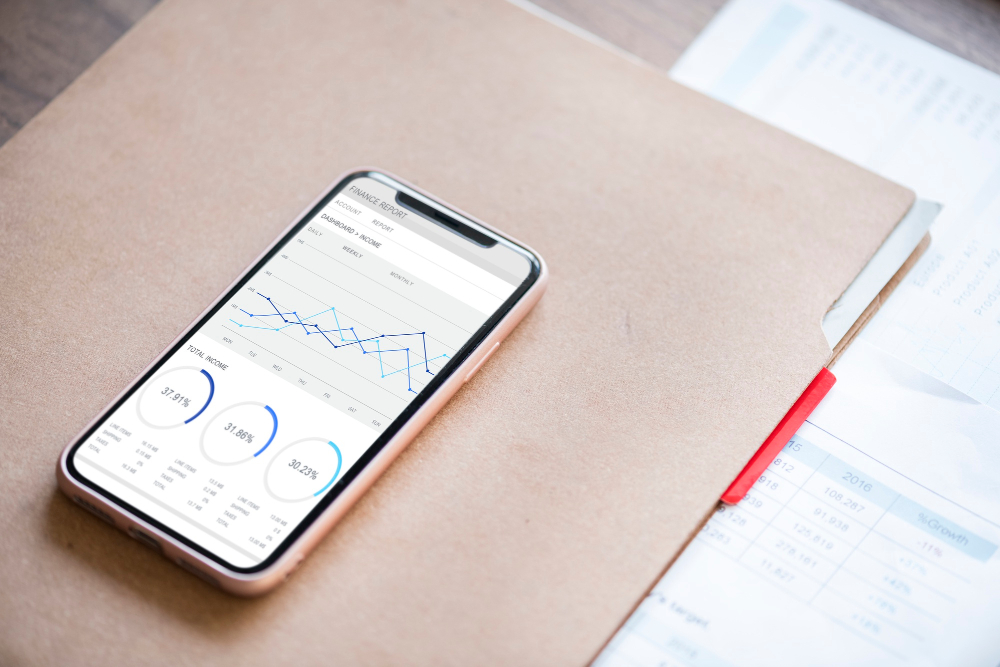
Keeping track of expenses when you have a limited income or are managing a household budget can be crucial for maintaining healthy finances. Here are some recommendations on how to do it using financial apps:
An income and expense tracking system is a combination of a method and a tool: you decide how you’re going to track and organize your money, and the app makes it easy for you to do so. If you’re wondering how to track your personal income and expenses, the first step is to answer another question: How should I categorize my expenses? A simple way is to separate fixed expenses (rent, utilities, subscriptions), variable expenses (food, transportation, entertainment), and occasional expenses (gifts, repairs). The kakebo method, which some of these apps incorporate, suggests four categories: survival, leisure, culture, and extras. As for managing cash with these apps, those that sync with your bank only track what goes through your bank account. A handy trick is to record every ATM withdrawal as a “cash” account and manually note down the expenses you pay with that cash, so that money doesn’t fall off the radar.

By combining these tips with the proper use of financial apps, you’ll be able to effectively track your expenses even with a limited income, thereby improving your ability to efficiently manage your personal or family finances.
Here are some of the most well-known and recommended financial apps:
This app lets you split expenses and keep track of who owes whom; it’s very useful for splitting costs with roommates or family. For example, it’s especially helpful when you share an apartment, go out to dinner with a large group, or take a trip. Give it a try!
This app focuses on creating budgets and effectively managing expenses, as it lets you visualize your finances, allowing you to set goals and save more effectively by clearly seeing what you’re putting away and what you’re spending.
This app is very easy to use; with it, you can track your daily expenses, categorize them, and generate detailed daily reports to analyze your spending patterns.
It’s a very comprehensive app where you can sync your bank accounts, credit cards, debit cards, and even cryptocurrencies. This way, you can view all your finances in one place.
This app lets you set budget limits and scan receipts to make tracking your purchases easier.
This is a very popular app for tracking expenses that lets you connect bank accounts and both debit and credit cards so you can view all your transactions immediately. A bonus is that it offers tips on the best ways to save and manage your money effectively.
This app helps you manage your personal finances to keep track of your spending. It includes a debt-tracking feature so you can keep a close eye on who you owe money to.
This app has many advanced features that let you create and manage detailed budgets, generate reports, and track investments and expenses.
This app lets you track income and expenses, and provides access to charts and visual tools that help you better organize your finances.
It has a very user-friendly interface; record income and expenses with just a few taps and visualize your finances.
It helps you organize and keep track of recurring payments, and notifies you when a subscription’s due date is approaching.
It’s very easy to use and helps you stay organized with your expenses—in other words, it gives you better control over them. It helps you manage your income and encourages you to save.
This app lets you efficiently manage unnecessary expenses by tracking profitable passive income and expenses, setting budgets, and identifying spending patterns.
It’s like a game! It helps you save money through charts, and you can earn rewards. You can also get personalized tips on the kakebo method for saving.
It’s a very simple app where you can categorize all your expenses, as well as manage reminders and notes, helping you learn how to manage your finances. You can use it every day since it’s very simple and intuitive.
As you can see, each app offers unique features tailored to your needs and preferences. Some may be more intuitive than others, more visually oriented, or simply provide practical advice to help you manage your daily finances.
And these aren’t all—the list is longer, and it’s worth checking out. Other apps worth mentioning include:
This app lets you track your expenses in great detail, keeping tabs on everything that comes in and goes out of your accounts and cards. You can create categories, set up payment reminders, or generate reports. With this app, you can sync your data to the cloud.
This app is specifically designed to help you manage your household finances, and what’s new is that it lets you categorize household expenses—for example, what you spend on groceries, rent, and bills. It also gives you money-saving tips.
With this app, you can track your finances, including investment tracking as well as information and planning for paying off your debts.
This app features a very attractive interface with several useful functions for expense tracking, allowing you to monitor your spending and view all your budgets in a visual and personalized way.
This is a very simple app where you can record daily transactions, complete with categories and charts. It lets you analyze your spending and offers savings tips.
There’s no single answer: the best app is the one you’ll still be using three months from now. If you’re looking for convenience, options with bank synchronization—like Fintonic or Wallet—minimize the effort required. If you prefer to understand where every euro goes, Monefy, Money Manager, or Spendee will give you a more visual and mindful overview. Most of the apps on this list are available for both iPhone and Android, so be sure to check your phone’s app store before deciding. If you’re also wondering which is the best web app for tracking household expenses, look for those that offer a browser version or cloud synchronization, such as YNAB or Wallet, because reviewing your household budget on a large screen is much more convenient. To organize your household expenses, Home Budget Manager is designed specifically for that purpose.

If, in addition to all these descriptions, you need more reasons to dive into the world of these expense-tracking apps, here are a few more:
Remember that these are tools that help you get better organized when it comes to your finances—you don’t have to run a business to manage your finances effectively and keep track of how you’re handling your money. Doing so offers many benefits, such as financial flexibility, organized payments, and a clear view of your savings. So it’s worth giving it a try.
If you want to improve how you manage your finances, these apps can be a good option. Download the one you think suits you best, and if it doesn’t work for you, try another one. The idea is that you feel comfortable using it; ultimately, the most important thing is that there are a number of alternatives that will allow you to improve your financial health through planning—in a simple yet very effective way. When will you get started? I’m sure it’ll be a big help! Keep in mind that keeping track of your finances will save you a lot of headaches and give you peace of mind.
Follow the advice provided by real estate investment experts, because in addition to being a platform that specializes in real estate asset tokenization and real estate crowdfunding, it offers money-saving methods to improve your financial situation.


.png)

41 Av. del Oeste
Funded
-
-
Target
€763,249.36


.png)
.png)
.png)
.png)



.avif)
.avif)
.avif)


