
.avif)
Pre-built homes are revolutionizing the real estate industry thanks to their rapid construction, low costs, and customizable design. And, if you're considering purchasing this type of home, you should know about their typologies, advantages, types, and prices.


Prefabricated homes are a type of residence built with modules or panels manufactured in an industrial plant and then transported to the construction site.
Furthermore, unlike traditional construction, these homes are built in a controlled environment, which ensures greater precision and efficiency.
You might also be interested in: sustainable homes.
These types of homes have gained popularity in recent years thanks to their outstanding characteristics, as you'll see below:
These residences are built in factories under strict quality controls, which ensures precision in materials and reduces common errors. Additionally, being manufactured in a closed environment prevents delays due to adverse weather conditions.
A traditional house can take 1 or 2 years to build, while a pre-assembled one is usually ready in months. Furthermore, waiting times are shorter because modules are manufactured in parallel while the site is being prepared.
They allow for multiple design options, so you can choose from different materials, sizes, layouts, and finishes.
Thanks to insulating materials and optimized construction systems, these homes are more efficient than traditional ones. Many incorporate renewable energies, such as solar panels and geothermal systems, from the initial design phase.
By being manufactured in a factory, the exact amount of material needed can be calculated, thus reducing waste.
Once the modules are manufactured, they are transported to the destination and assembled on a pre-prepared foundation. Similarly, assembly can take anywhere from a few days to several weeks, depending on the house's design.
Prefabricated homes are as strong as traditional ones, as certain models are designed to withstand extreme weather conditions.
Since everything is planned from the outset, there's less risk of unexpected cost overruns. This is because the budget typically includes manufacturing, transportation, assembly, and in some cases, interior finishes.
Many allow you to add new modules if you need more space, which avoids having to move or undertake costly renovations in the future.
Although not traditional, this type of construction must comply with the same legal requirements as a conventional one. Consequently, these homes are not only an economical alternative but also a fast, reasonable, and customizable option.
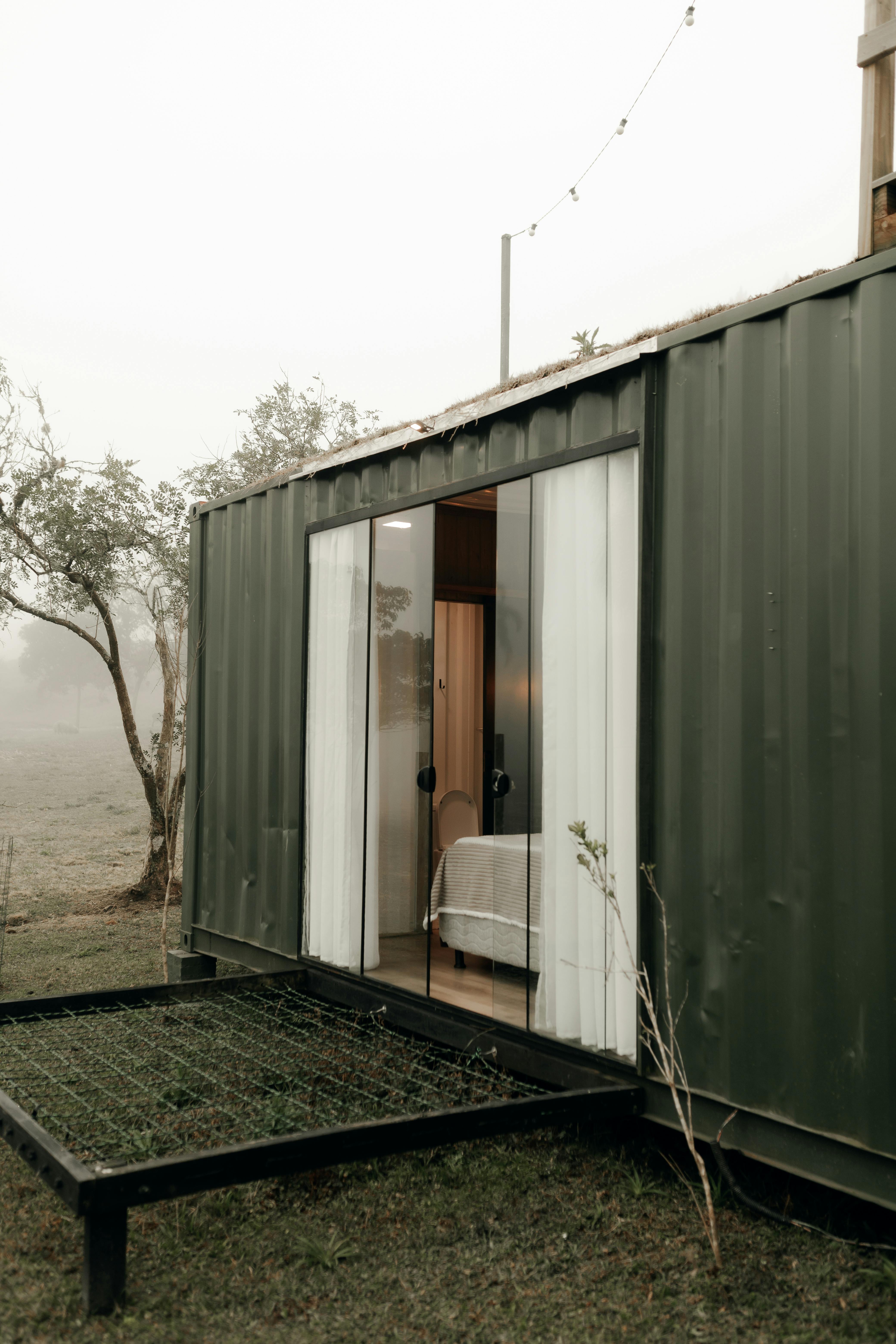
Prefabricated homes are transforming real estate products due to their benefits over traditional construction for the following reasons:
These types of homes have characteristics that offer many advantages, making them an increasingly popular alternative.
You might also be interested in: green mortgage.
Many people wonder what truly distinguishes this type of residence from a conventional building, and the answer lies in the manufacturing process:
Additionally, pre-assembled homes are more energy-efficient and allow for recycling in the design phase.
Below, we'll explain the main models so you can choose the best option for your project:
All options are valid if built according to regulations, so choose the one that best suits you!
The construction process for this type of house is more efficient than for a traditional one, but it still follows key stages. Below, we'll explain the design and planning:
The total time can vary between 2 and 6 months, depending on the complexity. Additionally, a technician verifies compliance with regulations (CTE) and the necessary document to legally occupy the house.
You might be interested in: difference between urban and developable land.
In Spain, it is necessary to comply with legal procedures for prefabricated houses, similar to those for a traditional dwelling. Below, you can find out what the requirements are according to the legislation in force in 2025:
As such, this type of home must adhere to legal standards set for its construction.
The price of these prefabricated homes varies depending on the size, materials, and how much you want to customize it:
The cost of a prefabricated home depends on its final appearance, so choose the one that best fits your budget.
Prefabricated structures have some significant disadvantages that you need to consider before considering this construction technique. Below, you will learn about the main drawbacks:
Despite these disadvantages, many are overcome with technological advancements and increasing acceptance in the industry. The key is to choose certified suppliers and carefully plan each stage.
The lifespan of these well-built homes can exceed 50 years, just like a traditional house.
They are completely safe if they meet regulations. In this regard, they are resistant to earthquakes and strong winds, and offer thermal insulation.
Yes, acquiring this type of building usually costs between 20% and 50% less than a traditional structure.
It depends on the manufacturer, but generally includes the structure, insulation, windows, doors, and in some cases, interior finishes.
This type of building is easily constructed in 3 weeks to 6 months, depending on its complexity.
All must comply with safety standards for fire protection, insulation, and structural resistance.
Modular homes are a type of prefabricated dwelling built from independent modules, whereas "prefabricated" is a more general term.
Imagine growing your money without complications and without large sums of capital? With Domoblock, it's possible! Starting from just €200, you can become a digital real estate investor, gaining access to real estate tokenization and real estate crowdfunding in different parts of the world.
This real estate investment platform was created to break down barriers. You don't need prior experience or advanced financial knowledge. Domoblock supports you throughout the entire process with personalized advice, so you can invest securely and confidently through its house flipping and flipping building.
Domoblock offers various real estate investment projects in Madrid, real estate investment in Alicante, real estate investment in Zaragoza and real estate investment in Valencia.
You decide how much and when to invest! Start today, because the financial future you dream of is closer than you think!
Prefabricated homes are a great alternative to traditional construction because they offer speed in building, cost savings, and sustainability. Furthermore, if you're looking for a custom-built yet efficient home, this construction method is your ideal solution.
So, are you ready to have your own prefabricated home? Get informed and choose the best option for you!


.png)

León XIII, 27
Funded
-
-
Target
507.697,35 €


.png)
.png)
.png)
.png)





.avif)
.avif)


