
.avif)
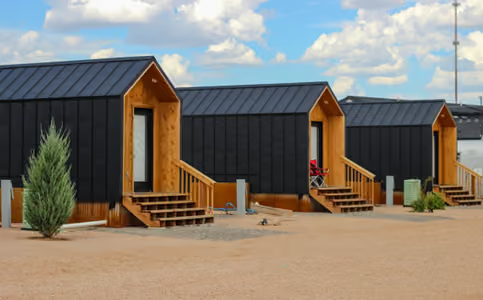
The modular homes are revolutionizing the entire housing sector in Spain. This is because they are a modern option that appeals due to its versatility, speed of construction, and innovative designs, adapting to any need.
As people seek practical and sustainable housing solutions, this option is gaining popularity for its ability to combine style and functionality. This article will guide you through its advantages, features, and everything you need to know to decide if they are the ideal choice for you.

Modular homes are homes built using pre-constructed sections, which are then assembled at the chosen site. It's a method that combines cutting-edge technology with a very modern design.
The idea is to offer a personalized, efficient housing solution that perfectly adapts to its environment and the owner's requirements. Their manufacturing process allows for rigorous quality control.
These solutions stand out for their flexibility and can be adjusted to any style, size, and need. From small homes to spacious residences, they are an innovative alternative for those seeking practicality without sacrificing aesthetics or comfort.
Modular homes offer multiple benefits that make them a truly attractive option. Their exclusive design and construction phases are the answer to the demands of a market that requires durability, speed, and individualization in every home.
Their construction significantly reduces building times. While a traditional house might take months, these homes can be assembled in weeks, minimizing inconvenience and accelerating the move-in process.
As they are built with eco-friendly materials and modern insulation techniques, they reduce energy consumption. In Spain, where efficiency is important, many feature solar panels or designs to optimize natural light.
Its flexible design allows you to adjust its size, location, and finishes as needed. Compact homes for singles or family residences, they adapt to any terrain or budget.
The modular homes have unique attributes which, when combined with technology and design, offer modern models. These characteristics make them ideal if you are looking for a practical, aesthetic, and tailored solution for your lifestyle needs.
The structure, made of prefabricated modules, allows you to expand or reduce it according to future needs. In Spain, it is ideal for growing families or if you wish to start with a small house and expand it.
These homes use durable raw materials such as steel, concrete, and certified wood, ensuring strength and beauty. They comply with building codes and have superior thermal and acoustic insulation for comfort in varied climates.
They incorporate features such as home automation for controlling lights, heating, or security from your mobile device. In places where home technology is popular, these homes improve comfort and efficiency in ventilation and insulation.
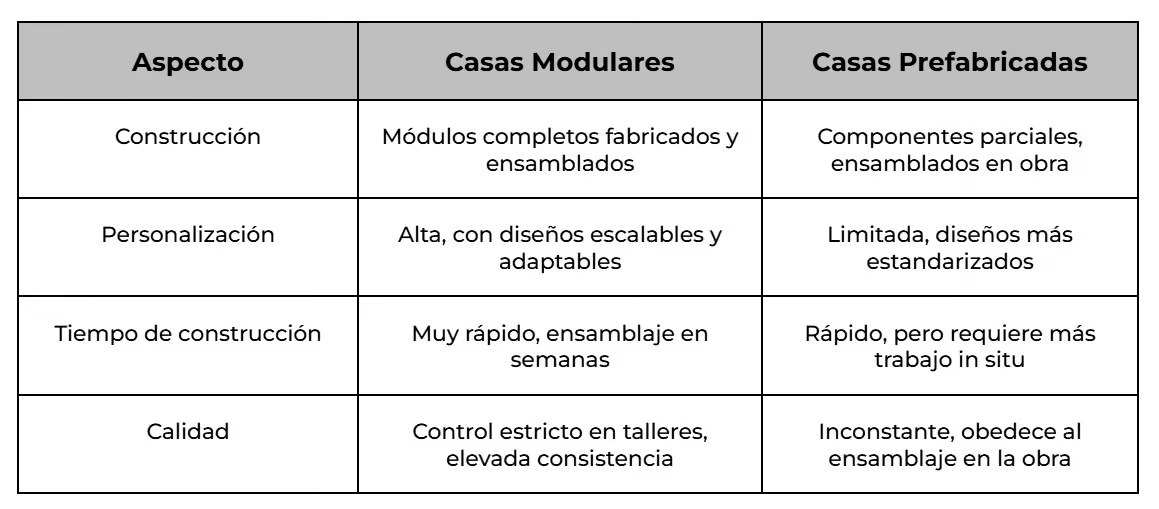
The modular homes and the prefabricated houses share several uses, but their designs and construction can vary. The former are based on complete models that connect, while prefabricated ones include elements that are built on-site.
Modular homes can be more individualized, with complete sections that allow for a scalable and adaptable design. Prefabricated homes, on the other hand, are more rigid, featuring walls or roofs whose assembly is an additional step at the construction site.
Both are fast and efficient, but modular homes offer superior flexibility and controlled quality. The choice will depend on design needs, location, budget, and time, with each type offering a very practical solution.
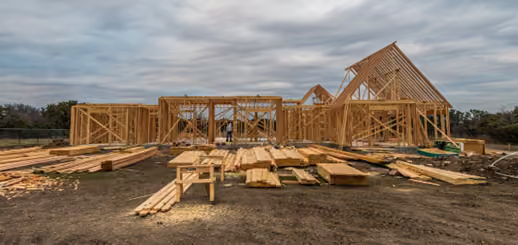
The modular homes are built using an efficient process with parts created according to custom plans. They are made with quality raw materials to comply with current construction regulations in Spain.
This allows you to control every detail, such as insulation or finishes, and once completed, they are transported to the site where they will be assembled. Final assembly is very quick, with cranes and special equipment joining each module in just a few days.
They certainly must meet certain requirements for their placement, so having a suitable plot of land is essential. Urban planning permits and access to basic services like water, electricity, and sewage are vital.
The land must have a concrete slab to support the modules, and you also need a project approved by an architect. This is to ensure compliance with construction and habitability regulations.
As they are built in well-defined stages to optimize time and quality, the first stage is design. Here, custom plans are created to reflect your wishes and comply with Spanish regulations.
In a subsequent phase, the modules are constructed under strict quality controls. The property is prepared with an adequate foundation to ensure stability for the final coupling of the house's components.
The third phase includes the transportation and coupling of the components on the site. Assembly takes just a few days, including service connections and final finishes.
This construction, from design to assembly, can take approximately 12 to 16 weeks, depending on the project's complexity and the terrain.
Manufacturing takes 4 to 8 weeks, and assembly can last between 1 and 2 weeks, including water and electrical connections.
The modular homes have variable costs depending on size, materials, and customization. In Spain, they can cost between 750 and 1350 euros per square foot, which is much cheaper than conventional construction.
The price includes design, manufacturing, and assembly, but premium, home automation or sustainable techniques can increase the cost. Location and site preparation could also influence the budget.
You might be interested in: home automation 2025.
They can be installed quickly due to their manufacturing process, as soon as the land is ready and the modules are fabricated. On-site installation could take between 1 and 2 weeks.
The time will depend on the size and complexity of the house; the larger or more customized its design, the longer it might take, potentially around 3 weeks. In Spain, coordinating with permits and public services can add a few days.
Indeed, they are officially legal, provided they comply with all urban planning and construction regulations. Remember to adhere to the Technical Building Code and obtain municipal licenses to ensure habitability.
Each municipality has specific regulations regarding their placement, size, and design. Consequently, you must provide technical plans approved by an architect and apply for the necessary permits before beginning installation.
They must include provisions for water and electricity connections and comply with local regulations. With the proper documentation, these homes are a legal and safe option for any homeowner in Spain.
You might also be interested in: how to apply for a building permit.
They are definitely an attractive investment due to their versatility and efficiency. However, making informed decisions is key to maximizing returns and ensuring a satisfactory experience in the Spanish market.
Before building, ensure the land is suitable for these homes and check urban planning regulations, access to utilities, and the need for foundations. A geotechnical study can prevent structural problems and cost overruns.
Choose homes with sustainable materials and solar panel systems or advanced insulation. Value sustainability to reduce long-term costs and increase property value.
Work with expert architects and builders; a well-prepared technical project streamlines permits and ensures quality. Professionals with experience in these types of homes guarantee and protect your investment.
Include all costs: the property, permits, transportation, installation, and finishes. Prices may vary depending on customization, but a clear budget prevents surprises.
These homes last for decades, just like traditional ones, if quality materials are used and they receive proper maintenance. They can exceed 50 years with regular care.
In Spain, there are specialized companies like Modular Home, Alucasa, or Eurocasa, which offer these products. Connect with certified manufacturers or local construction companies that comply with the urban planning regulations of the chosen land.
Yes, they are scalable, allowing you to add modules as needed, provided the land and local regulations permit it. They offer flexibility to adapt to family or functional changes.
Transport and installation in Spain could cost between 5,000 and 15,000 euros, depending on the size, distance, and complexity of the terrain. Consult the manufacturer for an exact quote.
Yes, they are ideal for rural areas in Spain, provided the land complies with urban planning regulations and has access to basic services.
They require similar maintenance to traditional homes: regular inspections of the structure, electrical systems, and plumbing, as well as cleaning finishes to ensure long-term durability and comfort.
With Domoblock, you can take the first step into the real estate investment market with house flipping and building flipping projects from €200. You can invest in real properties selected with extensive experience in real estate tokenization and real estate crowdfunding.
Our team thoroughly analyzes your project to offer you profitability, security, and short-term growth potential. Invest from your mobile, diversify your portfolio, and turn your money into sustainable income.
Domoblock offers various projects for real estate investment in Madrid, real estate investment in Alicante, real estate investment in Zaragoza and real estate investment in Valencia.
Grow your money securely. Join Domoblock and access the real estate world from anywhere!
If you are considering building modular homes, and need advice, just contact us,consult with Domoblock's experts!
The best investment is always one that has been carefully considered and discussed with industry experts. Become one of our fortunate investors!


.png)

León XIII, 27
Funded
-
-
Target
507.697,35 €


.png)
.png)
.png)
.png)




.avif)
.avif)
.avif)


