

The energy rating is that letter—from A to G—that appears in ads for homes for sale or rent. Many people just glance at it, but behind that letter lies data on energy consumption and emissions that give you an idea of your future utility bills, the comfort of the home, and any renovations it may need in the future.
In this guide, we explain what the energy rating measures, how it’s determined, how much it costs, what the regulations require by 2026, and how we at Domoblock use it when analyzing a property for a renovation project.

It is the result of evaluating the energy efficiency of a building or part of it, such as a home or commercial space. It indicates, under normal conditions of use and occupancy, how much energy the property needs to function and how much carbon dioxide it emits into the atmosphere as a result of that consumption.
It is regulated by Royal Decree 390/2021, which establishes the basic procedure for certifying the energy efficiency of buildings. The IDAE publishes the recognized documents and official software programs used to calculate it.
“A” corresponds to the most efficient buildings and “G” to the least efficient. Each letter is assigned based on limits that depend on the climate zone where the building is located and its type; therefore, the same letter does not mean exactly the same thing in Burgos as it does in Seville.
It is expressed in kilowatt-hours per square meter per year (kWh/m²·year). It measures the fossil fuel energy required for heating, cooling, and domestic hot water, and—in commercial buildings—also for lighting. It is the indicator that best predicts energy consumption.
These are expressed in kilograms of CO₂ per square meter per year. They depend both on the amount of energy consumed and its source; thus, a home with a diesel boiler will emit more than one with a heat pump, even if both have similar energy needs.
The label includes the address, cadastral reference, floor area, use, climate zone, and the energy regulations in effect when the building was constructed. This information allows you to verify that the certificate truly corresponds to the property being sold or rented.
The label indicates the date of issuance, the expiration date, and the registration number in the corresponding autonomous community. Without that registration number, the label is not official and cannot be used to fulfill the requirement to include it in listings.
This corresponds to very low energy consumption and emissions compared to the benchmark for its climate zone. Achieving this rating typically requires good thermal insulation, energy-efficient windows and doors, high-performance HVAC systems, and a significant contribution from renewable energy sources.
These are common in recent new construction and in homes that have undergone comprehensive renovations. They indicate moderate energy consumption and a good level of comfort, and are usually the realistic goal of a well-planned energy renovation in an existing apartment.
These are the most common in Spain’s residential housing stock, much of which was built before insulation requirements existed. These homes have room for improvement through relatively simple measures, such as replacing windows or HVAC systems.
These correspond to buildings with little or no insulation and outdated or inefficient systems. These are the properties with the greatest potential for improvement, but they also have the highest operating costs and are most likely to be affected by future European regulations.
Two homes with the same letter rating may have very different energy consumption levels if they are located in different climate zones. Additionally, the label may show one letter for energy consumption and a different one for emissions, so it’s always best to look at the numerical values and not rely solely on the letter.
Facades, roofs, floors, and shared walls form the building envelope. Their composition and level of insulation determine how much heat is lost in winter and how much is gained in summer, and they are the most significant factor in the energy rating of older buildings.
The orientation of the windows, the building’s compactness, and thermal bridges influence heating and cooling needs. A well-oriented home with few exposed surfaces requires less energy than a similarly sized home that is poorly oriented.
The calculation evaluates the efficiency of boilers, heat pumps, air conditioning units, and electric water heaters. Replacing an old unit with a high-efficiency one can improve the rating by several grades without requiring any changes to the building envelope.
Ventilation affects heat loss, especially in homes with significant air infiltration through windows or roller-shutter boxes. Lighting is only factored into the calculation for non-residential buildings, such as offices or commercial spaces, where it accounts for a significant portion of total energy consumption.
Solar thermal, photovoltaic, geothermal, and biomass systems reduce the consumption of non-renewable primary energy. Therefore, incorporating any of these sources is one of the most effective ways to improve a property’s energy rating.
The calculation program combines all this data to derive the final indicators per square meter. It then compares these figures to the reference scale for the climate zone to assign one letter grade for energy consumption and another for emissions.
This is the comprehensive report signed by a qualified technician, containing the property’s details, the calculations performed, the rating obtained, and recommendations for improvement. It is the legally valid document that must be registered with the autonomous community.
This refers to the letter grade and numerical values obtained after the calculation, and it forms part of the certificate. The term “rating” refers to the result, while the “certificate” is the document that contains and substantiates it.
This is the graphic symbol that summarizes the rating in a simple way. Royal Decree 390/2021 requires that it be included in all offers, promotions, and advertising for sale or rent, so that any buyer or tenant can learn about the property’s energy efficiency directly from the listing.
The certificate must be registered with the corresponding regional registry to be fully valid. Without this registration, the official label will not be issued, and the owner would be unable to prove compliance with their obligations when selling or renting.
According to Royal Decree 390/2021, the certificate is mandatory in the following cases, among others listed in the regulation:
The regulation itself excludes, among others, detached buildings with less than 50 m² of usable floor area, temporary structures, certain non-residential industrial or agricultural buildings, and properties purchased for demolition or major renovation. It is advisable to review each case individually, as the exceptions are specific.
Failure to have the certificate or to display the label in an advertisement may result in fines of up to €6,000 in the most serious cases, according to the penalty provisions of the Consolidated Text of the Land and Urban Renewal Act. The autonomous communities are responsible for conducting the inspections.
Royal Decree 390/2021 restricts certification to technicians with qualifying credentials, such as architects, technical architects, engineers, or technical engineers with expertise in the field. Before hiring, you should verify their credentials and ensure they have professional liability insurance.
An in-person visit is mandatory under current regulations. During the visit, the technician measures the home, inspects the exterior walls, windows, and systems, and takes photographs that are later included in the certificate to verify the data used.
Only software officially recognized by the Ministry is valid, such as HULC, CE3X, CE3, CYPETHERM, or SG SAVE. Each has its own specific features, but all must adhere to the official methodology so that the energy ratings are comparable across properties.
The technician—or the owner, depending on the autonomous community—submits the certificate to the regional registry and delivers the final documentation. From that point on, the owner can use the label in listings and provide it to buyers or tenants.
Request several quotes and compare not only the price but also what each one includes, such as the on-site visit, registration, or fees. Verify the technician’s credentials and liability insurance before commissioning the work.
Floor plans, the building specifications, invoices for windows or the boiler, and the year of construction help refine the calculation. The more actual information the technician has, the fewer default values they’ll have to apply—and those values tend to lower the rating.
The technician visits the home, takes measurements, inspects the systems, and checks the condition of the building envelope. It’s advisable to be present to answer questions about previous renovations or how the equipment operates.
Using the data collected, the technician enters it into the approved software and obtains the energy consumption and emissions rating. This process usually takes a few days, depending on the complexity of the property and the technician’s workload.
The certificate must include measures to improve efficiency, along with their estimated impact on the rating. These recommendations are very useful for planning a renovation, as they indicate which actions would have the greatest impact on the final rating.
The certificate is submitted to the registry of the corresponding autonomous community, usually online. Some autonomous communities charge a fee for registration, which should be taken into account when comparing quotes.
Once the certificate is registered, you’ll receive the official label, which can then be included in property listings and provided to buyers or tenants. Keep a copy with the property’s documentation, as you’ll be asked for it at the notary’s office or when signing the lease agreement.
There is no regulated price, and each technician sets their own fees. Market prices typically range from €60 to €250 for a residential unit, depending on its size, location, and complexity, while commercial spaces and entire buildings cost more.
In addition to the technician’s fees, some autonomous communities charge a registration fee. Be wary of very low prices that do not include an in-person visit: the inspection is mandatory, and a certificate issued without one may not be valid and could force you to have it redone.
The certificate is valid for up to 10 years from the date of issuance. If the rating obtained is a G, Royal Decree 390/2021 reduces that validity to 5 years, to encourage less efficient properties to be inspected and improved more frequently.
If renovations are carried out that change the property’s energy efficiency, it’s advisable to update the certificate before it expires so that it reflects its actual condition. Additionally, an updated certificate following the work is essential to verify the improvement and qualify for tax deductions.
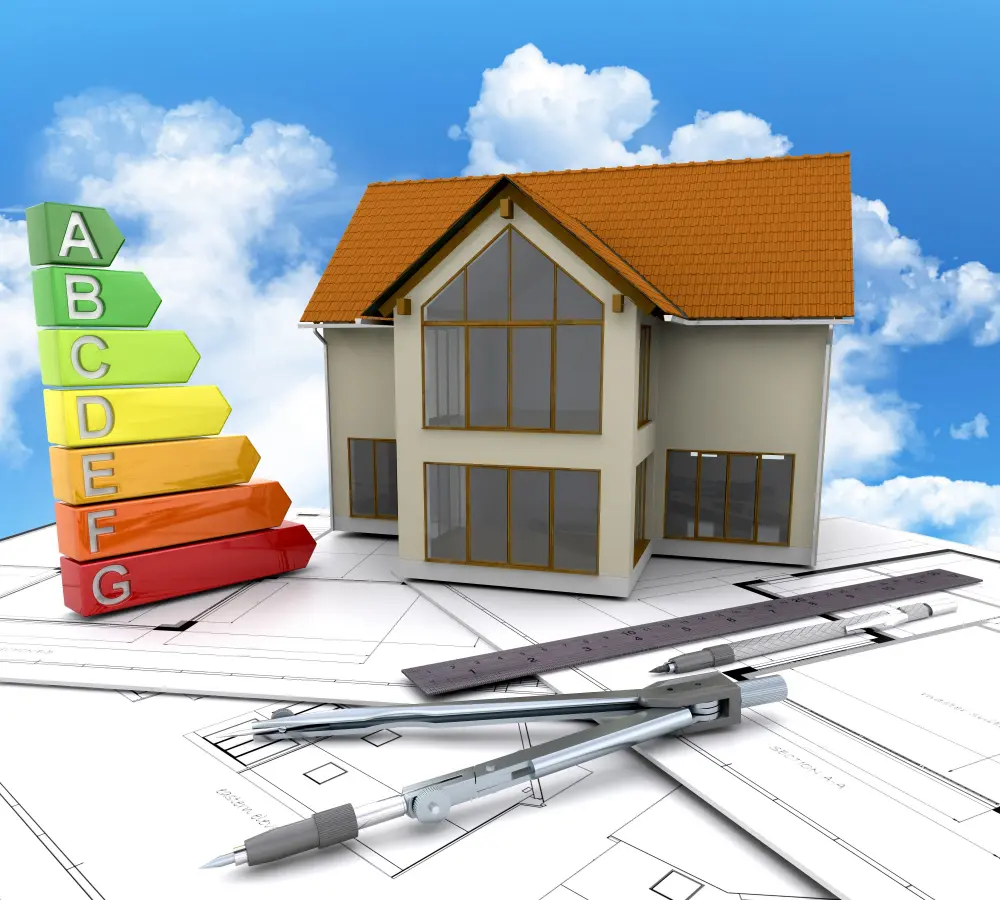
This is the measure with the greatest impact on older buildings, especially when implemented at the homeowners’ association level using systems such as SATE (exterior thermal insulation). If the homeowners’ association does not approve this, interior insulation is an alternative, although it reduces usable floor space slightly.
Windows with thermal breaks and double or triple glazing reduce heat loss and improve acoustic comfort. Sealing roller-shutter boxes and joints also reduces air infiltration, at a much lower cost than replacing the entire window.
Replacing old boilers or electric radiators with high-efficiency heat pumps typically improves the energy rating by several letters. It is one of the improvements with the best cost-to-impact ratio, especially in homes with direct electric heating.
Air-source heat pumps or solar thermal energy significantly reduce the consumption of non-renewable energy for domestic hot water. In homes with old electric water heaters, this change can have a significant impact on the final energy rating.
Photovoltaic self-consumption—whether individual or shared with the community—improves the non-renewable primary energy indicator. Its effect is greater when combined with efficient electrical equipment, such as air-source heat pumps, which make use of the energy generated.
LED lighting, programmable thermostats, and room-by-room temperature control help reduce actual energy consumption. While their impact on a home’s energy rating is less than that of other measures, they improve comfort and lower utility bills with a modest investment.
Ask the technician to rank the recommendations in the certificate by cost and by estimated improvement in the energy rating. This prevents you from investing first in measures that have the least impact on the energy rating and allows you to plan the renovation in phases, based on your available budget.
An 80 m² apartment with an E rating is renovated with interior insulation, new windows, and an air-source heat pump for €12,000. If the subsequent certificate confirms a reduction in non-renewable primary energy consumption of at least 30%, or the home achieves an A or B rating, the 40% income tax deduction provided for in the fiftieth additional provision of Law 35/2006 may be applied, with a maximum base of €7,500:
For residential properties, this deduction applies to renovations completed by December 31, 2026, and requires energy performance certificates issued both before and after the renovations. For renovations to entire residential buildings, the deadline is extended to December 31, 2027.
New construction must comply with the Basic Document HE of the Technical Building Code, updated by Royal Decree 732/2019, which requires nearly zero-energy buildings. In practice, most new homes receive an A or B rating.
New construction requires two certificates: the project certificate, issued before construction begins, and the certificate for the completed building, which must match the actual work performed. If materials or equipment are changed during construction, the final certificate must reflect this.
Directive (EU) 2024/1275 tightens this standard: new buildings must be zero-emission starting in 2030 (2028 for public buildings), and it establishes a harmonized scale in which an “A” rating corresponds to such buildings. The transposition deadline expired in May 2026, and as of this writing, Spain has not yet fully implemented the directive, so the current scale remains in effect.
A good rating lowers utility bills, improves comfort, and can facilitate financing, as some lenders offer green mortgages with better terms for homes rated A or B. It is, therefore, an increasingly relevant selling point.
The relationship with price is not automatic, as location, condition, and size carry more weight in the valuation. But in markets with a large supply of similar properties, energy efficiency makes a difference, and as European regulations advance, homes rated F and G may face more mandatory renovations or lower demand in the future.
In our renovation projects, we take this into account from the very beginning, because energy efficiency improvements are part of the value we create. Sergio Navarro, CEO of Domoblock, sums it up this way: with an energy-efficient renovation, “emissions are reduced by 30–40% per project.”
Here is the checklist we use when reviewing a property’s energy certificate before evaluating it:
At Domoblock, our proprietary tool monitors real estate portals 24/7, and we analyze more than 100 properties per week. The energy efficiency rating is one of the metrics we use to estimate the cost of the renovation and the property’s market appeal once it’s completed.
"A" is the most efficient: very low energy consumption and emissions compared to the benchmark for its climate zone. For existing homes, moving from an "E" to a "C" already represents a significant improvement in utility bills and comfort, and is usually more achievable than reaching an "A" without a comprehensive renovation.
Yes. The rating does not prevent you from selling or renting; what is required is to have the certificate registered and display the label in the listings. However, with a G rating, the certificate expires after 5 years, and the buyer will likely deduct the cost of the necessary improvements from the price.
No. Royal Decree 390/2021 requires it for sales and when renting to a new tenant, but not for transfers without consideration, such as inheritances or gifts. If the heirs later sell or rent the property, they will need to obtain the certificate before listing it.
Commercial spaces do, when they are sold or rented, with their own rating scale for non-residential use. Industrial warehouses and non-residential agricultural buildings with low energy demand are exempt under Royal Decree 390/2021, as are detached buildings with less than 50 m² of usable floor area.
It is a violation. Royal Decree 390/2021 requires the label to be included in all offers, promotions, or advertisements for sale or rent, and the autonomous communities may impose penalties for its absence. Fines vary depending on the severity of the violation and, in the most serious cases, can reach €6,000.
No, not while the current lease is in effect. The certificate is required when selling the property or renting it to a new tenant. If it expires while the tenant is still living there, you simply need to renew it before the next sale or the next lease agreement, at which point it must be valid and registered.
The energy efficiency rating allows you to anticipate part of the energy consumption, comfort levels, and improvements a property may require—factors that can affect your expenses and the property’s market appeal. Before investing as little as €200 in a tokenized real estate project through Domoblock, review this indicator along with the technical documentation, the renovation plan, and the risks involved in the transaction; the 100% online process does not replace this evaluation.
The energy efficiency rating is more than just a letter in an ad: it summarizes energy consumption, emissions, and pending renovations. Before buying or renting, review the numerical values and recommendations for improvement, and verify that the certificate is registered and valid. If you plan to renovate, request the certificate before you begin: without it, you won’t be able to prove the improvement or qualify for tax deductions. Remember that any real estate investment involves risks of illiquidity, delays, and capital loss.



Rúa Progreso, 27
Funded
Target
1.575.297,50 €