
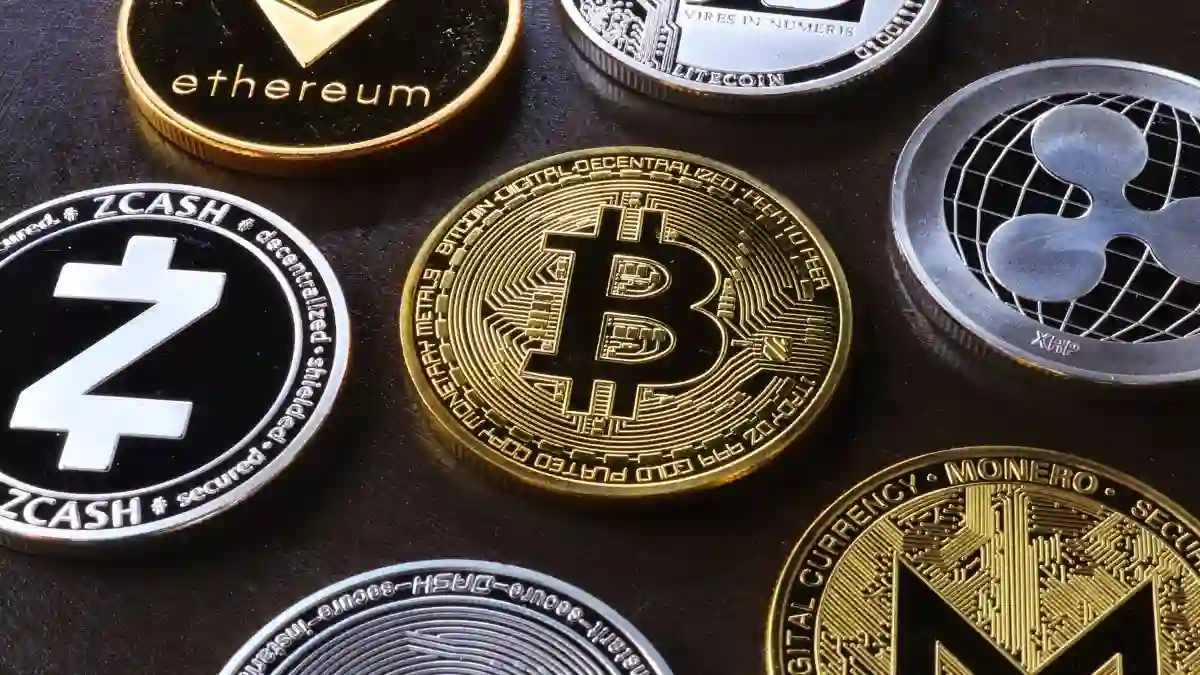
In this article, we will analyze how to invest in cryptocurrencies in Spain. While it's true that these, also known as crypto assets, have been around for several years, they still stand out today as an innovative investment alternative.
Learning how to invest in crypto assets can provide you with what you need to diversify your finances. The best part is that they are a type of investment that suits various budgets, making them a viable option even with a small budget.
And in terms of profitability, investing in cryptocurrencies in 2023 remains a good option. One only needs to look at the reach of Bitcoin and various types of Altcoins, especially emerging projects that look promising for the future.
There are several reasons why people want to learn how to invest in cryptocurrencies. However, it's also common to have many questions about it.
For example, are these types of investments legal? How much money is needed to invest in cryptocurrencies? Throughout this post, we will answer your main questions, and most importantly, we will tell you what you can do to make the most of your investment.
Remember that you also have the article how to make money with cryptocurrencies which you can benefit from.
The price of Bitcoin tends to increase significantly, and it has reached historical highs that have positioned it as an expensive asset. Given this, it's common to think that we need a lot of money to invest in cryptocurrencies.
So, the question is, How to start investing in cryptocurrencies with little money? Initially, you should select a good online broker, one that allows you to start your operations with an affordable minimum deposit.
There are some online brokers for investing in cryptocurrencies that allow you to start trading with minimum deposits of 20 euros. Additionally, there are transactions that can be carried out for small amounts, even from 1 euro.
This shows us that it's advisable to learn how to invest in cryptocurrencies in Spain even if we have rather limited capital.
But there's something you need to consider, and that is it's not worth investing in financial assets if it poses a risk to your financial stability.

What great financial gurus suggest is not to invest more than we are willing to lose. This is because, in any type of investment we make, we will be exposed to a certain degree of risk.
Another important aspect of how to invest in cryptocurrencies in Spain with little money is that your patience can lead you to better outcomes.
If you have limited capital and want to make the most of it, it's best to position your investment for the long term. Even when a cryptocurrency is down in the market, history has shown that it can turn its situation around.
And having patience, along with managing our emotions correctly, can help us achieve solid returns.
First, you should know that buying cryptocurrencies for savings is not the same as actually investing in this asset with a set goal.
And to make investments with this instrument, you can access at least three different alternatives, which are the following:
Mining cryptocurrencies.
Cryptocurrency trading.
Long-term investment.
One of the best ways to learn how to invest in cryptocurrencies in Spain is by planning long-term operations. Imagine that at the beginning of 2021, you decided to invest $100 in Dogecoin.
Dogecoin is one of the newer Altcoins, but naturally, its value was much lower in its early days. By 2021, it had an estimated value of $0.0049. As of today (May 2023), Dogecoin has a price of $0.0722.
This means that over the years, this cryptocurrency has seen an increase in its value. So, following this example, if the same $100 worth of Dogecoin were sold today, the profitability would be substantial, especially compared to the initial investment.
However, in our guide on how to invest in cryptocurrencies in Spain, we aim to be very objective. Just as gains are possible, losses are also a risk.
The best thing you can do is conduct thorough analysis when investing in cryptocurrencies in Spain. Recognizing how much strength and demand an asset might have in the future, is key.
Another good option for how to invest in cryptocurrencies in Spain is through trading. This alternative allows us to trade on the price fluctuations of Bitcoin and Altcoins.
It operates similarly to investing in Forex, as it's possible to trade on cryptocurrency pairs. While it's an option that is constantly growing in popularity, it's not based on luck.
Instead, cryptocurrency trading requires thorough analysis, where even certain political news can influence the asset's price.
That said, if the possibility of short-term cryptocurrency investing appeals to you, this is a great option.
And the best part is that today there are many trading strategies for this asset, and even the possibility of generating automatic profits using sophisticated automated trading algorithms.
All this shows us that not only is it legal to invest in cryptocurrencies in Spain, but there are many ways to do it. You just have to choose the one that is most convenient based on your experience and capital.
In the following list, you can see some ideal platforms for cryptocurrency trading:

To mine cryptocurrencies, you need a large investment, so it's far from the best option if you have modest capital. The reason is that you need special technical equipment to do this.
These are computers that, through algorithmic and mathematical analysis, generate a process within the Blockchain system, which allows for obtaining a small volume of cryptocurrencies.
On average, you need to have a few thousand dollars to get started in Bitcoin or cryptocurrency mining in general. And of course, it also carries risks.
Banco Santander is one of the banks in Spain that allows cryptocurrency transactions.
In fact, it has made efforts to consolidate a Bitcoin exchange-traded fund, meaning people will be able to invest in an ETF of the world's leading cryptocurrency.
Although BBVA initially had its doubts, today it allows certain cryptocurrency operations, but not in Spain. However, its Swiss branch does permit certain services with Bitcoin.
On the other hand, alternatives like CecaBank have also joined the trend regarding services that allow cryptocurrency transactions in Spain. Furthermore, one of the most significant achievements is Santander's, especially given its traditional banking background.
In the following chart, you can see some of the most used exchanges in Spain. Further on, we will share both the pros and cons of each alternative.
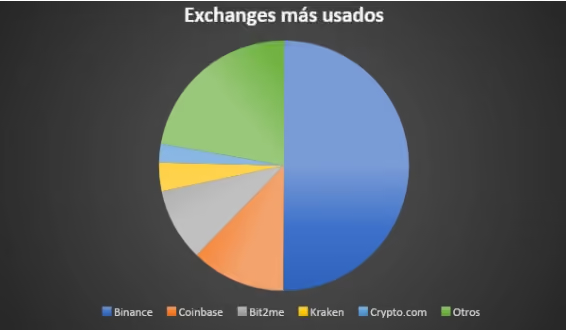
50.1% of the Spanish respondents in said study use Binance as an exchange to invest in cryptocurrencies.
Subsequently, 12.2% use Coinbase, and it's interesting that 22.2% indicated they use some other platform to invest in cryptocurrencies.
It is one of the most widely used platforms for buying, selling, and investing in cryptocurrencies. One notable aspect of this option is its highly flexible approach to managing fees.
In addition to allowing Bitcoin purchases, it enables investment in various Altcoins, offering a list of at least 140 options to its users.
According to experts on how to invest in cryptocurrencies in Spain, this is a good option for those with less experience in these types of transactions. The reason? It's a platform with practical usability and a great interface.
However, objectively, we can state that its commission rates can be a bit higher in comparison to Binance, for example.
Failing to declare your cryptocurrencies can have several legal and financial consequences in Spain. Below, I'll detail the main risks and penalties you could face:
In summary, failing to declare your cryptocurrencies can have serious consequences, including financial penalties, late payment interest, tax inspections, legal implications, and potential accusations of money laundering. It is crucial to stay informed about tax obligations and seek professional advice to regularize your situation and avoid future problems.
Declaring cryptocurrencies in Spain involves following a series of steps and complying with certain tax obligations. Here's how to do it:
You must declare capital gains and losses from cryptocurrency trading. These are included in the savings tax base.
Capital gains are taxed according to the following scale for the 2023 tax year:
If you hold cryptocurrencies on foreign platforms and the total value exceeds 50,000 euros, you are required to file Form 720.
Include capital gains and losses in your annual income tax return.
If your total net worth, including cryptocurrencies, exceeds the established threshold (generally 700,000 euros, although it may vary depending on the autonomous community), you must file a Wealth Tax return.
In general, the buying and selling of cryptocurrencies is not subject to VAT. However, if you engage in commercial activities with cryptocurrencies, such as mining or related services, you might have additional obligations.
If you have economic activity related to cryptocurrencies, such as professional trading or mining, you might need to file quarterly returns using Forms 130 (instalment payment of personal income tax) and 303 (VAT).
Let's assume that during the year you have carried out the following transactions:
Total capital gain: 10,000 + 10,000 = 20,000 euros.
By following these steps, you will be able to properly declare your cryptocurrencies in Spain and fulfill your tax obligations.

The way to buy your cryptocurrencies for savings is by using a digital wallet. One of the most commonly used platforms for this is LocalBitcoins, but you should know that there are other options available for this in Spain.
When selecting a platform to store your cryptocurrencies, it's important to consider the risk. Therefore, you should research the virtual wallet to understand its level of transparency and effectiveness.
Of course, you can also store cryptocurrencies on Binance, in fact, it's one of the most popular wallets not only in Spain but in many other countries.
In Spain, the obligation to declare cryptocurrencies doesn't depend so much on the exact amount of money you hold on a platform like Binance, but rather on the profits obtained and whether certain thresholds and conditions established by tax regulations are met. Here are the main obligations and thresholds you should be aware of:
In summary, if the total value of your cryptocurrencies on Binance exceeds 50,000 euros as of December 31st, you must declare it using Form 720. Additionally, any gains obtained from buying and selling cryptocurrencies must be declared on your annual income tax return.
Just as with other activities like trading, cryptocurrency operations can also be taxable. Broadly speaking, users may pay the PIT or Income Tax.
This tax is subject to capital gains, which averages between 19% and 23%. All of this might cause you stress, but you should know something.
Cryptocurrency taxes in Spain are paid when a transaction or exchange results in gains. Let's say that from a trade with your Bitcoin volume, you earn 2,000 euros; this operation may be taxable.
The benefits of investing in cryptocurrencies in Spain are related to several aspects, especially the following:
Of course, there are also certain risks, such as the possibility of facing scams or the impact of fluctuations. Since this can lead to economic losses.
Cryptocurrencies have a promising future, and this has been evident over the years. They have even made their way into everyday life, which will help them become more firmly established.
Finally, exercising caution, increasing your knowledge, and not investing beyond what is safe will always help us achieve better outcomes.
Want to discover other ways to invest and multiply your money? Remember that at Domoblock we offer secure investments with an annual return of 10%. You can achieve returns in less than 8 months.
No matter what type of investments you make, you can invest in startups and explore different types of real estate investments you will still achieve returns and the aforementioned profitability.
I suggest you keep reading: Best Investments in Times of Crisis and What to Invest in in 2023
But if you want to know more about real estate, you could click on the link real estate tokenization or real estate crowdfunding .Why not both, and learn even more.


.png)

41 Av. del Oeste
Funded
100%
763.249,36 €
Target
€763,249.36


.png)
.png)
.png)
.png)



.avif)
.avif)
.avif)


